Knowing how to stop toddler hitting and pushing calmly can feel urgent, especially when your child hits another child at playgroup or pushes a sibling off a toy. It helps to know that hitting at this age is common. Toddlers are not being naughty on purpose. They simply do not yet have the words, patience or self-control to handle big feelings, and their hands act before their brains catch up.
The aim is not to punish the hitting away, but to teach a better way to cope. That takes time, repetition and a calm adult. Toddlers learn far more from how you react than from any lecture, so your own calm response is the most powerful tool you have.
Why toddlers hit and push
Most toddler hitting has a simple cause. Your child may be tired, hungry, overexcited or frustrated. They may want a toy, want attention, or be overwhelmed by noise and people. Some toddlers hit when they are happy and excited too, because they do not yet know how to show strong feelings gently. Biting, pushing and grabbing usually come from the same place: a feeling too big for their current skills.
Understanding the cause does not excuse the behaviour, but it does change how you respond. A tired toddler needs rest, not a scolding. A frustrated toddler needs words and help, not shame.
Stay calm in the moment
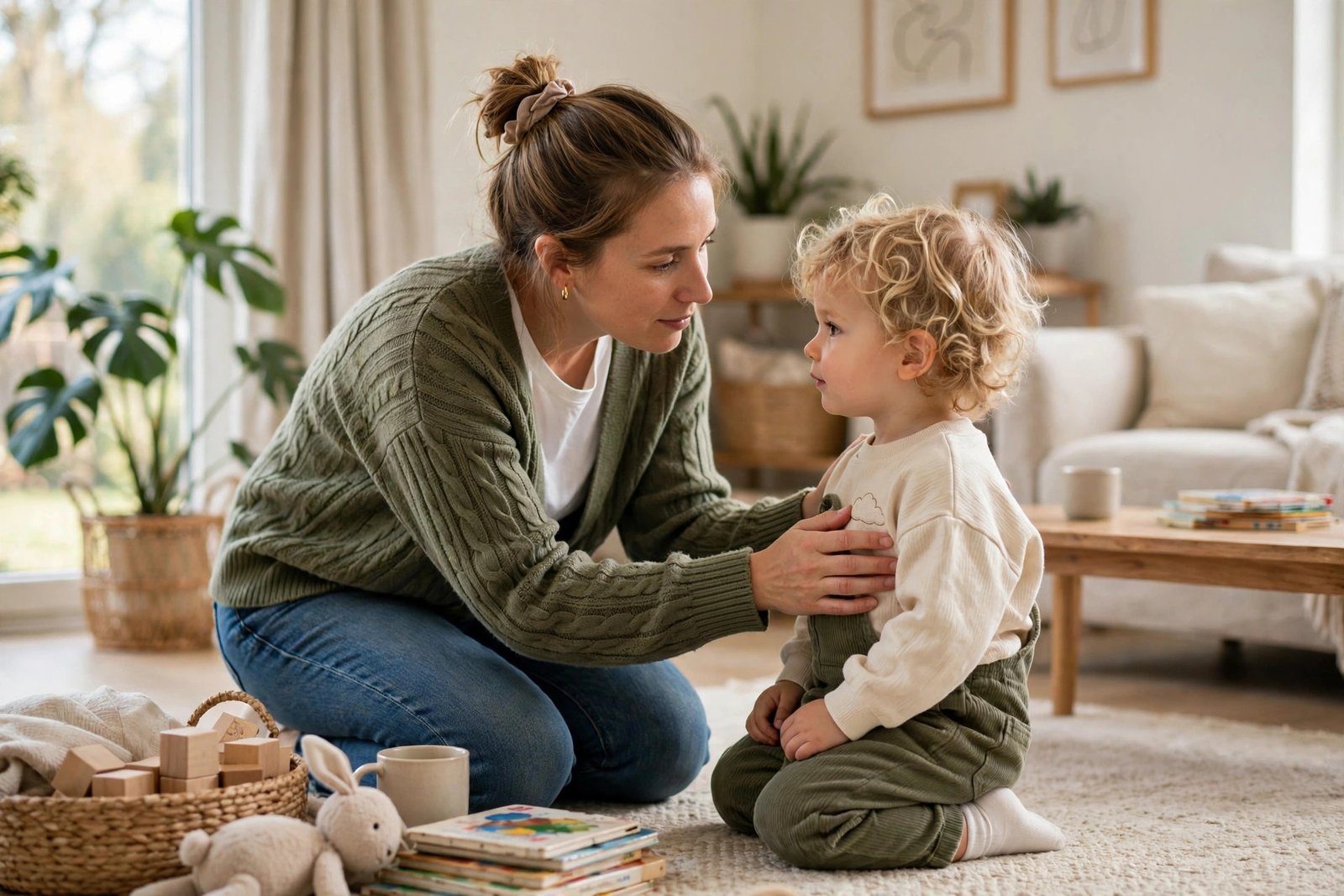
When hitting happens, take a breath before you speak. Get down to your child’s level, hold their hands gently if needed to stop another hit, and use a short, firm sentence:
- “No hitting. Hitting hurts.”
- “I won’t let you hit. I will help you stop.”
- “You are angry. I can help.”
Keep it brief. Long explanations are lost on a toddler in the middle of a big feeling. Avoid hitting back, shouting or labelling your child as naughty. Those responses teach that bigger, louder people win, which is the opposite of the lesson you want.
Comfort the child who was hit first
It is tempting to focus all your attention on the child who hit, but check on the other child first. A quick “Are you okay? That must have hurt” shows everyone that feelings matter and that hitting has a real effect. Then turn back to your toddler and repeat the boundary calmly. This order also removes the audience effect: some toddlers hit partly because it brings a big adult reaction.
Give them words for the feeling
Toddlers hit partly because they lack language. Every time you name the feeling, you give them a tool to use instead of their hands. Try simple phrases they can copy:
- “You wanted the truck. You felt angry.”
- “You are sad because it is time to go home.”
- “You can say ‘my turn’ or ‘help, please’.”
Practise these phrases when everyone is calm, through play and books. A child who can say “mine” or “stop” is less likely to push to make the same point.
Teach gentle hands every day
Do not wait for hitting to teach gentle behaviour. Build it into ordinary days:
- Show gentle stroking with dolls, pets and younger babies.
- Praise gentle touches straight away: “Lovely gentle hands.”
- Play games that practise waiting, such as rolling a ball back and forth.
- Read books about feelings and taking turns.
Specific praise works best. Instead of “good boy” or “good girl”, try “You waited for your turn. That was kind.” Children repeat what gets noticed.
Prevent hitting before it starts
Prevention is often easier than correction. Watch for the warning signs: tired eyes, whining, crowding around one toy, or rising excitement. Step in early with a distraction, a snack, a change of scene or a second identical toy if you have one. Keep playdates short for young toddlers, and avoid busy, overstimulating settings when your child is already tired or hungry.
Set clear, simple rules before play: “We use gentle hands. If we hit, play stops for a little while.” Then follow through calmly every time. Consistency from all adults in the child’s life matters enormously.
What about time-out?
A brief pause can help an overexcited toddler calm down, but it should never feel like rejection. Keep it short, one minute per year of age at most, and stay nearby. Afterwards, reconnect warmly and restate the rule. If time-out regularly turns into a battle, a calm-down space with cushions and books, where you sit together until feelings settle, often works better.
When hitting keeps happening
Progress is rarely instant. You may repeat the same calm response dozens of times before it sinks in. That repetition is the teaching. However, speak to your health visitor or doctor if hitting is frequent, intense or getting worse over months, if your child seems unable to calm down at all, if they hurt themselves, or if you are worried about their development or behaviour in general. There is no shame in asking for advice.
Learning how to stop toddler hitting and pushing calmly is really about teaching a small person to handle big feelings safely. Stay calm, keep the boundary short and firm, name the feeling, and practise gentle hands daily. With time and patience, most toddlers grow out of hitting as their language and self-control grow. For more calm, practical parenting guidance, visit our homepage.