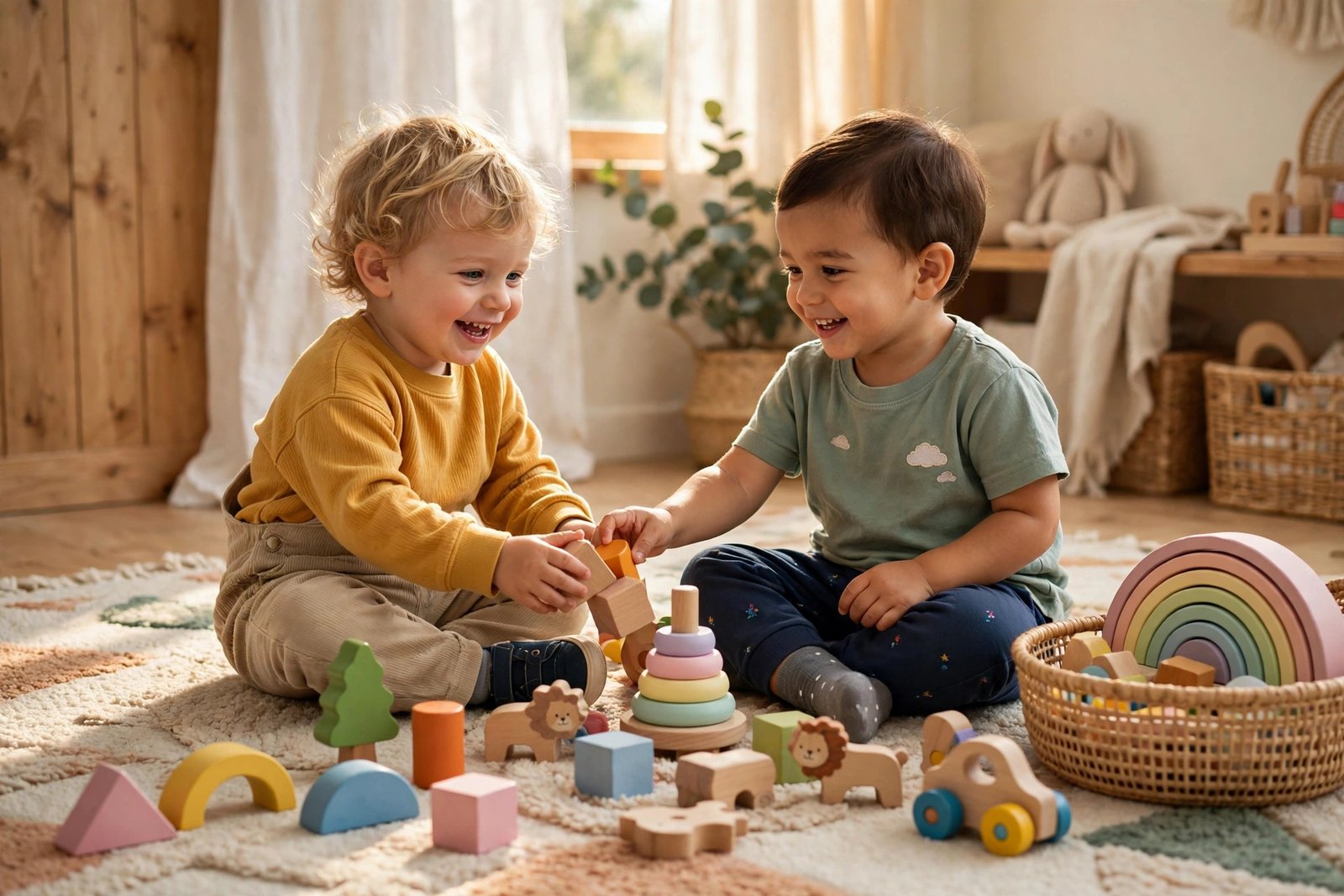
Sharing is one of the hardest lessons for a toddler to learn, and that is completely normal. At two or three years old, a child still sees the world from their own point of view, so handing over a favourite toy can feel like losing it forever. The good news is that sharing is a skill, not a personality trait — and with patience, play, and a little daily practice, most toddlers get better at it surprisingly quickly.
Why Toddlers Struggle to Share
Before you try to fix the problem, it helps to understand it. Toddlers are still learning that other people have feelings and wishes of their own. They are also building a sense of ownership: “mine” is often one of their first proud words. Add in big emotions they cannot yet name or control, and you have a recipe for toy-grabbing, tears, and the occasional meltdown at playgroup. None of this means your child is selfish. It means their brain is still under construction.
It also helps to know that forced sharing rarely teaches generosity. If you snatch a toy away and hand it to another child, your toddler learns that bigger people take things — not that sharing feels good. The goal is to help them want to share, even if that takes time.
Start With Turn-Taking, Not Sharing
For young toddlers, turn-taking is much easier to grasp than sharing. Sharing sounds permanent; a turn sounds safe. Try a simple timer or a song: “You have the truck while we sing the song, then it is Sam’s turn.” Short, predictable turns work best. Two minutes feels fair to a toddler; ten minutes feels like forever.
Play turn-taking games at home too. Roll a ball back and forth, take turns stacking blocks, or stir a bowl together. Every round is a small lesson that good things come back around.
Model Sharing in Everyday Life
Children copy what they see far more than what they are told. Let your toddler see you share: offer your partner a bite of your food, lend a neighbour a book, or let your child use your phone for a photo. Narrate it simply: “I am sharing my biscuit with Daddy because sharing makes people happy.” It may sound silly, but toddlers absorb these little scripts and repeat them.
You can also let your child practise giving in low-stakes moments. Ask them to hand you a spoon at dinner, or to give Grandma a flower. Praise the act warmly, without making a huge fuss: “Thank you for sharing — that was kind.”
Prepare Before Playdates
Playdates are where sharing is tested most, so a little preparation goes a long way:
- Put away the precious toys. If there is one toy your child cannot bear to share, keep it out of sight before friends arrive. That is not cheating — it is fair.
- Set out plenty of duplicates. Two sets of blocks or two toy cars prevent most arguments before they start.
- Talk it through first. “Your friend is coming to play. We can share the cars and take turns with the slide. If you need help, come and tell me.”
- Stay close. Young toddlers still need an adult nearby to coach them through tricky moments.
What to Do When a Row Breaks Out
When two toddlers both want the same toy, stay calm and step in early. Hold the toy neutrally if you need to, and name what happened: “You both want the doll. That is hard.” Then offer a solution: “You can have it for two minutes, then it is Mia’s turn. I will help you wait.” If your child is too upset to hear you, comfort comes first and problem-solving second.
Avoid labelling either child as “greedy” or “naughty” in the moment. Labels stick, and they do not teach anything useful. Instead, praise the recovery: “You waited for your turn. That was hard, and you did it.”
Books and Stories That Help
Picture books about sharing give toddlers safe examples to think about. Read them together, pause, and ask simple questions: “How do you think the bear felt when he shared his cake?” Stories let children practise empathy without any real toy at stake.
When to Worry — and When Not To
Most toddlers are still learning to share well into their fourth year, so slow progress is normal. Gentle, consistent coaching usually does the trick over months, not days. If your child is also struggling with language, eye contact, or play in general, it is worth mentioning at a routine health visit — but difficulty sharing on its own is rarely a cause for concern.
The Bottom Line
Teaching a toddler to share is a long game. Keep turns short, model generosity yourself, prepare for playdates, and stay calm when things go wrong. One day — probably when you least expect it — your child will hand over a toy without being asked, and you will know the lessons landed. For more gentle, practical parenting guidance, visit the Healthy Baby Guide homepage for new articles every week.