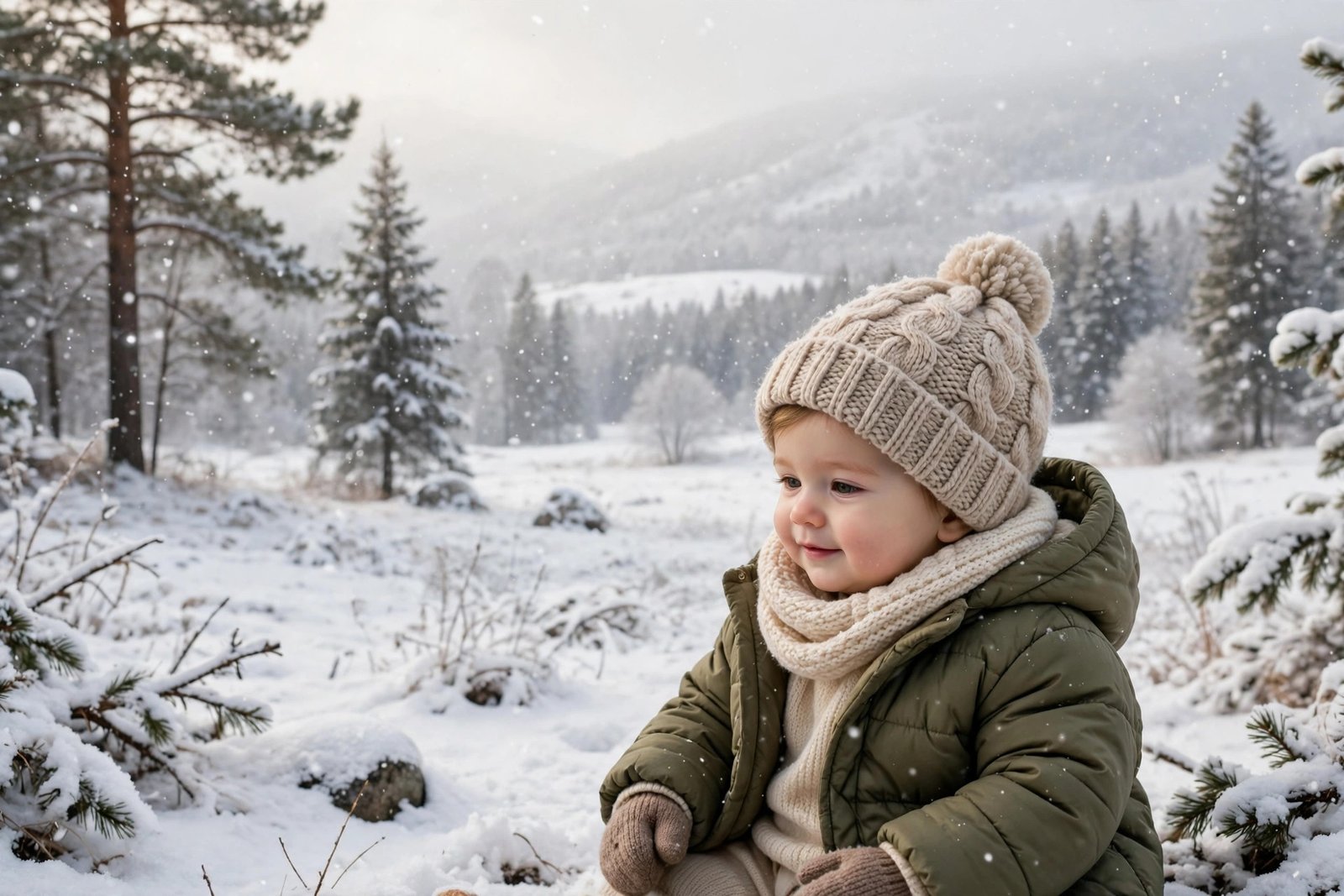
This best baby winter clothes layering guide for cold days will help you dress your baby warmly without overheating them. Babies lose heat faster than adults and cannot tell you when they are too hot or too cold, so getting layers right matters. A simple system works in almost any winter weather: a snug base layer, a warm middle layer, and a weatherproof outer layer.
The golden rule is simple: dress your baby in one more layer than you would wear yourself in the same conditions. Then check them regularly. A baby who is comfortably warm feels warm on their chest or tummy, not on their hands, which are often cool even when they are fine.
The three-layer system
1. Base layer: soft and snug
The base layer sits against the skin and keeps warmth in while letting moisture out. Choose a long-sleeved bodysuit or vest in soft cotton, bamboo or merino wool. Merino is excellent for winter because it stays warm even if it gets a little damp. Avoid scratchy fabrics and anything with loose threads near tiny fingers. The base layer should be snug but not tight, with no bulky seams that dig in.
2. Middle layer: warmth
The middle layer provides insulation. A fleece sleepsuit, a knitted jumper or a soft all-in-one works well. For very cold days, add leggings under a dress or dungarees. This layer traps warm air, which is what actually keeps your baby warm, so a slightly loose fit here is better than a tight one. If you are heading indoors, this middle layer is usually enough on its own.
3. Outer layer: weather protection
The outer layer protects against wind, rain and snow. A padded snowsuit or pramsuit is ideal for outings, while a warm coat works for toddlers who are walking. Look for a hood, covered zips and cuffs that turn over little hands. For babies in a pram, a cosy footmuff or pram blanket can replace a heavy snowsuit and makes temperature control much easier.
Dressing for different temperatures
- 10 to 15°C, cool and mild: base layer plus a light jumper or cardigan, with a hat if it is windy.
- 5 to 10°C, chilly: base layer, fleece middle layer and a warm coat or pramsuit, plus a hat and socks.
- 0 to 5°C, cold: full three layers, a snowsuit or footmuff, a warm hat, mittens and thick socks or booties.
- Below 0°C, freezing: all of the above, with extra care to cover ears, hands and feet, and shorter outings with regular checks.
These are guides, not rules. Wind, rain and sunshine change how cold it feels, and an active toddler generates more heat than a baby lying still in a pram. Adjust as you go.
Hats, mittens and socks: the essentials
Babies lose a lot of heat from their heads, so a soft hat that covers the ears is essential outdoors in winter. Choose one that ties gently under the chin or fits snugly so it stays on. Mittens keep little hands warm and are safer than gloves for babies, whose fingers are too small to separate comfortably. For feet, warm socks inside a sleepsuit or booties work well; check that shoes and socks are not so tight that they restrict circulation.
Car seats and winter coats: an important safety note
Never put your baby in a car seat wearing a thick, puffy snowsuit. The padding compresses in a crash, leaving the harness too loose to protect them. Instead, dress your baby in thinner layers for the car, tighten the harness properly, and then place a blanket over the top of the harness. Remove the blanket once the car warms up. The same rule applies to toddlers in bulky coats.
How to tell if your baby is too hot or too cold
Check your baby’s chest or tummy, not their hands or feet. Signs of being too cold include a cool chest, pale skin and unusual fussiness or quietness. Signs of overheating include a sweaty neck, flushed cheeks, damp hair and restlessness. If your baby feels sweaty, remove a layer. If they feel cool on their chest, add one. Indoors, remove the outer layer straight away; babies overheat indoors far more often than they get cold.
Winter dressing mistakes to avoid
- Dressing in one very thick outfit instead of layers you can adjust.
- Forgetting a hat on a windy day.
- Leaving wet clothes on after rain or snow play.
- Using blankets loosely in a cot, which is a safety risk; use a sleeping bag with the right tog rating instead.
- Keeping the snowsuit on indoors, in shops or in a warm car.
Night-time layering in winter
At night, dress your baby in a vest and sleepsuit, plus a baby sleeping bag rated for the room temperature. A room temperature of 16 to 20°C is ideal. A 2.5 tog sleeping bag suits most winter nights, while a 1 tog bag suits a warmer room. Never use loose blankets, duvets or pillows in a baby’s cot, and never add a hat indoors at night.
With the three-layer system, regular checks and a warm hat, winter outings can be comfortable and enjoyable for both of you. Dress in layers, adjust often, and trust the chest check over cold little hands. For more seasonal baby care advice, visit our homepage.