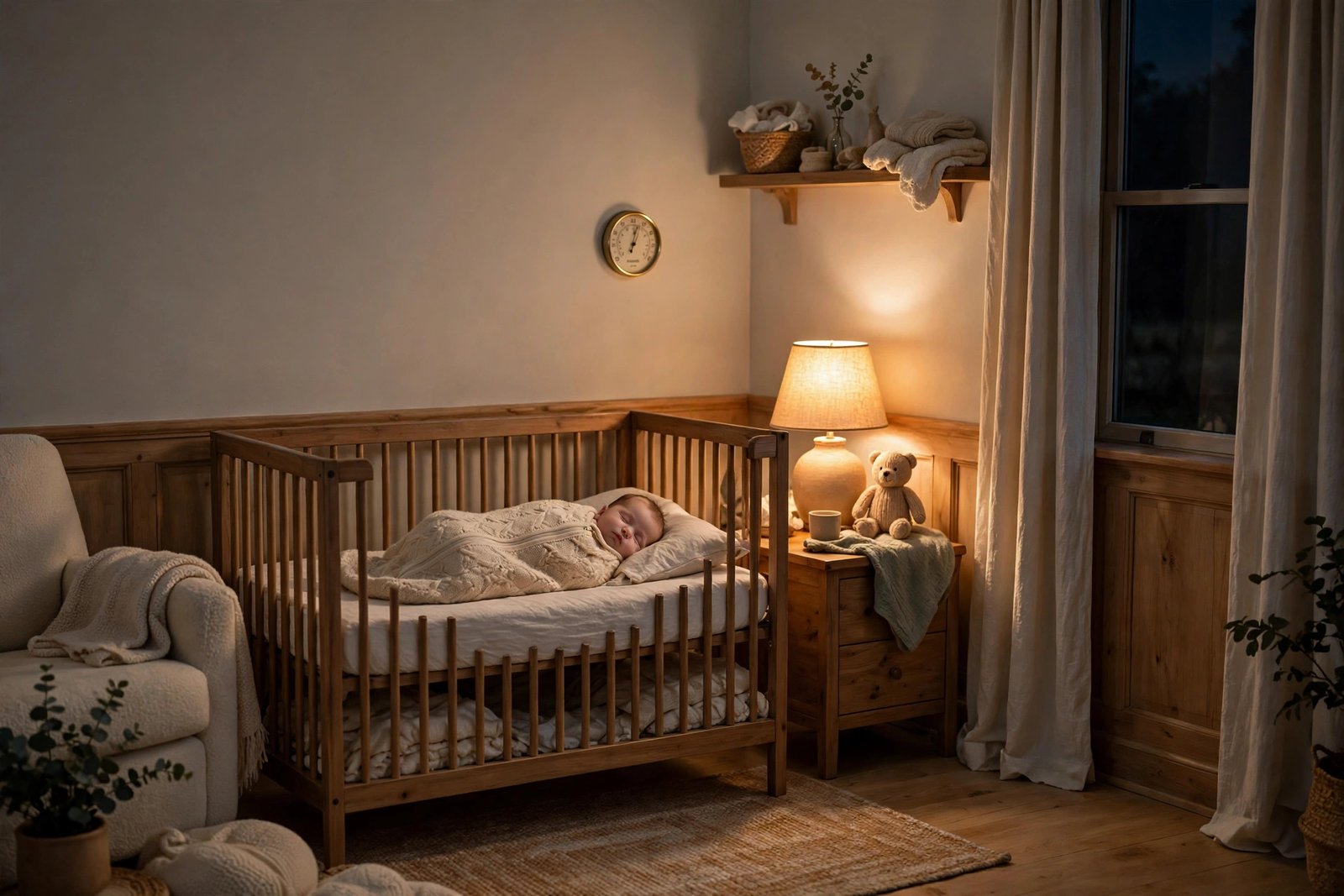
Every new parent has stood in the nursery doorway at midnight, hand hovering over the thermostat, wondering the same thing: is my baby too hot or too cold? Room temperature matters more than most of us realise. Babies cannot regulate their body heat the way adults can, and getting the room right is one of the simplest things you can do for safe, comfortable sleep.
The Ideal Temperature Range
Paediatric sleep experts recommend keeping the nursery between 20 and 22 degrees Celsius (about 68 to 72 Fahrenheit). This range works because it keeps a baby comfortable without the risk of overheating, which research has linked to an increased risk of sudden infant death syndrome.
Think of it this way: aim for a room that feels comfortable to a lightly dressed adult. If you walk in and feel warm, the room is probably too warm for the baby. A room that feels slightly cool to you is usually just right for them, because babies sleep under extra layers like sleep sacks.
How to Check Whether Your Baby Is Comfortable
A room thermometer takes the guesswork out of it, but your baby’s body gives you clues too. The best spot to check is the back of the neck or chest — these areas tell you the truth about how your baby feels.
- Comfortable: chest and neck feel warm, not hot, and the skin looks normal.
- Too warm: sweaty hair, flushed cheeks, rapid breathing, or a hot, damp neck.
- Too cold: cool chest, or hands and feet that feel very cold and look mottled.
Do not judge by hands and feet alone — babies’ hands and feet are often cool even when they are perfectly warm, because their circulation is still developing.
Dressing Your Baby for the Room Temperature
Once you know the room temperature, dress the baby to match it. A simple guide:
- 22°C and above: a light vest and a thin sleep sack or sheet.
- 20–22°C: a vest with a medium-weight sleep sack (1.0 tog is ideal).
- 18–20°C: a long-sleeved vest or pyjamas with a warmer sleep sack (2.5 tog).
- Below 18°C: warm the room rather than piling on layers — rooms this cold make it hard for anyone to sleep well.
Skip blankets, pillows, and soft toys in the cot for babies under twelve months. A sleep sack is safer and keeps the warmth even when your baby wriggles around. For more sleep and safety guidance, browse the articles at Healthy Baby Guide.
Seasonal Adjustments
In Summer
Keep the room from overheating on hot nights. Close curtains or blinds during the day to block the sun, open windows in the evening for a breeze, and consider a fan (placed where it does not blow directly on the baby). Dress the baby in light clothing and recheck the temperature before bed.
In Winter
Heating can dry out the air and push the room too warm. If you use a heater, keep it away from the cot and never use a hot-water bottle or electric blanket in the cot. A warmer sleep sack is a much safer choice than turning up the heat.
Common Mistakes to Avoid
- Overdressing: more parents overdress than underdress their babies. When in doubt, remove a layer.
- Trusting the heating display: the thermostat reading in the hallway may not match the nursery. Put a small thermometer in the room where the baby sleeps.
- Ignoring draughts: keep the cot away from windows, air-conditioning vents, and exterior walls that get very cold.
- Checking hands only: as noted, cool hands are normal — always check the chest or the back of the neck.
When to Call the Doctor
Room temperature is about comfort, not illness. But if your baby feels unusually hot or cold and will not settle, seems lethargic, refuses feeds, or has a rectal temperature above 38°C (100.4°F) if under three months old, call your paediatrician. Temperature worries about the room are normal parenting; a baby who seems genuinely unwell always deserves professional advice.
Getting the nursery temperature right takes a little attention for a few nights, then it becomes second nature. A simple thermometer, the right sleep sack, and a quick chest check are all you need — and you will both sleep better for it.