That first real smile is one of the moments every parent waits for. If you are asking when babies start smiling, and how to tell a social smile from wind, you are not alone. The answer is reassuring: most babies begin to smile socially at around six to eight weeks, and there is a wide range of normal before and after that.
For more month-by-month guidance, explore Healthy Baby Guide, where you will find practical articles on milestones, sleep and feeding in the first year.
Reflex smiles and social smiles: what is the difference?
Newborns smile from the first days of life, but those early smiles are usually reflex smiles. They happen during sleep or after a feed, and they are not a response to a person. A reflex smile is a small, brief movement of the mouth that comes and goes without eye contact.
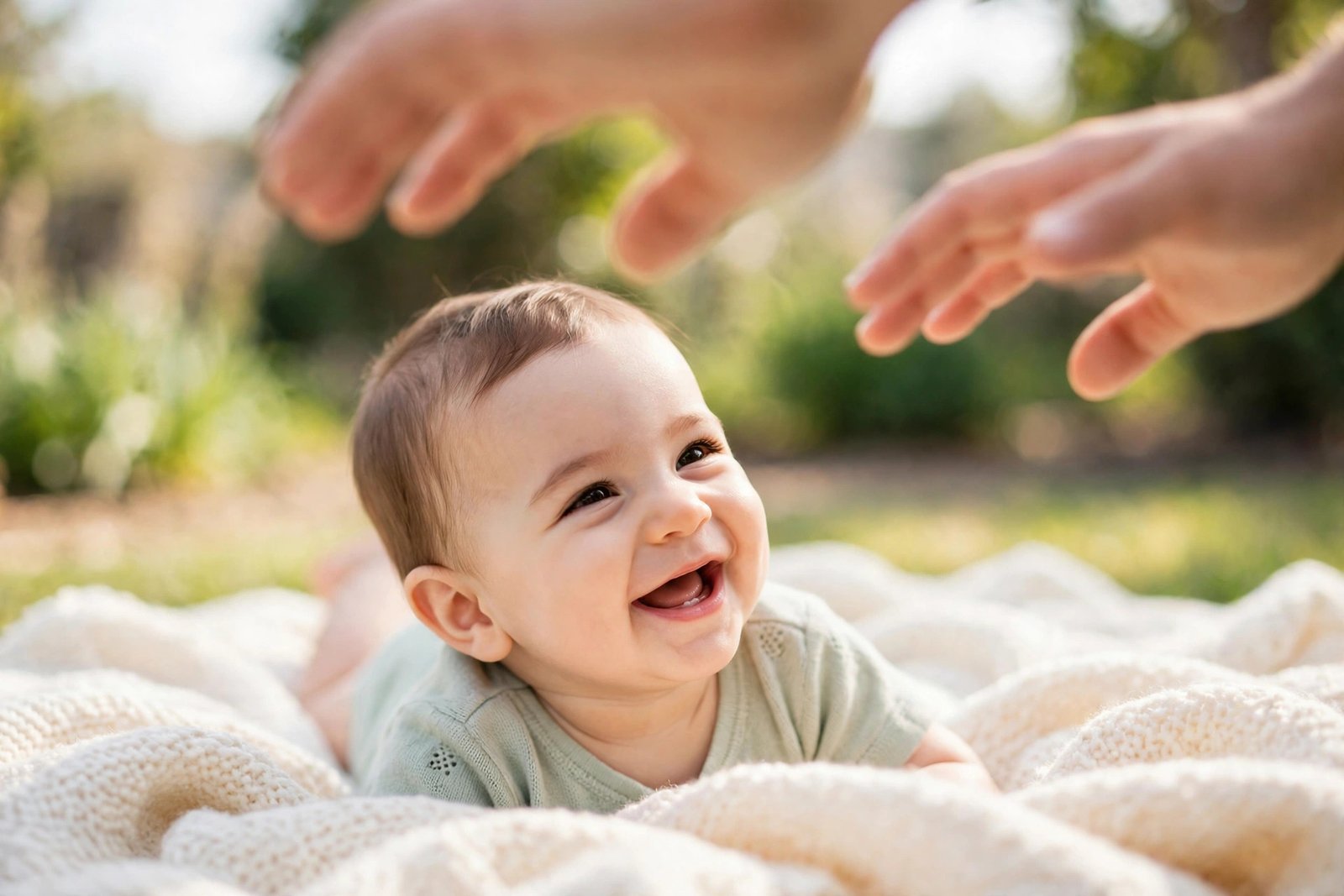
A social smile is different. Your baby looks at your face, makes eye contact, and smiles back at you. It is a deliberate social response, and it often comes with bright eyes, a relaxed body, and sometimes a little kick or wriggle. Once social smiling starts, you will usually see it more and more often, especially when you talk, sing, or pull a gentle funny face.
When do babies start smiling socially?
Most babies give their first social smile between six and eight weeks old. Some smile a little earlier, at around four or five weeks, and others take until ten or twelve weeks. Babies born early often reach this milestone based on their corrected age, counted from their due date rather than their birth date, so a premature baby may smile a few weeks later on the calendar and still be developing perfectly well.
Smiling is linked to vision and brain development. In the first weeks, a baby’s vision is blurry and focused mainly on things about 20 to 30 centimetres away, roughly the distance to a parent’s face during a feed. As vision sharpens and a baby learns to recognise familiar faces, smiling becomes a way of connecting. It is one of the earliest signs that your baby is learning that people respond to them.
First social smile signs to look for
The first social smile is often easy to miss because it is quiet and brief. Look for these signs:
- Your baby looks directly at your face and holds eye contact for a moment.
- The smile follows your voice, your smile, or a gentle touch, rather than happening at random.
- The whole face joins in, with crinkled eyes and raised cheeks, not just the mouth.
- Your baby repeats it. You smile, they smile, and the exchange happens again.
- The smile comes with happy sounds, such as coos or gurgles, as the weeks pass.
Try smiling at your baby from close range during a calm, alert period, after a feed and a nap rather than when they are tired or hungry. Talk in a warm, high voice, wait, and give your baby time to respond. Some babies need several seconds to take your face in before they smile back.
Why is my baby not smiling yet?
There are many ordinary reasons for a later first smile. Your baby may be a quieter, more watchful character who studies faces before responding. They may be tired, unwell, or going through a growth spurt. Premature babies, babies who have been unwell, and babies who are simply developing at their own pace may smile later than the average and still be doing well.
It can also be a matter of timing. If you mostly try to play when your baby is drowsy or hungry, you will see fewer smiles. Try again when your baby is awake, fed, and comfortable, in good light and without the television on in the background. A calm, face-to-face moment is the best chance for a smile.
When to talk to a health professional
Speak to your health visitor or GP if your baby is not smiling socially by around three months, if your baby rarely makes eye contact, or if you have any worry about vision, hearing, or development. Trust your instincts and ask early. A professional can check your baby’s development properly and reassure you, and early advice is always better than waiting and worrying.
This article gives general information only and is not a substitute for individual medical advice. Every baby is different, and milestones are guides, not deadlines.
How to encourage smiling without pressure
You do not need special equipment or a strict routine. Hold your baby close, talk about what you are doing, and pause to let them respond. Copy their sounds back to them. Use gentle facial expressions rather than loud, sudden ones. Sing a familiar song and watch for the moment your baby’s face lights up when they recognise it.
Short, frequent moments of connection through the day matter more than one long play session. A smile during a nappy change, a grin over the changing mat, and a happy exchange before a nap all count. And when that first social smile arrives, enjoy it. It is your baby’s first clear way of saying that they know you, and that they are glad you are there.