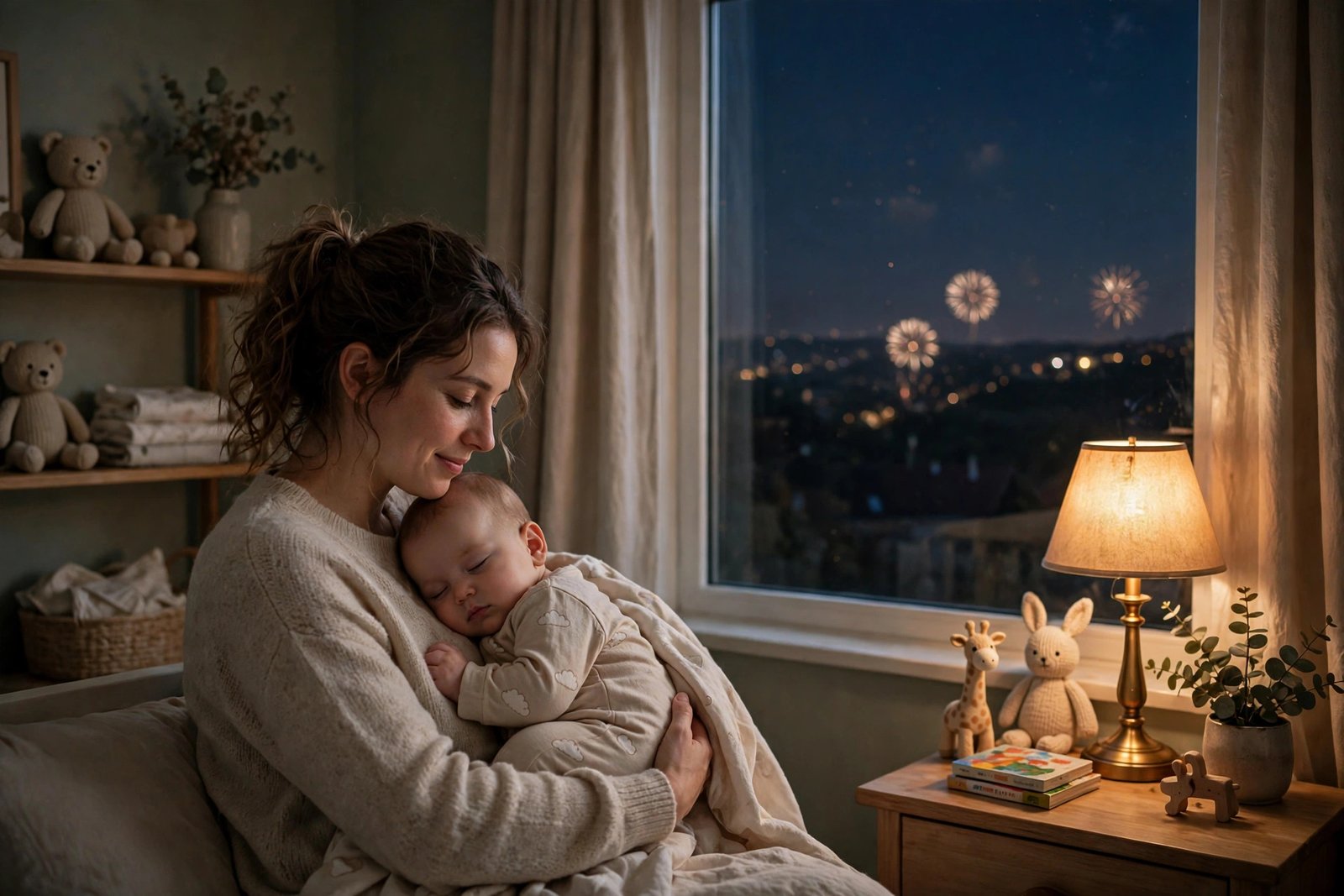
Bonfire Night can be a joyful evening for older children and adults, but for a baby it is often just a lot of sudden noise and bright light. If you are wondering how to help your baby sleep through fireworks on Bonfire Night, the good news is that a little preparation goes a long way. You cannot silence the whole neighbourhood, but you can soften the sound, keep bedtime familiar, and have a calm plan for wake-ups.
For more everyday guidance on the early months, you can browse the rest of Healthy Baby Guide for sleep, feeding and care articles written in plain, practical language.
Why fireworks disturb a baby’s sleep
Babies startle easily. A sudden bang can trigger the Moro reflex, that brief fling of the arms that makes a sleeping baby jerk awake. Newborns and younger babies also have shorter sleep cycles, so they pass through lighter sleep more often and are more likely to notice a noise. Bright flashes through curtains, a change in routine, and excited voices in the house can all add to the disruption.
It helps to remember that this is a normal reaction, not a sign that anything is wrong with your baby’s hearing or sleep. Most babies settle again once the noise fades and the room feels safe and familiar. Your job is not to create total silence, which is rarely possible, but to reduce the peaks and keep your response steady.
Prepare the room before the evening
Start with the bedroom. Close the windows and curtains before dark so that light flashes are dimmed and some outside noise is muffled. A heavy curtain helps more than a thin one. If you use a white noise machine, switch it on at the usual bedtime volume. A steady, low hum can mask the gaps between bangs, which are often what wakes a baby. Do not turn it up very loud to compete with fireworks; a comfortable background level is enough, and the machine should not sit right beside your baby’s head.
Keep bedtime as normal as possible
It is tempting to bring bedtime forward or to keep a baby up until the fireworks finish. In most cases, the usual routine works better. A warm bath, a feed, a short story or song, and lights down, in the usual order, give a baby a clear signal that the day is ending. A calm routine also helps you stay calm, and babies pick up on a parent’s tension very quickly.
If your baby is due a feed around the time the displays usually start, it is fine to feed a little earlier or a little later to fit the routine. Try not to introduce a brand-new sleep aid on Bonfire Night itself. A new gadget, a different room, or an unfamiliar bed can be more unsettling than the fireworks.
What to do during the fireworks
If your baby stirs, wait a few seconds before rushing in. Babies often whimper, shift, and resettle on their own between sleep cycles. If the crying builds, go in promptly with a calm voice and a gentle hand on the chest or tummy. Shushing at the level of a shower, rather than a loud shush, can help. Offer a feed if your baby is hungry, and keep the lights low so the room still signals night.
Try to avoid picking your baby up and carrying them around the house to look at the fireworks unless you know your baby enjoys that. For a young baby, the sudden light and noise at a window can be overwhelming. If older siblings are watching from the garden, it is kindest to keep the baby’s room as a quiet base and let one adult stay inside.
If your baby wakes fully
A full wake-up on Bonfire Night is common, and it does not mean the night is ruined. Keep things boring and dark. Change the nappy if needed, offer a feed, and use the same settling steps you use for a normal night waking. Resist the urge to start a play session or switch on bright lights, as that can make it much harder for your baby to fall back asleep once the noise stops.
If your baby will not settle, a short period of holding and rocking in the dark bedroom is usually enough. Some parents find that a sling or a gentle walk around the bedroom helps. The aim is to keep stimulation low while the displays run their course. Most local displays are over within an hour or two, and the quiet afterwards often brings sleep quickly.
When to ask for advice
Speak to your health visitor or GP if you are worried about your baby’s sleep in general, if your baby seems very distressed by everyday sounds, or if you notice anything that concerns you about hearing or development. This article is general information, not medical advice, and it is always worth asking a professional about your own baby’s needs.
With a darkened room, steady background sound, a familiar routine, and a calm response to wake-ups, most babies get through Bonfire Night with only a short interruption. Keep it simple, keep it familiar, and give both of you an early night the next day.