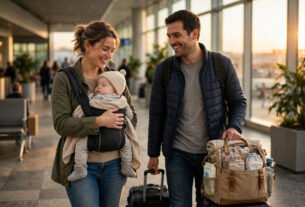
Your first flight with a baby can feel daunting before you even reach the airport. Will the baby cry? What if the ears hurt? How do you manage a nappy change at 35,000 feet? The honest answer is that flying with a baby is very doable — most parents find it easier than they feared — as long as you plan around feeding, sleep, and the few moments when pressure changes. These practical tips cover the whole journey.
Before You Book
Choose your flight time with your baby’s routine in mind. A flight that overlaps with a nap can work in your favour, while a flight during a usually alert and active period may need more entertainment. Direct flights are almost always worth it with a baby: every change adds stress, waiting, and another take-off and landing.
Check the airline’s baby policy before booking. Most airlines let infants under two fly on a lap, some free and some for a small fee, and many offer a bassinet on long-haul flights if you request one early. If you prefer your baby in their own seat, you will usually need an approved car seat. Also confirm the baggage allowance: many airlines allow a pushchair and a car seat free of charge, plus a nappy bag on top of your hand luggage.
Packing: What Actually Matters
Pack the nappy bag as if your luggage will be delayed, because the essentials must travel with you. A good first-flight packing list includes:
- More nappies than you think you need, plus nappy bags and wipes
- A full change of clothes for the baby, and a spare top for you
- Feeds, formula, or expressed milk, plus snacks for older babies
- A dummy, comfort toy, or blanket for settling
- Two or three small, quiet toys or books, ideally one new one
- Paracetamol suitable for your baby’s age, just in case
- Your baby’s passport, boarding pass, and any health documents
Keep everything in a bag that opens easily under the seat in front of you. Rummaging in an overhead locker with a baby on your lap is nobody’s idea of fun.
Take-Off and Landing: Helping Little Ears
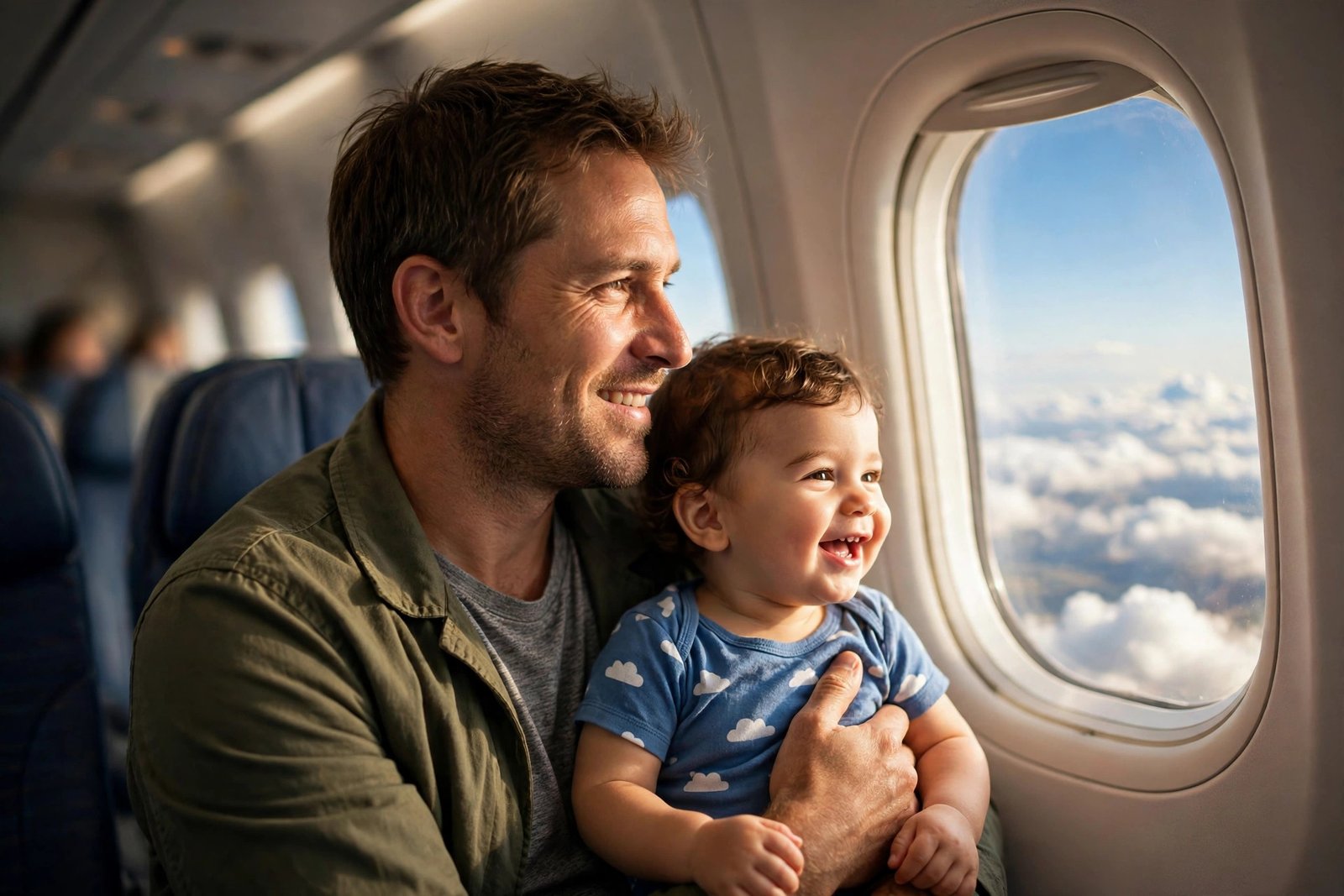
Pressure changes during take-off and landing are the part parents worry about most, and they are the easiest to help. Swallowing equalises pressure in the ears, so feeding your baby — breast, bottle, or a drink — during take-off and descent is the classic trick, and it works. For older babies, a snack or a sippy cup does the same job. A dummy can help too.
If your baby is asleep, there is no need to wake them specially. Many babies sleep straight through the pressure change without any trouble. If your baby does cry during descent, it is usually brief, and it often settles once the plane levels out or lands.
Feeding and Sleeping on Board
Feed on demand during the flight, even if it is not quite the usual time. Cabin air is dry, so babies may want fluids more often. Breastfeeding on a plane is common and accepted, and a light scarf or blanket can give you privacy if you want it. For formula, most airlines will provide hot water, and you can ask cabin crew for help warming a bottle.
For sleep, keep the routine as familiar as you can: a feed, a cuddle, the usual comfort item, and dimmed light if possible. A baby carrier is often more useful than a pushchair on board, leaving your hands free and letting your baby sleep against you. On longer flights, a bassinet — if you have booked one — can be a game changer.
Nappy Changes and Practicalities
Most planes have at least one toilet with a fold-down changing table, usually at the rear. Ask the crew which one to use. Change your baby shortly before boarding so you start the flight fresh, and do not be shy about asking for help: cabin crew deal with babies every day and are usually happy to hold a bag or warm a bottle while you sort things out.
At security, baby food, milk, and water for babies are generally exempt from the usual liquid limits, but they may be checked separately. Keep them in a clear, accessible part of your bag, and allow extra time at the airport. Arriving early removes the one thing that makes flying with a baby hardest: rushing.
If Your Baby Cries
It helps to accept in advance that your baby may cry, and that it is normal. Other passengers are usually far more understanding than parents fear, and a short cry is quickly forgotten. Walk the aisle if you can, try feeding or a change of position, and remember that the cabin noise often masks more than you think. You are not the first parent to fly with a baby, and you will not be the last.
Flying with a baby for the first time is mostly about preparation and patience: book direct, pack for delays, feed during take-off and landing, and keep your own expectations gentle. Do that, and the journey is likely to be much calmer than you imagined. For more family travel and baby care advice, visit the Healthy Baby Guide homepage.