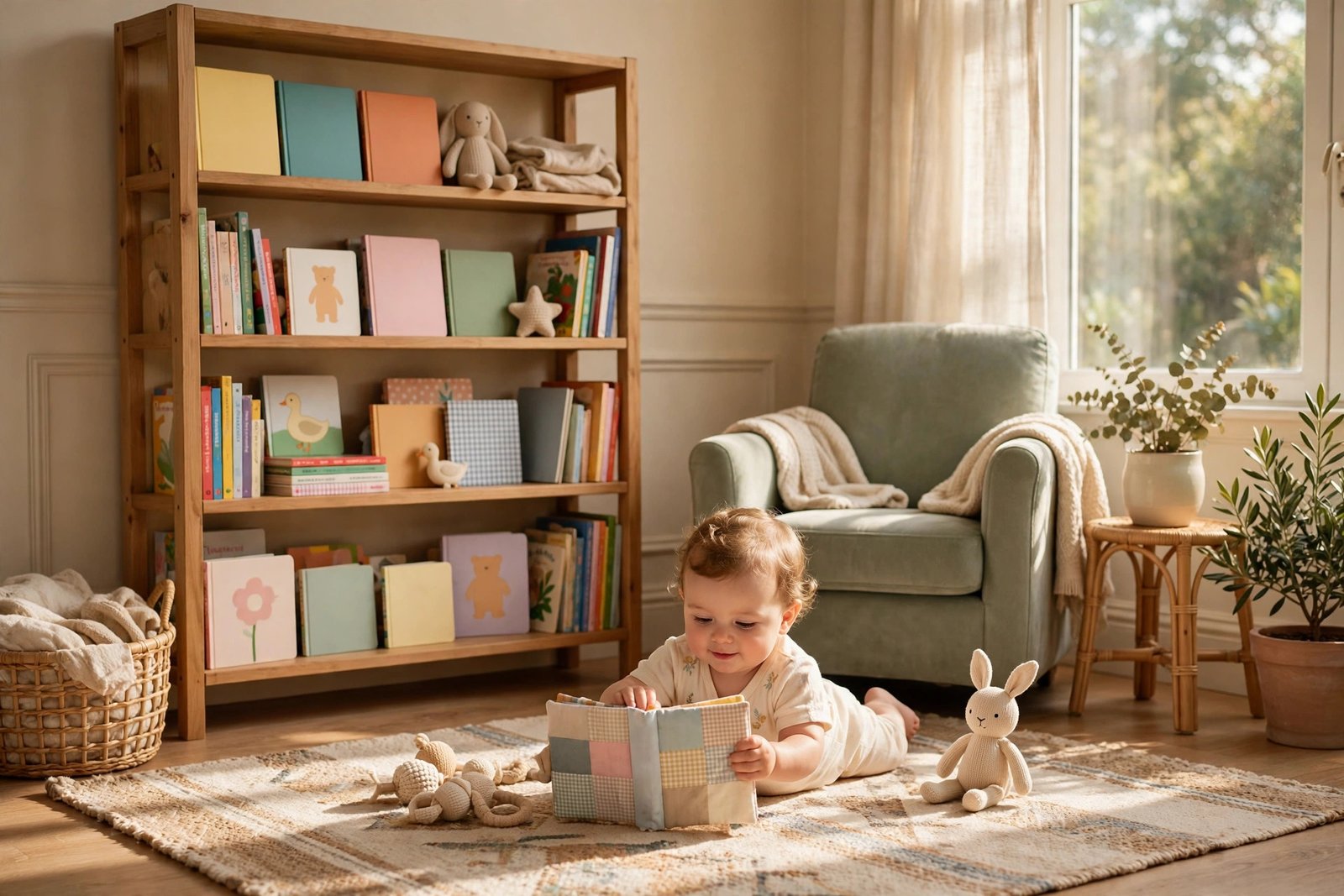
Reading to your baby from the very first months is one of the simplest and most rewarding things you can do as a parent. Even before your little one understands a single word, the rhythm of your voice, the bright pictures, and the closeness of story time all help their brain grow. If you are wondering which books are worth buying first, this guide to the best first books for babies 0 to 12 months will help you choose with confidence.
Why Reading Matters From Birth
Babies learn language by listening. When you read aloud every day, your baby hears new sounds, words, and sentence patterns, which builds the foundation for talking later on. Research consistently shows that children who are read to regularly develop larger vocabularies and stronger early literacy skills. Just as importantly, story time creates a calm, loving routine that helps your baby feel safe and connected to you.
You do not need a big library to start. A small shelf of well-chosen board books, rotated every few weeks to keep things fresh, is more than enough for the first year.
What Makes a Great First Book
When shopping for the best first books for babies, look for these features:
- Sturdy board pages: Babies grab, chew, and throw books. Thick board pages survive all of it.
- Simple, bold pictures: High-contrast images and clear illustrations hold a young baby’s attention far better than busy scenes.
- Short, rhythmic text: Rhymes and repetition are easier for babies to follow and delightful for parents to read aloud.
- Interactive elements: Flaps, textures, and mirrors invite touching and exploring, which is how babies learn.
- Safe materials: Choose books with non-toxic finishes and no small parts that could come loose.
Best First Books by Age
0 to 3 Months: High Contrast and Faces
Newborns see best in black, white, and bold colours. High-contrast picture books and books featuring baby faces are ideal at this stage. Hold the book about 20 to 30 centimetres from your baby’s face and talk about what you see together. At this age, your voice matters more than the story itself.
3 to 6 Months: Touch and Explore
As your baby starts reaching and grasping, touchy-feely books come into their own. Books with different textures, crinkly pages, and squeakers encourage sensory play. Simple animal books with one picture per page also work beautifully, giving you a chance to name each animal and make its sound.
6 to 12 Months: Rhymes, Routines, and First Words
Older babies love predictable rhymes, lift-the-flap surprises, and books about everyday routines such as bath time, bedtime, and mealtimes. Books that name familiar objects — ball, cup, dog, banana — help build first words. Let your baby turn the pages, point at pictures, and even “read” the book upside down. All of it counts.
How to Make Story Time a Daily Habit
The best time to read is whenever you and your baby are both calm and happy. Many families build reading into the bedtime routine, but a quiet moment after a feed or during tummy time works just as well. Keep sessions short — five minutes is plenty — and follow your baby’s lead. If they lose interest, that is fine; try again later.
Read with expression, point at the pictures, and pause to let your baby babble back. This back-and-forth “conversation” is exactly how language develops. You can also sing the rhymes, act out the animal sounds, and let your baby hold the book themselves.
Books to Avoid in the First Year
Skip books with thin paper pages, small detachable parts, or long blocks of text — they will frustrate both of you. Very busy illustrations can also overwhelm a young baby. If a book is not working, put it aside and try it again in a month or two; babies change quickly, and a book ignored today may become a favourite tomorrow.
Building Your Baby’s First Library
Start with five or six books covering different types: one high-contrast book, one touchy-feely book, one rhyming book, one animal book, and one bedtime book. Add a couple more as your baby grows, and visit your local library for free story sessions and new titles to try before you buy.
For more ideas on supporting your little one through every stage, explore the guides on our homepage, where you will find practical, honest advice for new parents.
The Bottom Line
The best first books for babies 0 to 12 months are sturdy, simple, and fun to share. You do not need to spend a fortune or read for hours each day. A few minutes of story time, a handful of good books, and your warm, familiar voice are all it takes to give your baby a wonderful head start with language — and memories you will both treasure.