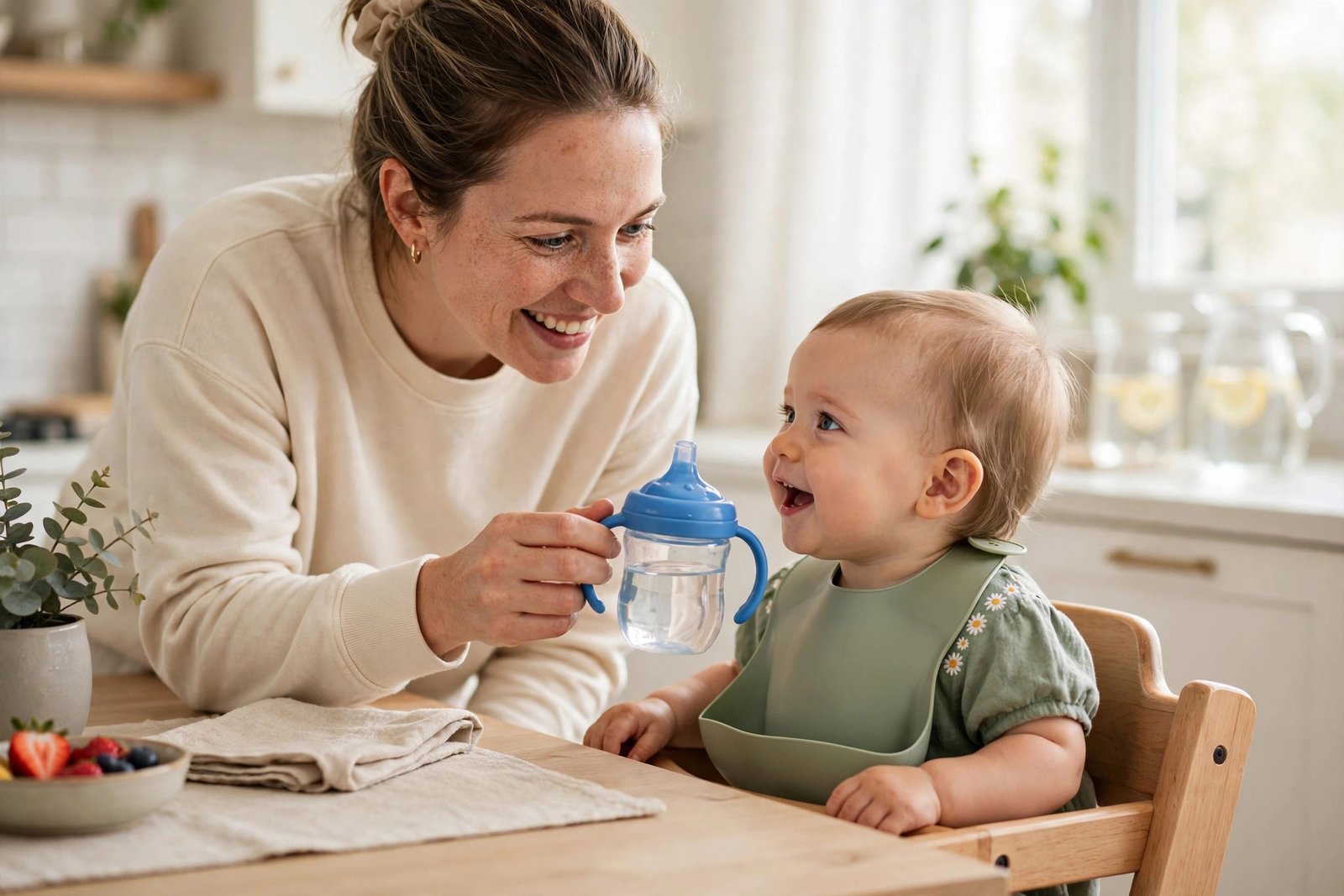
One of the most common questions new parents ask is when their baby can start drinking water, and how much is safe. Babies get all the hydration they need from breast milk or formula in the first months, so water is not needed early on. Once solids begin, however, small sips of water become part of the picture.
This guide explains the right age to start, how much water to offer at each stage, and the mistakes to avoid. For more feeding guidance, visit the Healthy Baby Guide homepage.
When Can Babies Start Drinking Water?
Most health authorities recommend waiting until around 6 months of age before offering water. Before 6 months, breast milk or formula provides all the fluid and nutrition a baby needs, and extra water can fill a tiny stomach without giving any nutrition. It can also dilute the sodium in a young baby’s blood if given in large amounts, which is why water is avoided in the early months.
At around 6 months, when you begin introducing solid foods, you can start offering small sips of water with meals. This helps your baby learn to drink from a cup and supports digestion as solids are introduced.
How Much Water Should You Give?
6 to 12 months
At this stage, water is a side drink, not the main source of hydration. Offer small sips with meals — roughly 60 to 120 ml (2 to 4 ounces) spread across the whole day is plenty. Milk feeds remain the main drink, and your baby will still get most of their fluid from breast milk or formula.
12 to 24 months
After the first birthday, as milk feeds reduce and meals become the main nutrition, water becomes more important. Toddlers typically need around 240 to 480 ml (8 to 16 ounces) of water per day, alongside milk and water-rich foods such as fruit and soup. Active toddlers and those in hot weather may need a little more.
These are general guides, not strict rules. Your baby’s exact needs depend on the weather, activity level, and how much milk and food they take. Offer water regularly, but do not force it.
How to Offer Water
- Use an open cup or sippy cup: a small open cup, held with help, is ideal from 6 months. It builds drinking skills and is better for oral development than a bottle.
- Offer it with meals: sips alongside solids teach your baby that water goes with food.
- Keep it plain: plain water is best. Avoid juice, squash and sweetened drinks, which damage teeth and add unnecessary sugar.
- Make it available: keep a cup of water within reach during play and outings so your toddler can sip when thirsty.
What Kind of Water Is Safe?
In areas with safe tap water, cooled boiled water is recommended for babies under 6 months, and ordinary tap water is fine from 6 months onwards in most places. If you use bottled water, choose one low in sodium (under 200 mg per litre) and fluoride, and boil and cool it for babies under 6 months. If you are unsure about your local water quality, ask your health visitor or doctor.
Common Mistakes to Avoid
- Giving water before 6 months: unless a doctor advises it, water is unnecessary and can be harmful in large amounts for young babies.
- Replacing milk with water: water should never replace breast milk or formula feeds in the first year.
- Offering juice instead: juice is not a substitute for water and is best avoided for babies and toddlers.
- Forcing your baby to finish a cup: let your baby drink what they want and stop when they turn away.
Signs Your Baby Is Well Hydrated
A well-hydrated baby has regular wet nappies (around 6 or more per day after the first week), a moist mouth, and is alert and active. Dry lips, fewer wet nappies, a sunken soft spot on the head, or unusual sleepiness can be signs of dehydration — contact your doctor promptly if you notice these, especially during illness or hot weather.
The Bottom Line
Wait until around 6 months, then start with small sips alongside meals. Milk stays the main drink through the first year, and water gradually takes a bigger role in toddlerhood. Keep it plain, keep it simple, and let your baby guide how much they drink.