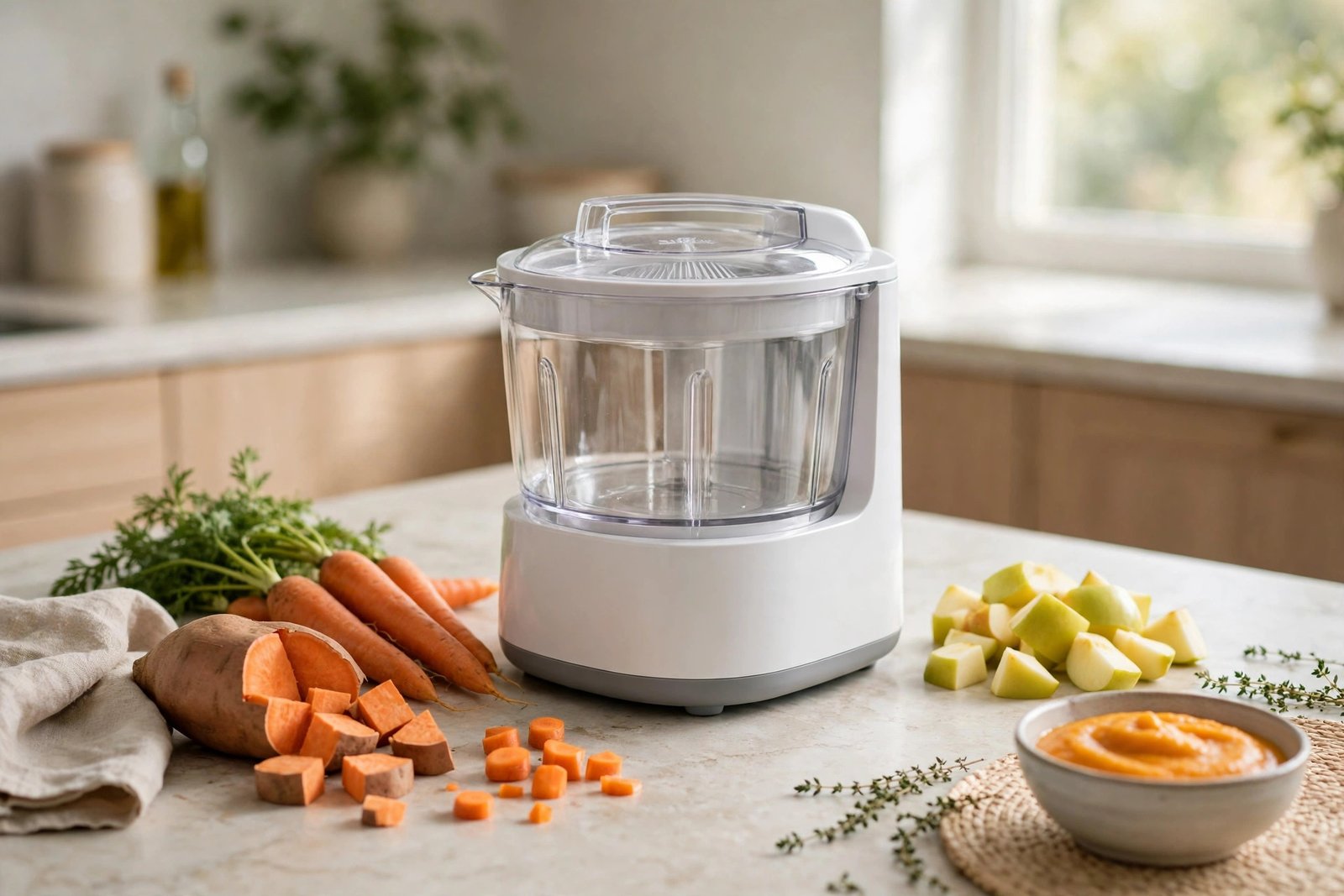
Making your baby’s food at home is one of the simplest ways to know exactly what your child is eating — no hidden salt, sugar, or preservatives. A good baby food maker takes the work out of it, steaming and blending in one machine. But with so many models on the market, how do you choose? This guide explains what to look for when finding the best baby food maker for homemade purees.
What Is a Baby Food Maker?
A baby food maker is a small kitchen appliance that steams fruit, vegetables, meat, or fish and then blends them into a smooth puree, usually in the same jug. Some models also defrost, reheat, and sterilise. Instead of juggling a steamer basket and a blender, you do the whole job in one device with one button — a real time-saver when you are cooking with a baby on your hip.
Key Features to Look For
Steaming and blending in one jug
The best models steam and blend without you having to transfer hot food between containers. This keeps nutrients in, saves washing up, and reduces the risk of spills. Look for a jug with a clear fill line and a lid that locks firmly.
Capacity that matches your needs
Most baby food makers hold between 500 ml and 1 litre. A smaller jug is fine if you cook fresh each day; a larger one suits batch cooking, where you make a week’s worth of puree in one go and freeze it in portions.
Simple controls
You will use this machine with one hand and a baby in the other, so big, simple buttons or a single dial beat a complicated touch panel. A clear steam timer and an automatic switch-off are worth having.
Easy cleaning
Look for a jug and blade that come apart easily and are dishwasher-safe. Smooth surfaces with few hidden corners make cleaning quick. Avoid models where food gets trapped under a fixed blade.
Safe materials
Choose a jug made from BPA-free plastic or glass, and check that the steaming basket is food-grade. A stable, non-slip base is important too, since the machine vibrates while blending.
Types of Baby Food Maker
- All-in-one steamer-blenders: the most popular choice — steam, blend, and often reheat in one jug.
- Blender-only models: cheaper, but you need a separate steamer, so they suit parents who already own one.
- Multi-function processors: larger machines that also chop, sterilise bottles, and warm milk. Handy, but they take more counter space and cost more.
For most families, an all-in-one steamer-blender is the best balance of price, size, and convenience.
What About Texture as Your Baby Grows?
A good baby food maker should handle more than silky-smooth puree. As your baby moves from first tastes at around six months to lumpier textures at eight or nine months, you need a machine that can pulse-blend to a chunkier finish. Models with variable speed settings or a pulse button give you that control, so the same machine grows with your baby instead of being outgrown in two months.
How Much Should You Spend?
Basic steamer-blenders start at a modest price and do the job well. Paying more usually buys a bigger capacity, quieter motor, glass jug, or extra functions like sterilising. You do not need the most expensive model to make safe, healthy purees — focus on build quality and ease of cleaning rather than extra features you may never use.
Tips for Making Great Homemade Purees
- Start with single vegetables such as carrot, sweet potato, or butternut squash, and introduce one new food at a time.
- Steam rather than boil — steaming keeps more vitamins in the food.
- Add a little of the steaming water or breast milk to reach the right consistency.
- Cool purees quickly and freeze them in ice-cube trays or small pots for easy portions.
- Label every batch with the food and the date, and use frozen purees within a month.
Is a Baby Food Maker Worth It?
If you plan to make most of your baby’s food at home, yes — a steamer-blender saves time, reduces washing up, and makes batch cooking easy. If you will only make purees occasionally, a small hand blender and a steamer basket may be enough. Either way, the real value is in the food itself: fresh, simple ingredients, prepared at home, with nothing added that your baby does not need.
Choose a model that steams and blends in one jug, is easy to clean, and is made from safe materials — and you will have a helper that earns its place on your kitchen counter for the whole weaning journey. For more weaning and feeding guides, visit the Healthy Baby Guide homepage.