You have done the bath, the story, the lullaby — and the moment you step towards the door, your baby cries as if you are leaving forever. Separation anxiety at bedtime is one of the most common and most exhausting phases of babyhood. It is also a sign that your baby’s development is right on track. Here is why it happens, and how to help your baby through it calmly.
Why Babies Develop Separation Anxiety
Between around eight and eighteen months, babies learn a big new idea: that things continue to exist even when they cannot see them. This is called object permanence, and it is a wonderful milestone — but it also means your baby now understands that you have gone somewhere when you leave the room. They just do not yet understand that you will come back.
At bedtime this fear is at its strongest. Your baby is tired, the room is dark, and the day’s distractions are gone. Crying when you leave is not manipulation and it is not a failure of your routine. It is your baby saying, in the only way they can, “Stay with me, I feel safe when you are here.” You can read more about normal baby development on the Healthy Baby Guide homepage.
Build a Predictable, Calming Bedtime Routine
Predictability is the antidote to anxiety. When your baby knows exactly what happens next, the world feels safer. Keep the routine the same every night, in the same order, for about twenty to thirty minutes:
- A warm bath or a gentle wipe-down.
- Pyjamas and a fresh nappy.
- A quiet story or a soft song.
- A cuddle, a kiss, and the same goodnight phrase every night.
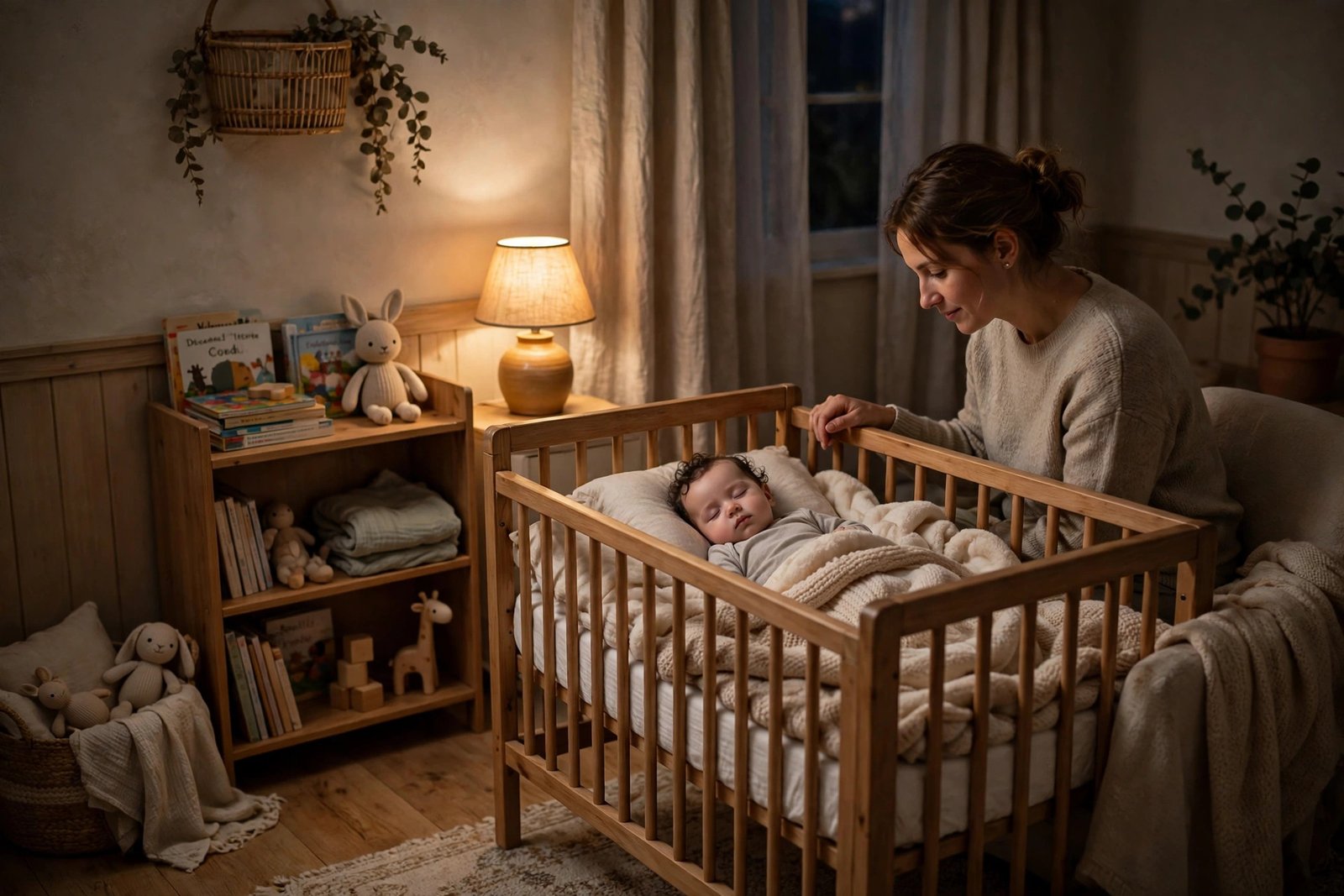
- Lights low, and into the cot while still awake but drowsy.
The exact steps matter less than their consistency. After a week or two of the same sequence, your baby will start to relax as soon as the routine begins, because they know what comes next.
Help Your Baby Practise Separations During the Day
Bedtime is the hardest time to practise being apart, so build confidence during the day instead. Play peekaboo and hide-and-seek — these games teach your baby that people disappear and come back, and that coming back is fun. Leave the room for a few seconds and return with a smile. Say a clear goodbye when you leave (“Mummy is going to the kitchen, I’ll be right back”) instead of slipping away unnoticed, which teaches your baby that people can vanish without warning.
A Comfort Object Can Help
A soft toy, a small blanket, or a muslin cloth that smells of you can become a powerful source of comfort at bedtime. Offer it during feeds and cuddles so it picks up your scent and your baby associates it with safety. Once your baby is attached to it, the comfort object stays in the cot when you leave the room — a small piece of you that does not leave. Make sure it is safe for unsupervised sleep: no loose parts, ribbons, or anything that could cover your baby’s face.
How to Leave the Room Calmly
When it is time to go, keep your goodbye short, warm, and confident. Lingering, returning again and again, or showing your own worry can make your baby more anxious, not less. Try this:
- Say the same phrase every night, such as “Goodnight, I love you, I’ll see you in the morning.” Your baby will learn that this phrase means you are leaving — and that morning always comes.
- Leave while your baby is drowsy but awake. If they always fall asleep in your arms, waking alone in the cot can be frightening. Drowsy but awake gives them the chance to practise falling asleep on their own.
- If they cry, wait a short while before going back in. Many babies settle within a few minutes. If the crying continues, go in, comfort them briefly with a calm voice and a gentle hand, then leave again with the same goodnight phrase.
- Keep night visits boring. Low light, quiet voice, no play. Your baby should learn that night-time is for sleep, not for company.
What Not to Do
Do not start a new sleep training method in the middle of a big change, such as starting nursery or moving house — your baby has enough to cope with. Do not punish crying or show frustration; your baby cannot control this fear. And do not feel guilty for wanting your evenings back. Looking after your own rest makes you a better, calmer parent during the day.
When to Seek Extra Support
Separation anxiety usually peaks between ten and eighteen months and fades gradually as your child grows. But speak to your health visitor or GP if your baby’s distress seems extreme, if it is getting worse rather than better over several months, or if it is paired with other worries such as poor feeding, very little sleep, or distress during the day as well as at night. There is no shame in asking for help — that is what health visitors are for.
The Reassuring Truth
Separation anxiety is a sign of a healthy attachment. Your baby cries because your presence matters to them, and that is something to be glad about, even at 2am. With a steady routine, small daytime practice, and calm, consistent goodbyes, most babies work through this phase within a few months. Stay patient, stay boring at night, and trust that the phase will pass.