If your baby has red, itchy patches on their cheeks, elbows, or knees, you are probably dealing with eczema. It is one of the most common skin conditions in babies, and while it can look uncomfortable, it is usually very manageable at home. Before trying anything new on your baby’s delicate skin, here is a gentle guide to safe home remedies that actually help — and the ones to avoid.
What Causes Baby Eczema?
Eczema (also called atopic dermatitis) happens when the skin’s natural barrier is not doing its job, letting moisture out and irritants in. Genetics play a big role — if you or your partner had eczema, asthma, or hay fever, your baby is more likely to develop it. Common triggers include fragrances in soaps and lotions, heat and sweat, wool or rough fabrics, dry winter air, and sometimes certain foods. The good news: most babies outgrow eczema, and careful daily care keeps flare-ups under control.
Safe Home Remedies That Actually Work
1. Keep Baths Short and Lukewarm
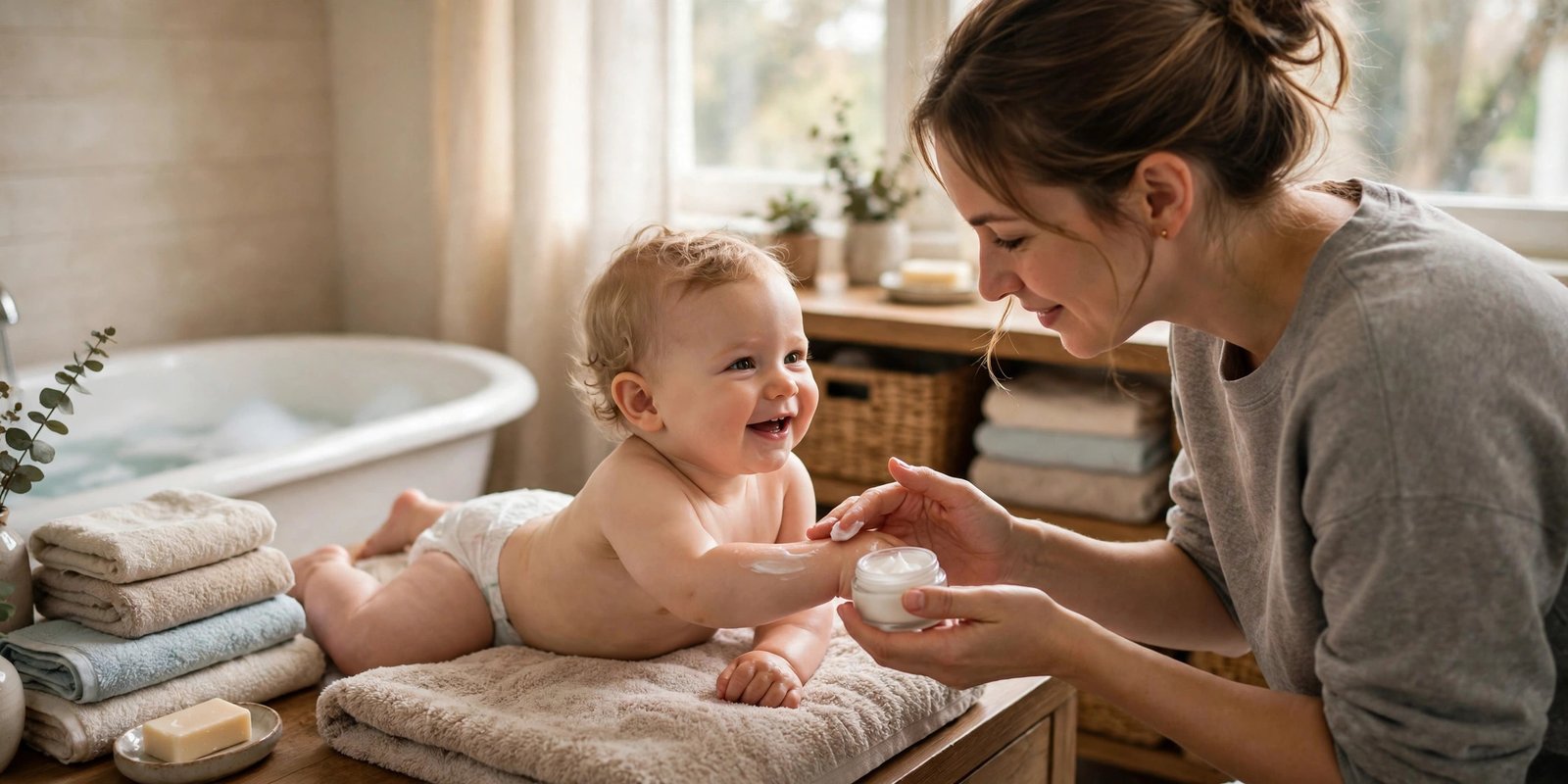
A daily bath of 5 to 10 minutes in lukewarm water is one of the best things you can do. Use a mild, fragrance-free cleanser made for babies, and only on areas that truly need soap. Within three minutes of the bath, pat (don’t rub) your baby dry and apply moisturiser to damp skin. This “soak and seal” routine locks in moisture and is recommended by paediatric dermatologists worldwide.
2. Moisturise Generously, Twice a Day
Plain petroleum jelly and thick, fragrance-free creams are the safest moisturisers for baby eczema. Apply at least twice daily, and more often during flare-ups. Avoid lotions in pump bottles for daily eczema care — they contain more water and preservatives, which can irritate. A simple rule: if it smells nice, it probably isn’t right for eczema skin.
3. Try a Lukewarm Oatmeal Bath
Colloidal oatmeal (finely ground oats) has real anti-inflammatory properties and is a genuinely safe remedy for itchy baby skin. Stir a few tablespoons of colloidal oatmeal into a lukewarm bath and let your baby soak for 10 minutes. You can buy it pre-ground, or make your own by blending plain, unflavoured oats into a fine powder. Rinse lightly and moisturise right after.
4. Use a Cool, Damp Cloth for Itchy Spots
When your baby is scratching one particular patch, a cool damp washcloth held gently on the area for a few minutes can calm the itch quickly. Follow it with moisturiser. This is far safer than scratching, and it works almost instantly on warm, irritated skin.
5. Choose Soft, Breathable Clothing
Dress your baby in soft cotton clothing, wash all new clothes before wearing, and use a fragrance-free laundry detergent. Skip fabric softeners and dryer sheets, which leave irritating residue. In hot weather, light layers help prevent sweat-triggered flare-ups.
What to Avoid
- Home remedies with essential oils — tea tree, lavender, and other oils can burn or irritate baby skin, even when diluted.
- Apple cider vinegar baths — too acidic for a baby’s skin barrier and can cause stinging.
- Honey or herbal poultices — infection risk is not worth it on broken skin.
- Steroid creams without medical advice — these are medicines, not home remedies. Ask your doctor before using any medicated cream.
When to Call the Doctor
Home care handles most mild eczema, but see your paediatrician if the skin is cracked and oozing, if you see yellow crusts or pus (signs of infection), if your baby is clearly in pain or losing sleep, or if the eczema is not improving after two weeks of consistent care. A doctor may prescribe a mild topical treatment and can check whether a food allergy or another condition is involved.
Eczema in babies is common, and with consistent gentle care, most little ones stay comfortable. For more everyday guidance, explore our newborn care articles for practical tips that make parenting a little easier.