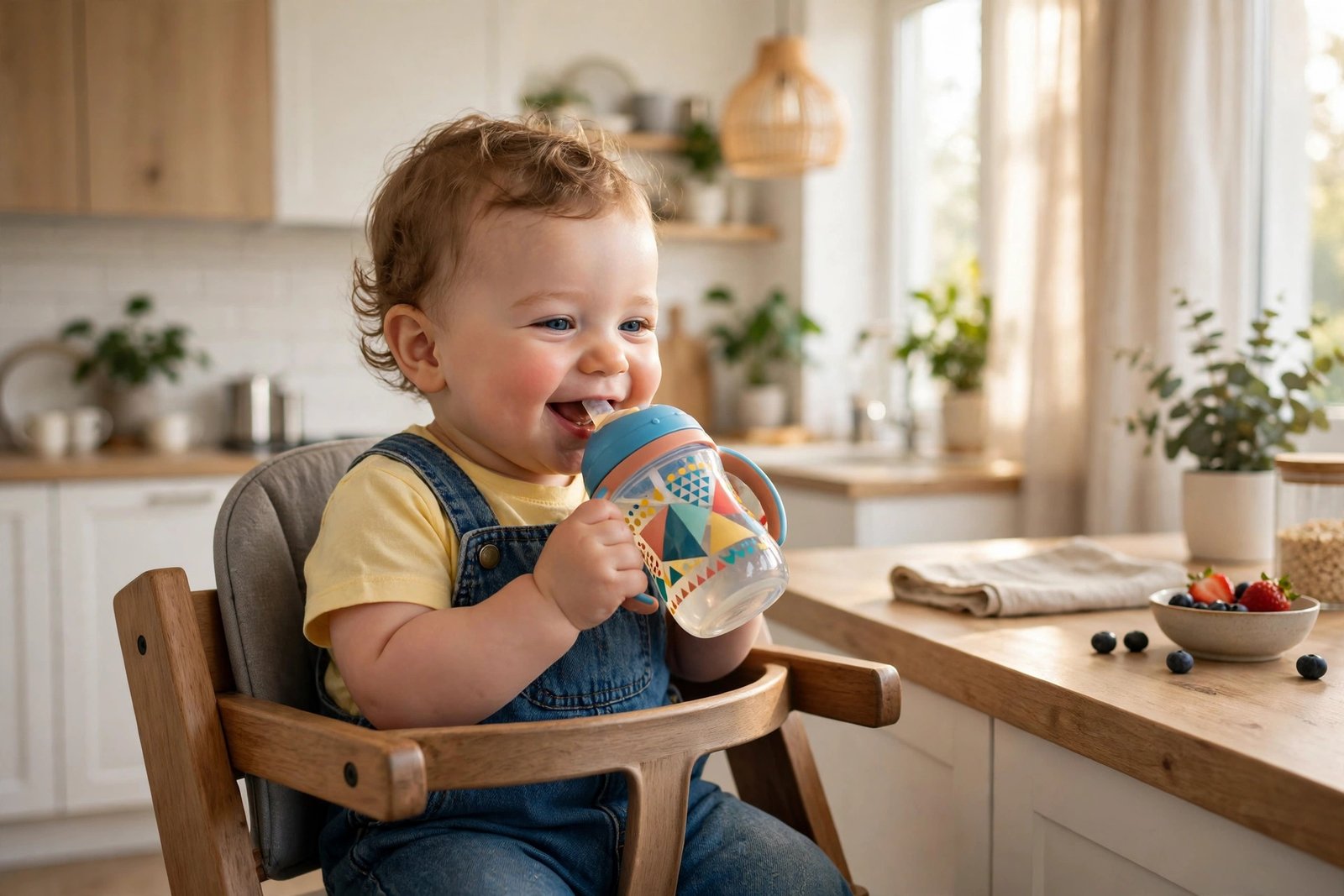
Learning how to introduce a sippy cup to a baby is one of those small milestones that makes a big difference. Moving from breast or bottle to a cup teaches your baby new oral-motor skills, supports speech development, and sets the stage for eventually saying goodbye to the bottle. Done gently and at the right time, most babies take to a cup more easily than parents expect.
When to start: around 6 months
Most health experts suggest introducing a cup at around six months, alongside the start of solid foods. At this age your baby can sit with support and is developing the coordination to bring objects to the mouth — both essential for cup drinking. The first weeks are just practice — there is no rush, and a baby who is not interested at six months can try again at seven or eight.
One important note: the cup is an addition at this stage, not a replacement. Breast milk or formula remains your baby’s main source of nutrition and hydration until twelve months, so the cup is simply for small sips and skill-building.
Choosing the right cup
The cup aisle can be overwhelming, so here is what actually matters:
- Open cup (best first choice). A tiny open cup is what feeding specialists recommend most: it teaches proper lip and tongue movement, with no valve to fight. Expect spills — that is part of the learning.
- Straw cup. A good second option. Sucking through a straw strengthens the same mouth muscles used for speech and is easier to carry out and about than an open cup.
- Spout or “sippy” cup. The classic spout cup is convenient and spill-proof, but hard spouts can encourage an immature sucking pattern, and some babies find the valve frustrating. Choose a soft spout and treat it as a stepping stone.
Choose a cup that is easy to take apart and clean — hidden valves and crevices can harbour mould. BPA-free plastic, silicone, or stainless steel are all fine.
Step-by-step: introducing the cup
Step 1: Let your baby explore it empty
Hand over the cup with no pressure and let your baby bang it, chew the rim, and turn it upside down. A baby who has played with the cup for a few days is far more willing to drink from it.
Step 2: Offer tiny amounts of water
Put a tablespoon or two of water in the cup and hold it to your baby’s lips, tipping slowly so a small sip reaches the mouth. Offer it at mealtimes, when your baby is already in the highchair and in “eating mode”.
Step 3: Make it part of the routine
Offer the cup at every meal and snack time. Consistency matters more than quantity — even a few sips a day builds the skill. Praise the effort warmly; never force the cup or hold it to a resisting baby’s mouth.
Step 4: Let them take over
Once your baby reaches for the cup, let them hold it with both hands while you steady the base. Put a mat under the highchair and embrace the chaos — self-feeding builds independence fast.
Handling refusal
Some babies reject every cup for weeks. This is normal, not a failure. Try these troubleshooting moves:
- Switch the cup type. A baby who hates the spout may love a straw, and vice versa — sometimes a different colour or shape is all it takes.
- Change the contents. Try breast milk or formula in the cup instead of water — the familiar taste can bridge the gap.
- Model it. Drink from your own cup with obvious enjoyment. Babies are relentless imitators.
- Back off for a week. Pressure creates resistance. Put the cup away, try again in seven days, and you will often find a suddenly willing baby.
Weaning off the bottle: the timeline
Experts generally recommend weaning from the bottle between 12 and 18 months, ideally finishing by around 15 months. Prolonged bottle use is linked to tooth decay and can dull appetite for solids. A gentle approach works best:
- From 9–12 months, gradually replace one bottle feed at a time with a cup, starting with the midday feed.
- Keep the bedtime bottle for last — it is usually the most emotionally loaded one.
- By 12–15 months, aim for all drinks from a cup, with milk served in the cup at mealtimes.
If your baby is deeply attached to the bottle, go slowly rather than cold turkey. A gradual transition over several weeks is kinder and more likely to stick.
Cleaning tips
Cups need thorough cleaning because milk residue and moisture breed bacteria and mould:
- Disassemble every part — valves, straws, lids — after each use and wash in hot soapy water.
- Use a small straw brush for straw cups; run water through the straw to check it is clear.
- Let all parts air-dry completely before reassembling — trapped moisture is where mould starts.
- Inspect silicone parts regularly and replace them if they smell musty or show dark spots.
The bottom line
Introducing a sippy cup is a skill built sip by sip: start around six months with an open or straw cup, offer it at every meal, let your baby make a glorious mess, and do not panic over refusal — trying again next week usually does the trick. For more on feeding milestones and baby nutrition, explore the rest of our guides at Healthy Baby Guide.