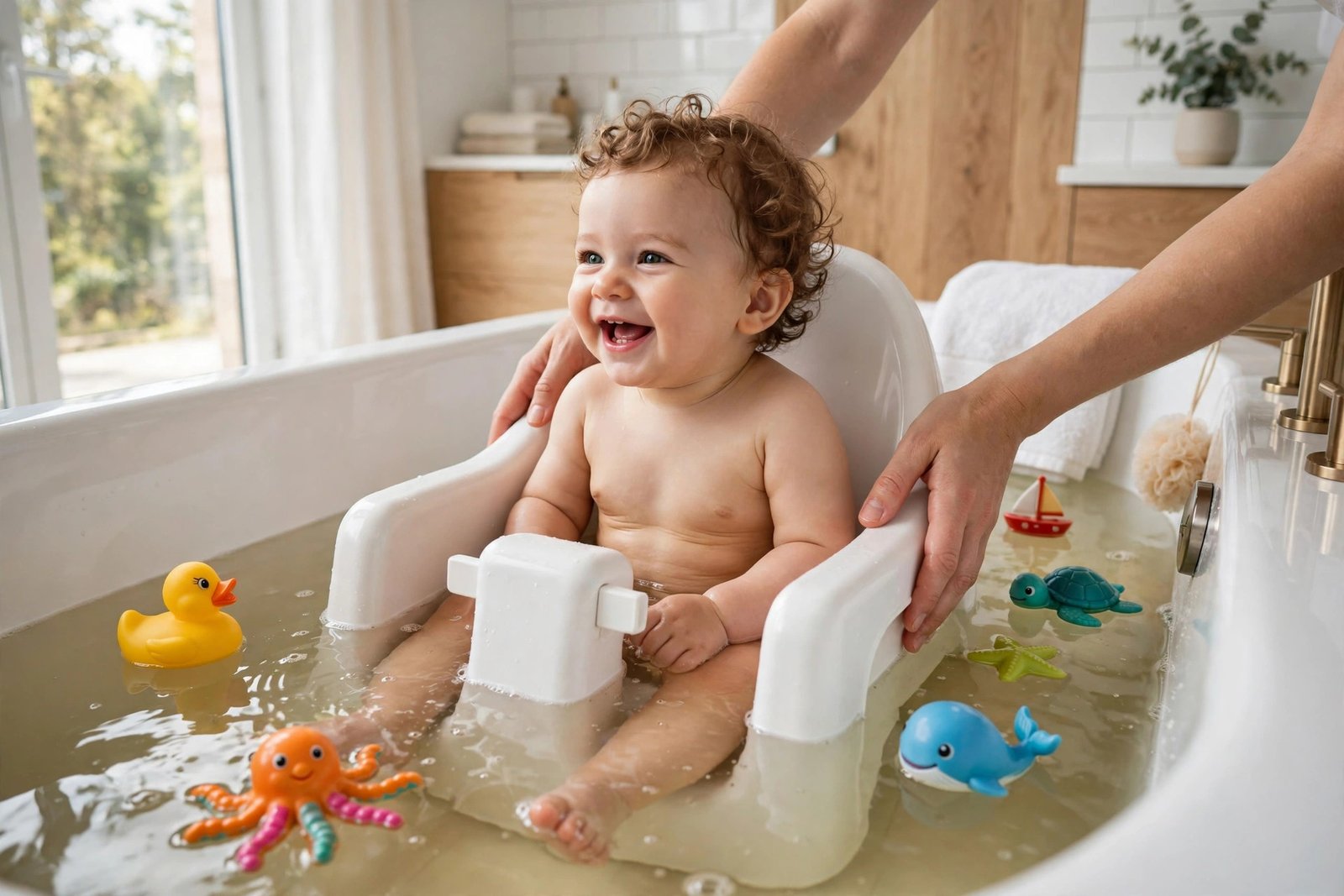
Bath time should be one of the happiest parts of the day, but the moment your baby starts sitting up, it can feel a little less relaxing. A wriggly baby in a slippery tub is a recipe for stress, which is why so many parents look for a baby bath seat. The right seat gives your little one support, keeps them upright, and lets you wash them with both hands free. The wrong one, though, can give a false sense of security. Here is how to choose the best baby bath seat for sitting babies safely, and how to use it properly.
What Is a Baby Bath Seat?
A baby bath seat is a small moulded chair, usually made from plastic, that sits inside a regular bath or a large baby bath. It holds your baby in a sitting position, with a backrest, a front bar or tray, and often suction cups on the base to stop it sliding around. Some seats are fixed in place, while others are freestanding and can be lifted out of the water.
Most bath seats are designed for babies who can sit unaided, usually from around six months old, up to about 12 to 15 months, or until your child can pull themselves up to standing. Always check the weight and age limits printed on the product, because they vary between brands.
What to Look for in a Safe Bath Seat
Not every seat on the market is equally safe. Before you buy, check for these features.
Strong Suction Cups
The base should have several large suction cups that grip the bath firmly. Press the seat down on a smooth, clean surface and try to wobble it. If it slides easily, it is not safe enough. Remember that suction cups do not stick well to textured or non-slip bath surfaces, so check your bath type first.
A Sturdy, Wide Base
A wide base is much harder to tip over than a narrow one. Look for a seat that feels solid and low to the ground, with no wobble when your baby leans to one side.
A Secure Front Bar and Backrest
The front bar should close firmly and stay in place, and the backrest should support your baby without letting them slump sideways. Avoid seats with gaps your baby could slip through.
Easy to Clean
Bath seats get soapy and damp every day, so mould can build up quickly. Choose a seat with smooth surfaces and as few nooks and crannies as possible, and let it dry fully between baths.
The Golden Rule: Never Leave Your Baby Alone
This is the most important thing to understand about any bath seat. A bath seat is a support aid, not a safety device. Babies can slip, tip over, or slide under the water in seconds, even in a shallow bath and even in a seat that seems secure. Never leave your baby unattended in the bath, not even to answer the door or grab a towel. Have everything you need within arm’s reach before you start, and keep one hand on your baby at all times.
Keep the water shallow too, no more than waist height when your baby is sitting, and always test the temperature with your elbow or the inside of your wrist. It should feel warm, not hot, around 37°C.
How to Use a Bath Seat Safely
- Place the seat on a flat, smooth part of the bath and press the suction cups down firmly before putting your baby in.
- Fill the bath first, then test the water temperature before your baby goes in.
- Lower your baby into the seat gently, making sure they are sitting upright and comfortable.
- Stay within arm’s reach for the whole bath, and keep your attention on your baby, not your phone.
- When bath time is over, lift your baby out first, then drain the water and remove the seat.
- Rinse the seat after every use and let it dry completely to prevent mould.
When Should You Stop Using a Bath Seat?
Stop using the seat once your baby can pull themselves up to standing, climb out, or exceeds the manufacturer’s weight limit. At that stage, the seat can actually become a hazard, because a standing baby can tip it over. Most children are ready to bathe without a seat by around 12 to 15 months, sitting directly in a shallow bath with you close by.
Alternatives to a Bath Seat
If a bath seat does not suit your bath or your baby, there are other options. A non-slip bath mat gives good grip for a sitting baby, and a large baby bath tub with a built-in seat can work well for younger babies. Some parents simply sit their baby in a shallow bath and support them with one hand. Whatever you choose, the safety rules stay the same: shallow water, the right temperature, and constant supervision.
Our Verdict
The best baby bath seat for sitting babies safely is one with strong suction cups, a wide stable base, and a secure front bar, used only while you are right beside your baby. It can make bath time calmer and more enjoyable, but it is never a substitute for your watchful eye. Choose a well-made seat, use it correctly, and bath time can stay the happy, splashy ritual it should be. For more practical advice on bath time, sleep, and everyday baby care, visit Healthy Baby Guide.