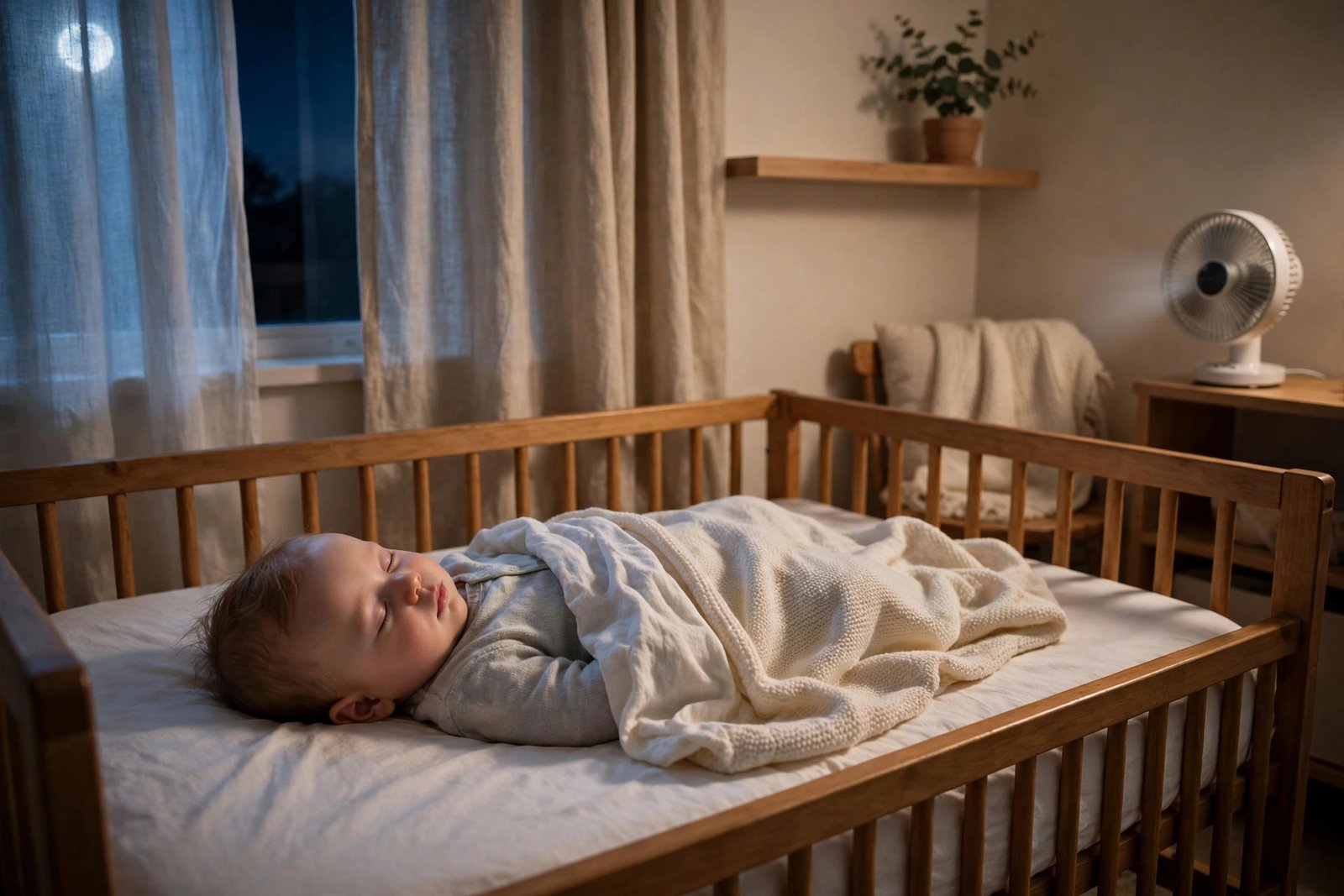
When the thermometer refuses to drop after sunset, working out how to keep baby cool in hot weather at night can feel like a battle. Babies cannot regulate their body temperature as well as adults, and they cannot tell you they are too warm — so it is up to you to set up a comfortably cool sleep space. The good news is that a few simple, safe changes to the bedtime routine make an enormous difference.
Why babies overheat more easily
Young babies have a higher surface-area-to-weight ratio than adults, so they gain and lose heat quickly. Their sweat glands are also less efficient, so they cannot cool themselves down by sweating the way you do. An overheated baby is not just uncomfortable — overheating is also linked to a higher risk of sleep-related problems, so keeping the room cool is a genuine safety matter, not just a comfort one.
9 safe ways to keep your baby cool at night
1. Aim for a room temperature of 16–20°C
This is the ideal range recommended for infant sleep. A simple nursery thermometer takes the guesswork out of it. If the room feels warm to you, it is almost certainly too warm for your baby.
2. Ventilate the room before bed
Open the windows for an hour or so in the early evening to let the trapped daytime heat escape. Close them before bed if the night air carries insects or noise, or keep them on the latch with a window guard.
3. Use a fan — but position it with care
A gently oscillating fan keeps air moving and can genuinely help. Place it across the room so air circulates around the space rather than blowing directly on your baby. A constant stream of cool air on a sleeping infant can chill them uncomfortably and dry out their nose and skin. Good air circulation also supports safer sleep, so a fan does double duty.
4. Dress your baby in light, breathable layers
A single layer of light cotton is usually plenty on very warm nights — often just a vest or short-sleeved bodysuit under a very light muslin wrap or low-tog sleeping bag. Cotton breathes; polyester and fleece trap heat. If you are unsure how many layers your baby needs for the temperature, have a look at our guide on how to dress your baby for sleep by temperature, which breaks it down degree by degree.
5. Give a cool (not cold) bath before bed
A lukewarm bath about half an hour before bedtime gently lowers your baby’s core temperature and makes the bedtime routine feel refreshing rather than sticky. Keep the water lukewarm on the inside of your wrist — never cold, which shocks a small body.
6. Keep the cot away from heat sources
Move the cot away from sun-warmed walls, radiators, and windows that catch the evening sun. The coolest, darkest corner of the room is the best sleeping spot on a hot night.
7. Offer extra feeds or water (age-appropriate)
Babies can dehydrate faster in the heat. For babies under six months, offer more frequent breast or bottle feeds — extra feeds are the safest way to keep a young infant hydrated, and water is not needed at this age. Over six months, small sips of cooled boiled water through the day help too.
8. Check your baby’s temperature by touch
The most reliable quick check is the back of the neck or the tummy — these should feel warm, never hot or sweaty. Cold hands and feet are normal and not a sign your baby is cold. If the neck feels hot and clammy, remove a layer and let the room cool further.
9. Keep bedding minimal and breathable
Use a light cotton sheet or a thin muslin layer only. A fitted cot sheet with nothing on top is often enough in real heat. Heavy blankets, quilts, and pillows have no place in a baby’s cot — they trap heat and are unsafe for sleep.
Signs your baby is too hot
Watch for these clues and act on them straight away:
- Hot, red, or sweaty neck and back
- Flushed cheeks or a heat rash on the chest and neck
- Rapid breathing or unusual restlessness during sleep
- A feverish feeling with no other illness symptoms
If you notice these, cool the room, remove a layer, and offer a feed. Most babies settle quickly once the heat is addressed.
What NOT to do on hot nights
Safety comes first, and some well-meant ideas are risky:
- No loose blankets draped over the cot to “shade” the baby — loose fabric is a suffocation risk and traps warm air.
- No direct air-conditioning blast on the cot. If you use AC, set it to a moderate temperature and keep the airflow indirect.
- Do not leave a baby sleeping in a hot car or a closed room, even briefly — temperatures rise dangerously fast.
- Do not put ice or cold wet cloths on a sleeping baby. Cooling should always be gentle and gradual.
The bottom line
Keeping your baby cool in hot weather at night comes down to three things: a ventilated room in the high teens, light cotton layers, and checking the back of the neck rather than guessing. Get those right and you can both sleep easier — even when the heatwave refuses to quit.