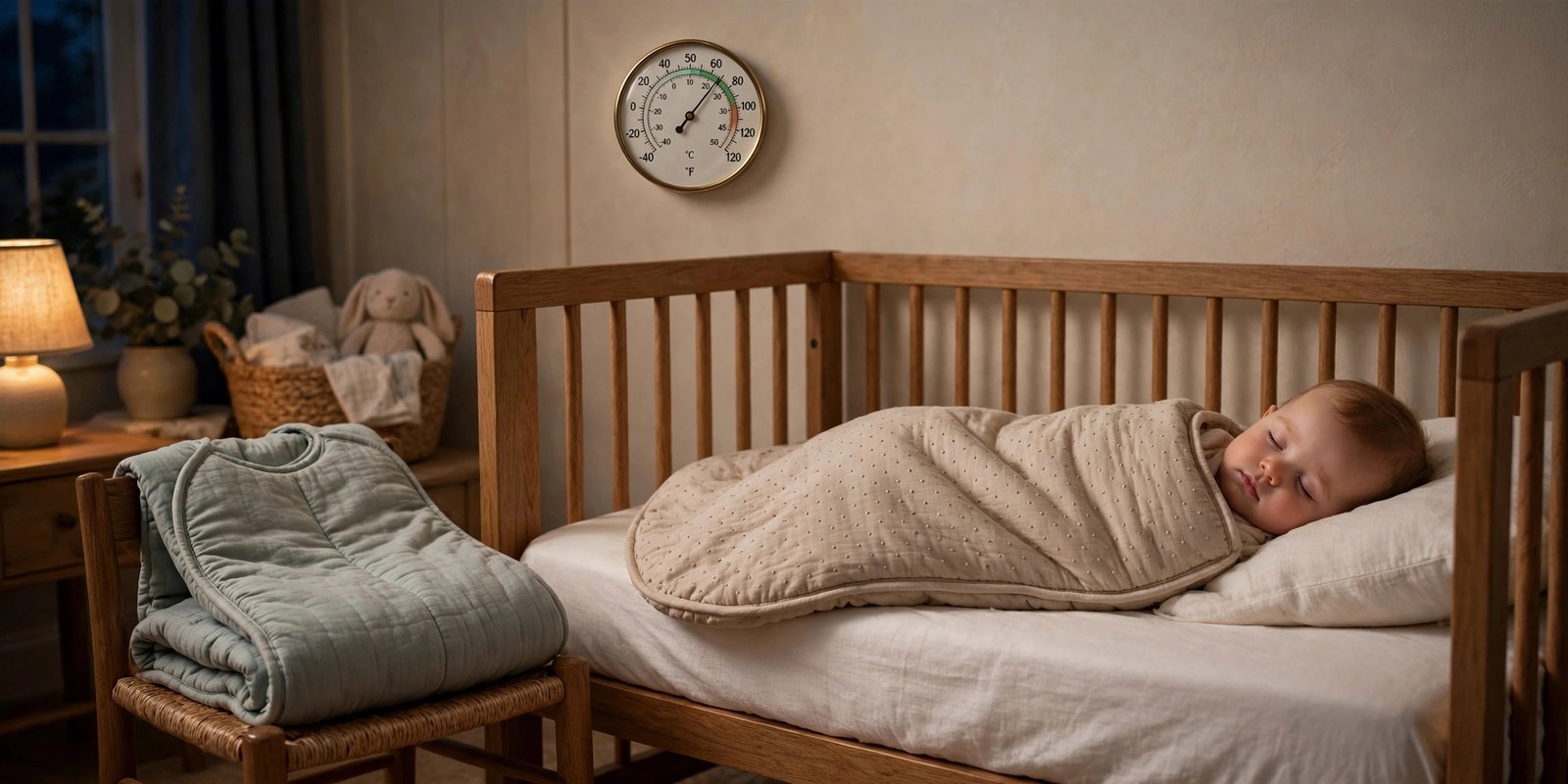
Every parent has stood in the nursery doorway at 2 a.m., hand hovering over the crib, asking the same question: is my baby too hot or too cold? Babies cannot tell us how they feel, and they regulate body temperature far less efficiently than adults. The good news is that dressing your baby for sleep does not have to be guesswork. With a room thermometer and a simple guide based on room temperature, you can get it right every night.
Why Temperature Matters So Much for Baby Sleep
Overheating is one of the risk factors linked to sudden infant death syndrome (SIDS), so the first rule of safe sleep dressing is: when in doubt, dress lighter rather than heavier. A baby who is slightly cool can be warmed quickly, but an overheated baby is in real danger. The back of your baby’s neck or their chest is the best place to check — hands and feet often feel cool even when a baby is perfectly comfortable.
The ideal room temperature for a sleeping baby is between 20 and 22°C (68–72°F). This is cooler than many parents expect, but research consistently shows babies sleep more safely and often more soundly in a slightly cool room.
How to Dress Baby for Sleep by Temperature
The key concept is TOG — thermal overall grade — a rating on sleep sacks that tells you how warm the garment is. A 0.5 TOG sack is light; a 3.5 TOG sack is very warm. Here is a room-by-room breakdown using a TOG-rated sleep sack plus a base layer.
Below 18°C (64°F): Very Cold Room
Dress baby in a long-sleeved footed onesie plus a 2.5–3.5 TOG sleep sack. A warm hat is not needed for sleep (never put a hat on a sleeping baby, as it can trap heat), but you can warm the room itself. Check that the crib is not next to a drafty window.
18–20°C (64–68°F): Cool Room
A long-sleeved footed onesie under a 2.5 TOG sleep sack is the standard combination. This is a very common bedroom temperature in winter and is perfectly fine with the right layers.
20–22°C (68–72°F): Ideal Range
Dress baby in a short-sleeved onesie or long-sleeved cotton pyjama top under a 1.0–1.5 TOG sleep sack. This combination suits most homes through much of the year and is the baseline most manufacturers recommend.
22–24°C (72–75°F): Warm Room
A short-sleeved onesie with a 0.5 TOG sleep sack, or just a lightweight short-sleeved onesie on its own. Open the window slightly or run a fan in the room (not aimed directly at the crib) to keep air circulating.
Above 24°C (75°F): Hot Room
A nappy/diaper and a 0.5 TOG sleep sack, or just a light onesie alone, may be all that is needed. During heatwaves, a cool bath before bed and a lukewarm cloth on the neck can help. Never cover a baby’s head while they sleep, and keep baby out of direct sunlight in the bedroom.
Signs Your Baby Is Too Hot or Too Cold
Too hot: sweaty or damp neck, flushed cheeks, rapid breathing, heat rash, or a warm tummy.
Too cold: a cold chest or the back of the neck (not hands or feet). If baby’s chest feels cool, add a layer.
The simple test: put your hand on the back of baby’s neck. It should feel comfortably warm and dry — not hot, sweaty, or cold.
Common Mistakes to Avoid
- Adding loose blankets to the crib. Loose bedding is a suffocation and SIDS risk. Use a fitted sheet and a sleep sack instead.
- Dressing by outdoor weather, not room temperature. A heated bedroom can be 24°C even when it is freezing outside — always go by the room thermometer.
- Using hats, hoods, or bibs during sleep. These trap heat and can slip over baby’s face.
- Overdressing a feverish baby. If baby is ill and feverish, dress them lightly so heat can escape, and follow your paediatrician’s advice.
Quick Checklist for Tonight
- Check the room temperature with a thermometer near the crib (not above a radiator).
- Pick the right TOG sleep sack for that temperature using the guide above.
- Feel the back of baby’s neck after 20 minutes — warm and dry means perfect.
- Adjust one layer at a time rather than overhauling the whole outfit.
Getting sleep dressing right becomes second nature within a week. For more newborn guidance, explore the Healthy Baby Guide homepage for practical, evidence-based parenting articles on sleep, feeding, and safety.