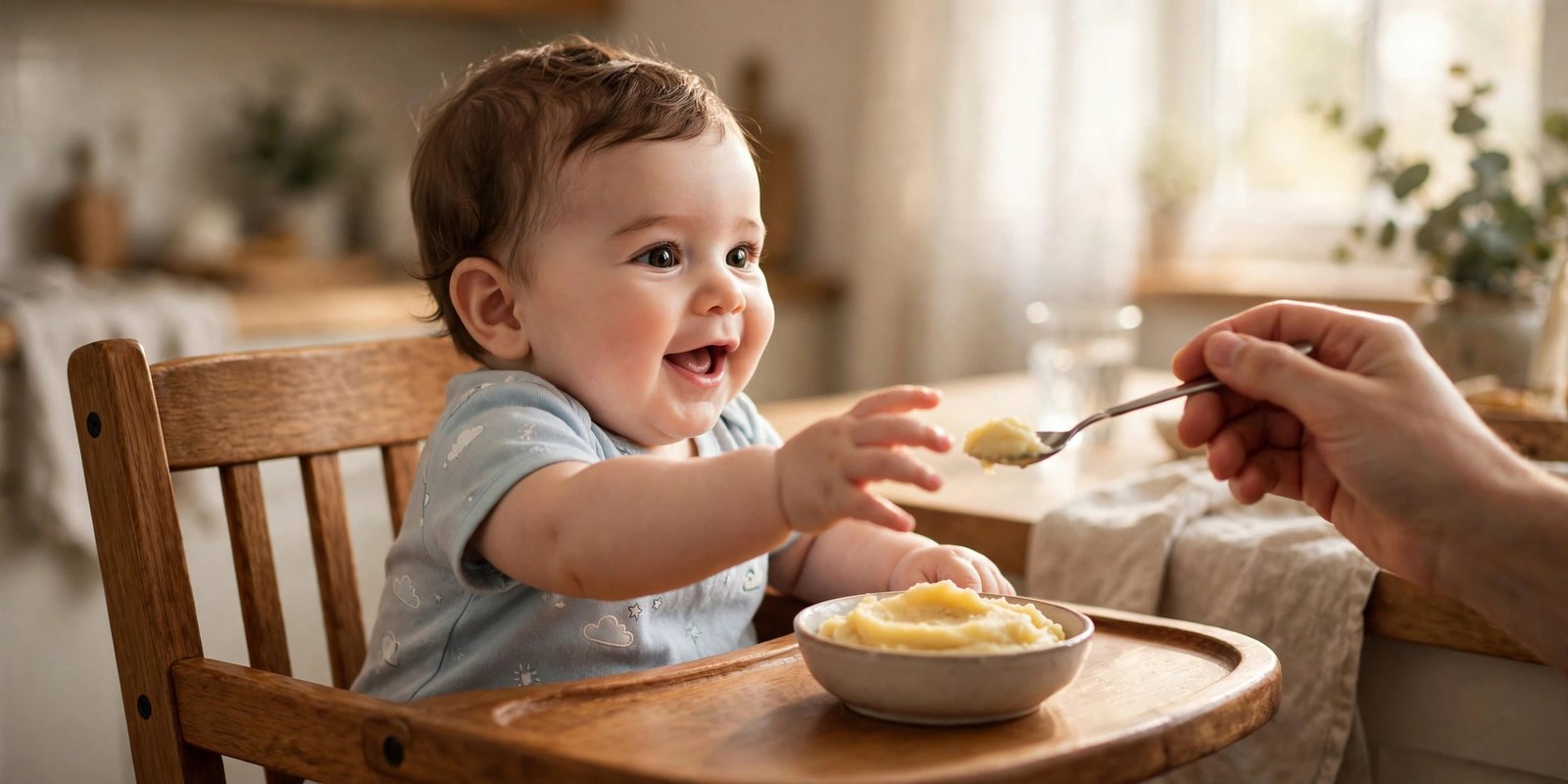
Wondering when to start your baby on solid food is one of the most exciting — and nerve-wracking — milestones for new parents. Those tiny jars of mashed banana look tempting from the supermarket shelf, but starting solids too early or too late can make the transition harder for everyone. The good news? Your baby will tell you when they’re ready. You just need to know what to look for.
Most babies are ready for solid food somewhere between 4 and 6 months old. Age is only part of the story, though. A baby who can sit up, has lost the tongue-thrust reflex, and shows genuine interest in what you’re eating is far more ready than a baby who simply hit a certain birthday. Here are the key signs baby is ready for solid food, according to pediatric guidelines.
Physical signs of readiness
Before you offer that first spoonful, check these physical milestones. All of them should be present — not just one or two.
Your baby can sit up with little support
This is the single most important sign. Your baby should be able to hold their head steady and sit upright in a high chair or with minimal support. Sitting upright lets them swallow safely and reduces the risk of choking. A baby who still slumps to one side is not ready yet, no matter how old they are.
The tongue-thrust reflex has faded
Newborns have an automatic reflex that pushes the tongue forward when anything touches their lips — it’s there to help them breastfeed or bottle-feed. As long as this reflex is strong, your baby will push food right back out of their mouth, making feeding frustrating for both of you. Around 4 to 6 months, this reflex weakens and food starts staying in. If everything you offer comes straight back out, wait another week and try again.
Your baby has good head and neck control
Related to sitting up: your baby should be able to hold their head upright and steady for the whole meal. This gives them control over their swallowing and lets them turn away from the spoon when they’re full — their first real say in mealtime.
Behavioral signs of readiness
Beyond the physical milestones, your baby’s behavior will give you plenty of clues.
Interest in your food
Does your baby watch every bite you take, lean forward toward your plate, or try to grab food from your hand? This curiosity is a strong signal that they’re developmentally interested in eating. Babies learn by imitating — wanting what you have is completely natural at this stage.
Opening the mouth for the spoon
Try touching a clean spoon to your baby’s lower lip. A ready baby will often open their mouth and accept it. If they clamp their lips shut, turn their head away, or push the spoon away, they’re telling you they’re not ready. Respect that signal and try again in a few days.
Increased appetite that milk alone doesn’t satisfy
If your baby has been sleeping well on milk feeds and suddenly seems hungry again, more interested in feeding, or not settled by their usual milk intake, solids might be the next step. This alone isn’t enough to start — pair it with the physical signs above — but it’s a useful supporting clue.
Signs that do NOT mean your baby is ready
Several common myths deserve clearing up:
- Waking up at night: Sleep regressions around 4 months are developmental, not hunger. Solids won’t fix night waking.
- Chewing on hands or toys: This is normal exploration and often teething — not a call for food.
- Watching you eat: On its own, interest without the physical milestones isn’t enough.
- A specific age: Every baby develops differently. Four months is the earliest anyone should start, and many babies aren’t truly ready until closer to six months.
How to start safely once you see the signs
When the signs are all there, start simple. A single new food at a time, offered once a day, is the calmest way to begin. Iron-rich foods like iron-fortified single-grain cereal or pureed meat are good first choices, since babies’ iron stores begin to drop around six months. Wait a few days between new foods so you can spot any reaction.
Keep the texture smooth and thin at first — think the consistency of yogurt. Offer the spoon gently and let your baby set the pace. The first weeks of solids are about learning and tasting, not nutrition; breast milk or formula should still be the main source of calories until around 12 months.
If you’re unsure whether your baby is ready, or if your baby was born prematurely, check with your pediatrician first. They can assess your baby’s individual development and give you a confident starting point.
For more guidance on feeding, growth, and everyday baby care, visit the Healthy Baby Guide homepage for our full collection of practical parenting articles.
The bottom line
Look for sitting up, lost tongue-thrust reflex, steady head control, and real interest in food — when those line up, your baby is telling you they’re ready. Starting solids is a milestone to enjoy, not rush. Trust your baby’s signals, keep the first meals relaxed and simple, and you’ll both find your rhythm quickly.