Touch is one of the first ways your baby understands the world, and a gentle daily massage is one of the simplest ways to use it well. Baby massage is not a complicated therapy or a skill you need a certificate for. It is a few calm minutes of slow, gentle strokes that can help your newborn relax, sleep better, and feel secure — while giving you a lovely moment of closeness every day.
Many parents worry about doing it wrong, but babies are far more forgiving than we fear. With clean hands, a little suitable oil, and a watchful eye on your baby’s cues, you can build massage into your daily routine from the first weeks. This guide covers the real benefits, safe techniques for newborns, and the signs that tell you to pause or stop.
Benefits of Baby Massage for Newborns
Research and generations of parenting experience point to several genuine benefits. Massage helps stimulate blood circulation and supports digestion, which is why many parents find it eases wind and mild constipation. The steady rhythm of strokes also calms the nervous system, helping babies settle more easily after a busy day.
For parents, the benefits are just as real. Massage forces you to slow down and focus entirely on your baby, which builds confidence — especially for new parents who are still learning their baby’s signals. Partners who massage the baby also build their own bond, which matters in the early weeks when one parent often does most of the feeding.
When and How to Massage Your Baby
Timing matters more than technique. Pick a moment when your baby is awake, calm, and content — often after a bath or before a nap. Avoid massaging straight after a feed, when your baby is hungry, or when they are overtired and crying.
Setting up safely
Warm the room so your baby is comfortable undressed, wash your hands, and warm a small amount of fragrance-free oil between your palms. Plain mineral oil or a cold-pressed vegetable oil such as coconut or sunflower oil works well. Avoid nut-based oils if there is a family history of nut allergy, and skip scented lotions entirely.
Gentle strokes to try
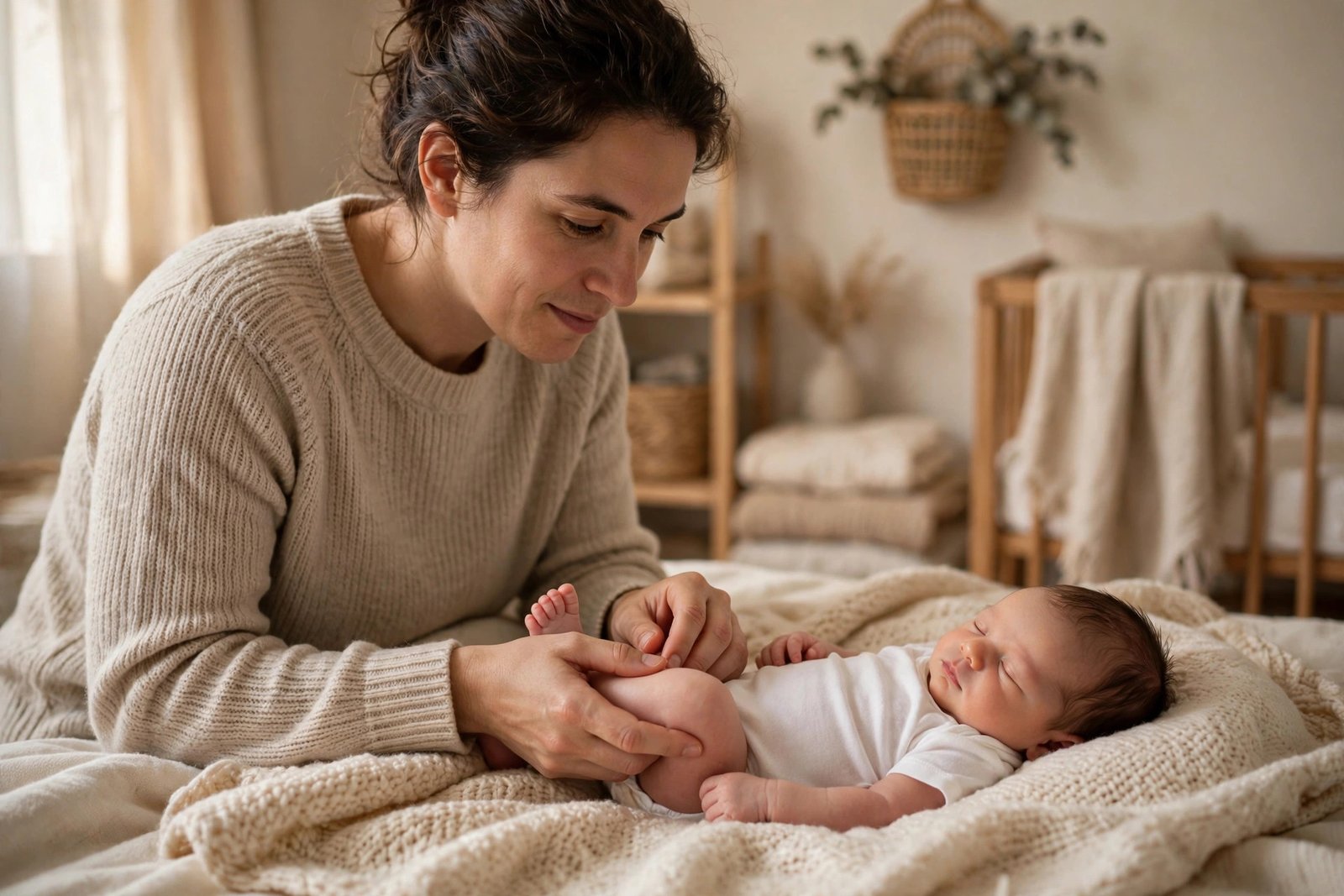
- Legs and feet: Stroke gently from thigh to ankle, then circle the soles of the feet with your thumbs. Babies often enjoy this most.
- Tummy: Use slow clockwise circles around the belly button, following the direction of digestion. Keep pressure very light.
- Chest and arms: Stroke outward from the centre of the chest, then glide down each arm from shoulder to wrist.
- Back: With your baby on their tummy, stroke from neck to bottom with both hands, then gently across the shoulders.
- Face: If your baby enjoys it, trace tiny circles on the forehead and cheeks with your fingertips.
Keep the whole session short — five to ten minutes is plenty for a newborn. Talk or sing softly as you go; your voice is part of the comfort.
Safety Tips Every Parent Should Know
Massage should always feel good to your baby. Watch for cues: turning the head away, arching the back, fussing, or going stiff are all signs to stop and try another time. Never massage over broken skin, rashes, or a healing umbilical stump, and avoid pressing on the soft spot on top of the head.
Use light pressure only — your baby’s skin and joints are delicate, so there is no need for the firm pressure adults associate with massage. If your baby has a medical condition, was born prematurely, or you are unsure about anything, check with your paediatrician first. And remember, massage is a complement to normal care, not a treatment for illness.
Making Massage Part of Your Routine
The best massage routine is the one you actually enjoy. Many families fold it into the bedtime routine after a bath: bath, massage, feed, sleep. Others prefer a morning session when the baby is alert. Either works — consistency matters more than the clock.
If you want more ideas for calm, confidence-building routines in the early months, explore the other newborn guides on Healthy Baby Guide. A few minutes of gentle touch each day is a small habit with a surprisingly big payoff: a calmer baby, and a parent who feels a little more sure of themselves.