When Do Babies Say Their First Words?
Waiting for a baby’s first word is one of the great milestones of parenthood, and one of the most eagerly watched. Most babies say their first recognisable word, besides “mama” or “dada” used as a label, at around 12 months. But the range is wide, and perfectly normal. Some babies say a clear word at 10 months, others not until 15 months, and both can be developing entirely typically. What matters far more than a single date is the steady progress of communication before words arrive: babbling, gestures, eye contact, and understanding.
Language development starts long before the first word. Newborns cry to communicate. By two to four months, babies coo and make vowel sounds. Around six months, babbling begins — repeated syllables like “ba-ba” and “da-da” — and babies start to enjoy the back-and-forth of sound play. By nine to twelve months, babbling becomes more varied, gestures appear (waving, pointing, shaking the head), and babies begin to understand simple words like “no” and their own name. First words grow out of this foundation, not out of nowhere.
A Typical Timeline, With Wide Normal Ranges
0 to 6 months: sounds and listening
In the first months, babies listen intently and experiment with their voices. They coo, gurgle, and laugh, and they start to turn towards familiar voices. Talking to your baby from day one matters: narrate what you are doing, sing songs, and respond to their sounds as if they were conversation. This “serve and return” interaction builds the brain connections language needs.
6 to 12 months: babbling and first words
Babbling becomes more speech-like, with varied consonants and intonation that sounds almost like sentences. Around the first birthday, many babies say one or two real words with meaning — “ball,” “dog,” “more” — and use them consistently for the same thing. They may also follow simple instructions, such as “give me the cup,” even before they can say many words themselves. Understanding usually runs ahead of speaking at this stage.
12 to 18 months: a growing word bank
Between 12 and 18 months, vocabulary grows steadily, often reaching 10 to 20 words by 18 months, though counts vary a lot. Babies begin to point at things they want and name familiar people and objects. They may also combine a word with a gesture, like saying “up” while reaching out their arms.
18 to 24 months: word explosion and two-word phrases
Many toddlers experience a “word spurt” in the second year, adding new words rapidly and starting to join two words together: “more milk,” “daddy go,” “big dog.” By two, a typical vocabulary is around 50 words or more, but again the range is broad. Sentences are still simple, and pronunciation is often unclear to anyone but close family — that is normal.
Signs of Healthy Language Development
- Responds to their name and familiar voices by around 9 to 12 months.
- Babbles with different sounds and intonation, not just one repeated sound.
- Uses gestures: pointing, waving, nodding, or shaking the head.
- Understands simple words and instructions before speaking many words.
- Tries to communicate — by sounds, gestures, or words — rather than withdrawing.
- Shows steady progress over months, even if it is slow.
How to Encourage First Words
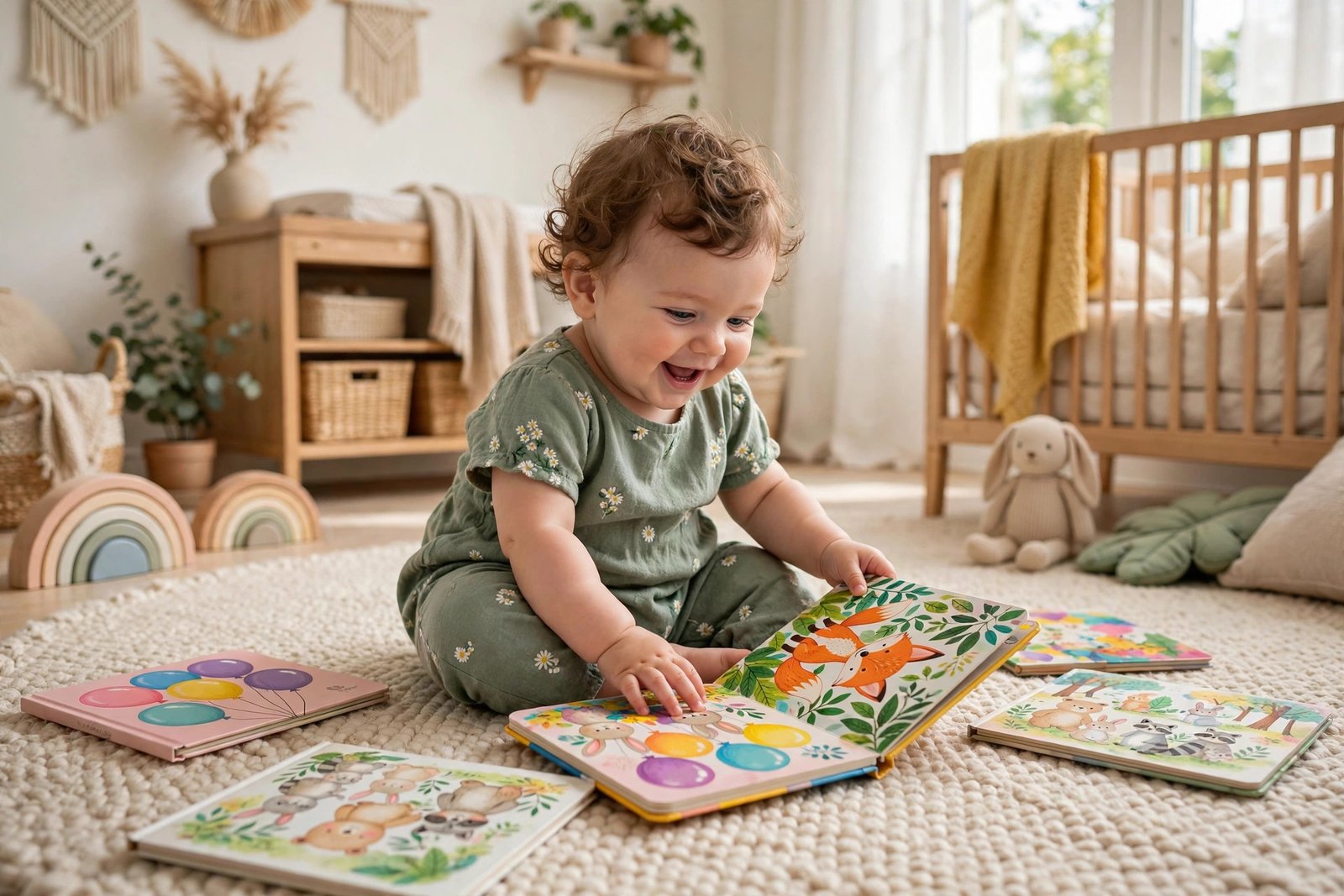
You do not need special toys or apps. Everyday talk is the best teacher. Talk about what your baby is looking at, name objects during play and mealtimes, read simple picture books daily, and sing nursery rhymes — repetition helps words stick. When your baby babbles, answer back and add a word: if they say “ba,” you can say “yes, ball!” Pause to give them a chance to respond, and follow their lead rather than drilling them. Limiting background television helps too, because babies learn language from live interaction, not from a screen.
Bilingual homes need not worry: babies can learn two languages at once, and a slight delay in each language’s word count is common and not a problem. Keep speaking both languages naturally, and the vocabulary will build in both.
When to Ask a Professional
Talk to your health visitor or paediatrician if your baby is not babbling by around 12 months, does not respond to their name, shows no gestures such as pointing or waving by 12 months, has no words by around 16 to 18 months, or seems to lose skills they once had. Early help, such as speech and language advice, works best when it starts early, and asking is never a waste of time. Most worries turn out to be normal variation, but checking brings peace of mind.
Every baby’s language journey is their own. Celebrate the babble, the gestures, and the first wobbly words alike — they are all communication. For more on your baby’s milestones, visit the Healthy Baby Guide homepage.