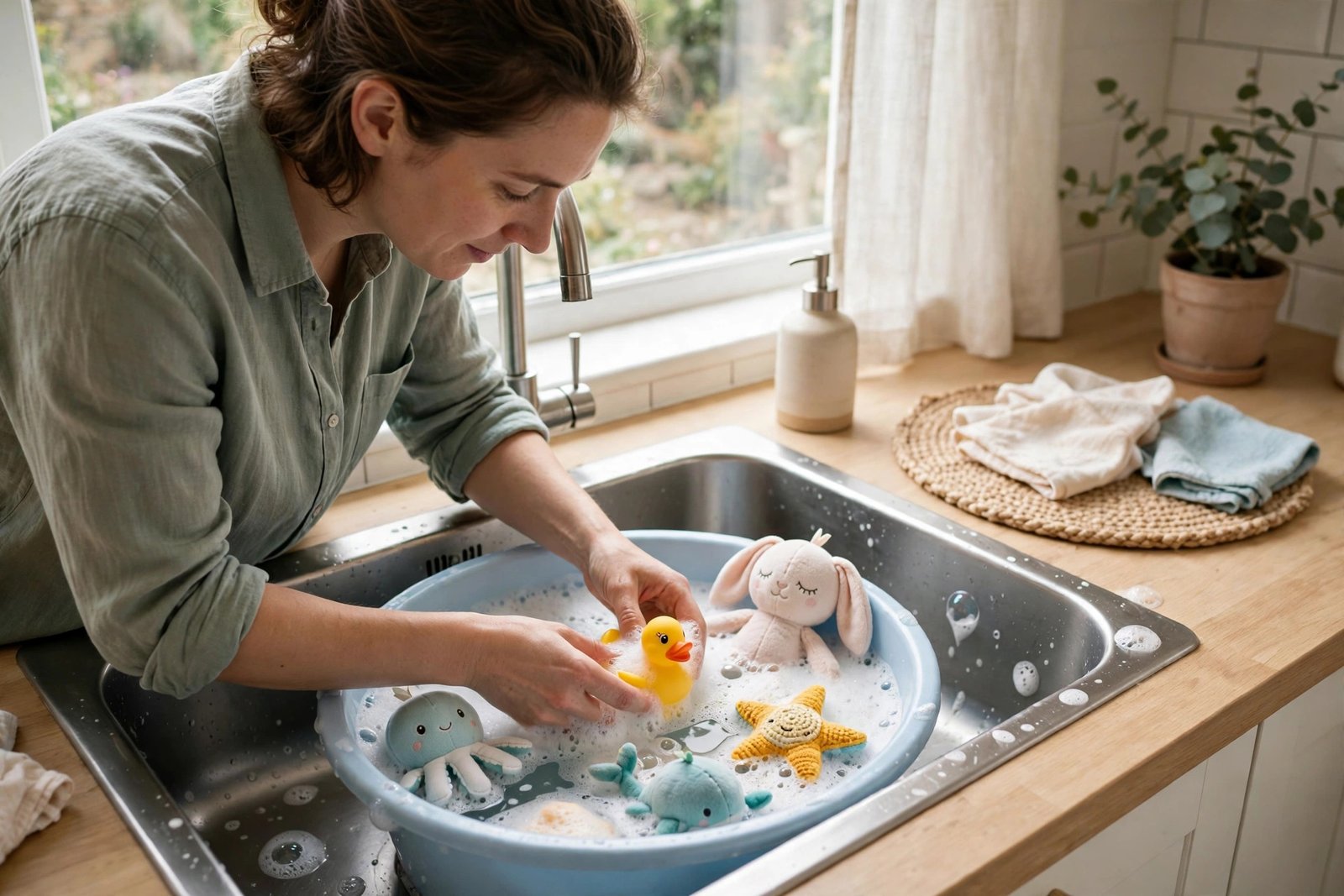
Babies explore the world with their mouths, which means their toys end up covered in drool, food, and germs. Keeping toys clean matters, but you do not need bleach or harsh sprays to do it safely. Learning how to clean baby toys safely without harsh chemicals protects your baby’s health and keeps their favourite toys in good condition.
Why Avoid Harsh Chemicals on Baby Toys
Strong disinfectants and chemical cleaners can leave residues on surfaces that babies chew and suck. Some products also irritate sensitive skin or damage toys over time. Gentle, everyday cleaning with soap and water removes most germs perfectly well for normal household use, and food-safe methods such as vinegar or steam handle the rest without leaving anything harmful behind.
The goal is not a sterile toy — a little everyday exposure is normal and healthy — but a toy that is visibly clean, free of grime, and safe to mouth.
Sort Toys Before You Clean
Different materials need different care, so sort toys first:
- Plastic and silicone toys: The easiest to clean. Most can be washed in warm, soapy water.
- Wooden toys: Need gentler care, since soaking can crack or warp the wood.
- Soft toys and cloth books: Usually machine washable — check the label.
- Bath toys: Need extra attention, because water trapped inside can grow mould.
- Electronic toys: Wipe only; never submerge them.
How to Clean Plastic and Silicone Toys
Fill a basin with warm water and a few drops of mild dish soap. Wash the toys, scrub any grooves or joints with an old toothbrush, then rinse well under clean water and air-dry completely. For a deeper clean, you can run sturdy plastic toys through the dishwasher on the top rack, or soak them for a few minutes in a solution of one part white vinegar to three parts water, then rinse.
Teethers and silicone toys can also be boiled for a few minutes or sterilised in a steam steriliser, following the manufacturer’s instructions. Always let them cool fully before handing them back.
How to Clean Wooden Toys
Wooden toys should never be soaked. Wipe them with a damp cloth dipped in warm, soapy water, then wipe again with a clean damp cloth to remove soap. Dry them straight away with a towel and leave them in fresh air until fully dry. For occasional disinfecting, a light wipe with diluted white vinegar works well. If the wood looks dry afterwards, a tiny amount of food-grade beeswax polish or coconut oil rubbed in will restore it.
How to Clean Soft Toys
Most soft toys can go in the washing machine on a gentle, warm cycle inside a laundry bag or pillowcase. Use a mild, fragrance-free detergent, and air-dry or tumble-dry on low. For toys that cannot be machine washed, sprinkle them with bicarbonate of soda, leave for 30 minutes, then brush or vacuum it off — this freshens them without chemicals.
Dealing With Bath Toys and Mould
Squeeze bath toys after every bath to empty trapped water, and store them somewhere they can drain and dry. If you spot black spots inside a toy, soak it in diluted white vinegar, scrub what you can reach, and rinse well. Toys with mould that cannot be cleaned out should be thrown away — it is not worth the risk, and replacing a cheap bath toy is simple.
To prevent mould in the first place, look for bath toys with sealed holes or no holes at all when buying new ones.
How Often Should You Clean Baby Toys?
As a practical routine, wipe or wash toys your baby mouths every day or two, clean the full toy basket once a week, and deep-clean after illness or after toys have been shared with other children. A quick daily wipe with a damp cloth and mild soap is enough for most days; save the deep clean for the weekend.
Safe Cleaning Supplies to Keep at Home
- Mild, fragrance-free dish soap
- White vinegar
- Bicarbonate of soda
- Clean cloths and an old toothbrush
- A laundry bag for soft toys
That is all you really need. Expensive “baby-safe” sprays are convenient, but plain soap and water do the same job for far less money.
For more gentle, practical baby care advice, visit our homepage and browse the latest guides for new parents.
The Bottom Line
Knowing how to clean baby toys safely without harsh chemicals comes down to three things: match the method to the material, use simple soap, water, and vinegar, and dry everything fully before it goes back in the toy box. With a small weekly routine, your baby’s toys will stay clean, safe, and ready for another day of chewing, throwing, and exploring.