Bath time should be fun, not a battle with mouldy toys. Yet many parents discover that the cute squirting toy they bought quickly fills with water, turns black inside, and becomes impossible to clean. Choosing the right bath toys matters, because your baby will chew them, suck them, and splash them in the water they sit in. This guide looks at the safest, easiest-to-clean bath toys and what to avoid.
For more practical baby care tips and product advice, visit Healthy Baby Guide.
Why Bath Toy Safety Matters
Babies explore the world with their mouths, and bath toys are no exception. A toy that traps water inside can grow mould and bacteria within days, even if it looks clean on the outside. Mould can irritate your baby’s skin and cause tummy upsets if swallowed. That is why the safest bath toys are either sealed solid, have no holes at all, or can be opened and dried fully after each bath.
Size matters too. Any toy, or any part of a toy, should be too large to fit entirely in your baby’s mouth. Avoid toys with small parts that could break off, sharp edges, or peeling paint.
What Makes a Bath Toy Easy to Clean?
The best bath toys share a few simple features. First, they have no hole for water to get inside, or the hole can be sealed shut. Second, they are made from a single piece of smooth, non-porous material that dries quickly. Third, they can be washed in warm soapy water or placed in the dishwasher. Toys made from food-grade silicone or solid plastic are usually the easiest to keep clean.
Best Baby Bath Toys That Are Safe and Easy to Clean
1. Solid Rubber Ducks Without Holes
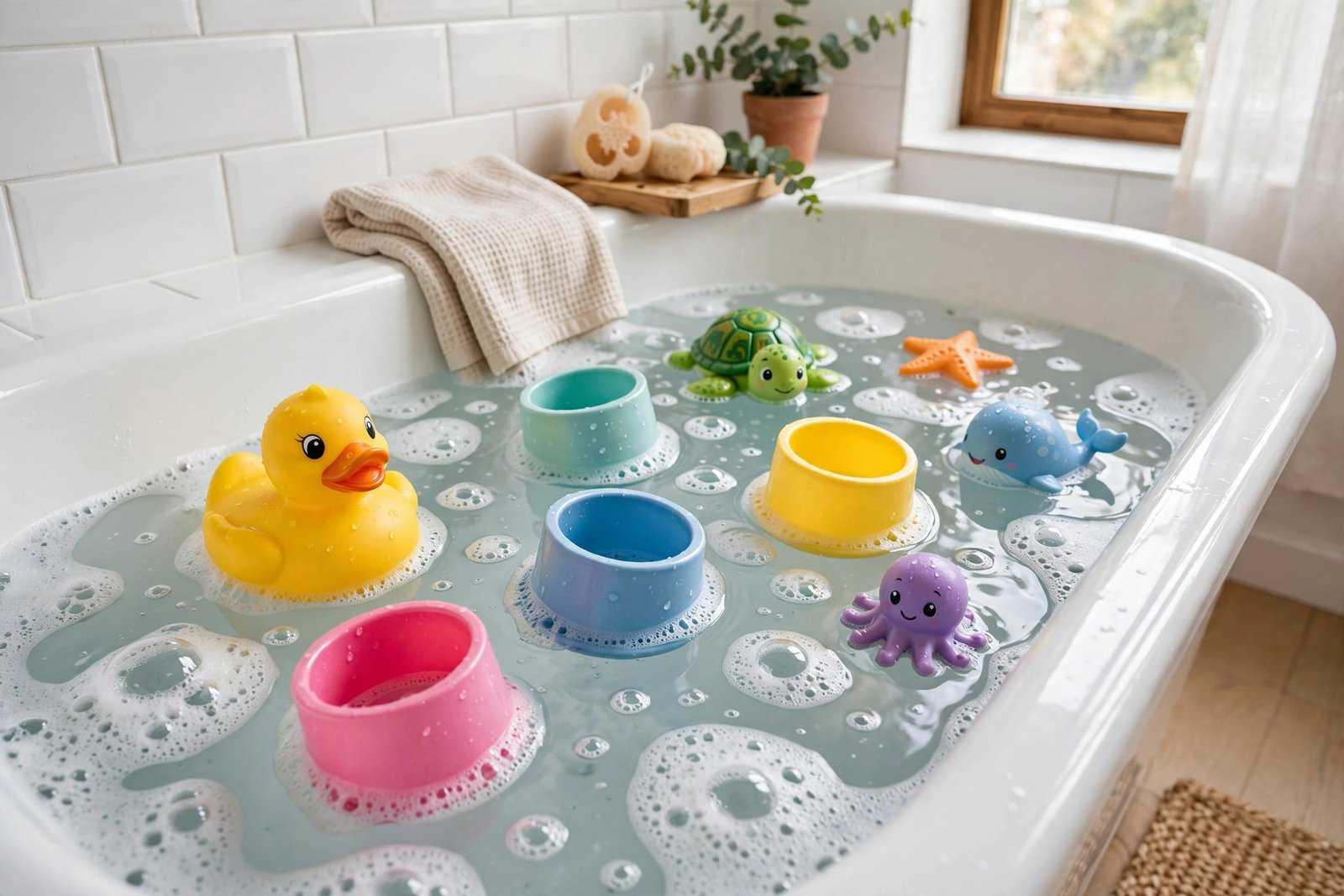
The classic rubber duck is a bath-time favourite, but traditional ducks have a hole underneath that lets water in. Look for solid ducks made from one piece of rubber or silicone with no holes at all. They float, they squeak, and they can be wiped dry in seconds.
2. Stacking Cups
Stacking cups are simple, cheap, and very easy to clean. They have no hidden parts, they dry quickly, and babies love pouring water from them, stacking them, and knocking them over. Choose cups with small holes in the base for gentle sprinkling, and make sure the holes are large enough to dry out fully.
3. Silicone Squeeze Toys
Soft silicone animals and shapes are gentle on sore gums and easy to wash. Because silicone is non-porous, it does not absorb water or harbour mould the way soft plastic can. Many silicone toys are dishwasher safe, which makes cleaning almost effortless.
4. Bath Books
Soft waterproof bath books are great for babies who love stories. They float, they have bright pictures, and they can be wiped clean or rinsed and left to dry. Choose books made from a single sealed piece of waterproof material rather than fabric that stays damp.
5. Floating Boats and Pouring Jugs
Simple boats and small pouring jugs encourage splashing and pouring play, which helps hand-eye coordination. Pick designs with smooth surfaces and no hidden compartments. Rinse them after each bath and leave them to air dry.
Bath Toys to Avoid
- Squirt toys with small holes that cannot be emptied or dried — these are the worst for mould.
- Cheap painted toys where the paint flakes or peels in warm water.
- Toys with batteries that are not fully sealed and waterproof.
- Foam toys that absorb water and take a long time to dry.
- Very small toys or toys with detachable parts for babies under one year.
How to Clean Bath Toys Properly
Cleaning bath toys takes only a few minutes and should become part of your bath-time routine. After each bath, squeeze out any water, rinse the toys in clean water, and leave them on a drying rack or a mesh bag where air can reach them. Once a week, wash them in warm water with mild soap, rinse well, and let them dry completely. For a deeper clean, soak solid plastic or silicone toys in a mixture of one part white vinegar to three parts water for fifteen minutes, then rinse and dry. Throw away any toy that smells musty, has black spots inside, or cannot be cleaned properly. It is not worth the risk.
How Many Bath Toys Does Your Baby Need?
You do not need a whole basket of toys. Three or four good toys are plenty. Too many toys crowd the bath and make cleaning harder. Rotate a small set so your baby always has something fresh to play with, and replace toys every few months or sooner if they show wear.
The Bottom Line
The best baby bath toys are simple, solid, and easy to dry. Choose toys with no holes or sealed holes, smooth non-porous materials, and no small parts. Wash them after each bath, dry them properly, and throw away anything that grows mould. With a small set of safe, clean toys, bath time stays fun, healthy, and stress-free for both you and your baby.