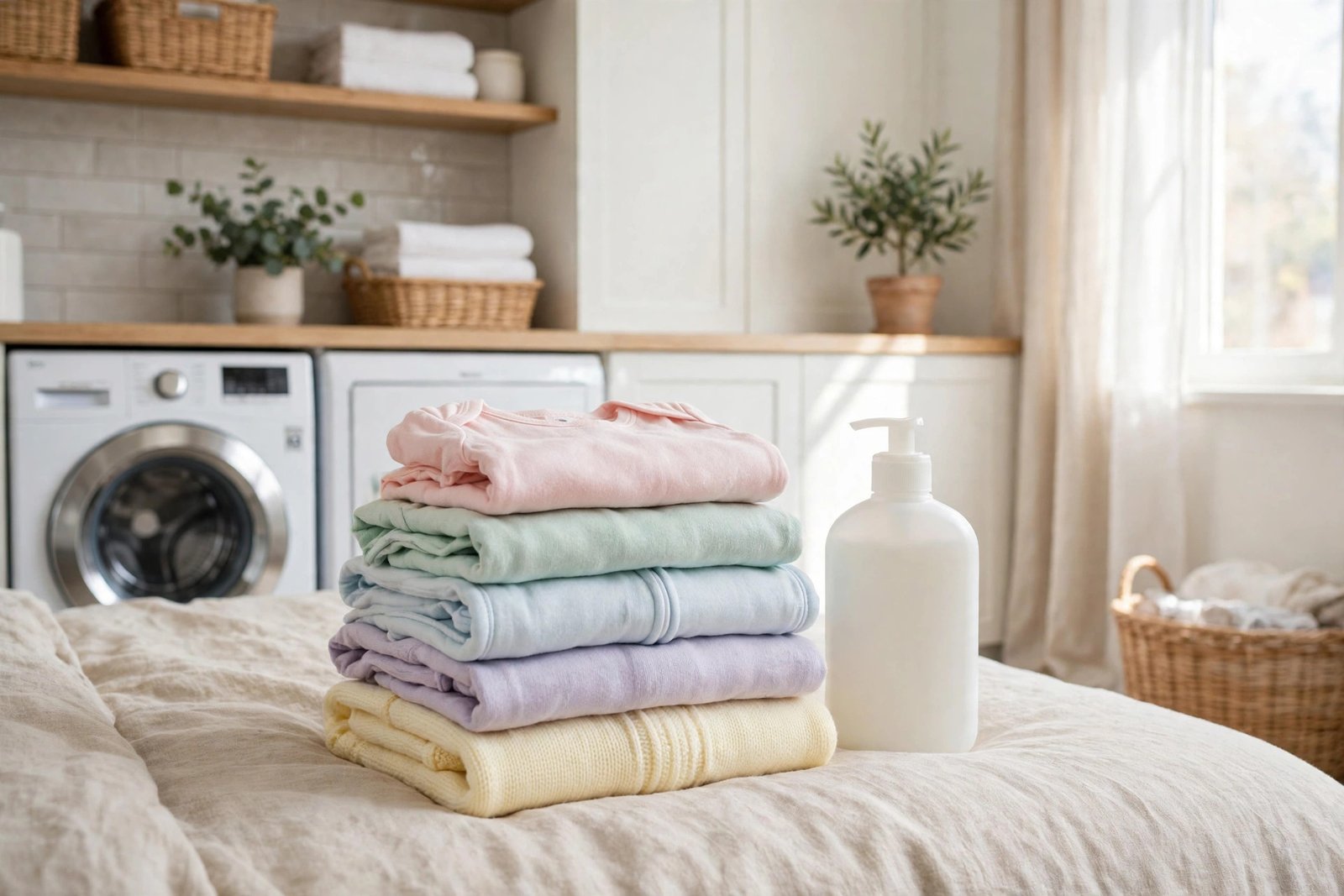
Babies have skin that is thinner and more delicate than adult skin, so the detergent you wash their clothes in matters more than you might think. The wrong product can leave residue that irritates sensitive skin, triggers eczema flare-ups or causes rashes. Choosing the best baby laundry detergent for sensitive skin does not have to be confusing — here is what to look for and which types of product are worth your money.
Why Ordinary Detergent Can Irritate Baby Skin
Standard laundry detergents are designed to shift tough stains, so they often contain strong fragrances, dyes, optical brighteners and enzymes. Traces of these chemicals stay in fabric after washing and sit against your baby’s skin all day — and all night in their sleepsuit. For babies with eczema or sensitive skin, that residue can be enough to cause redness, itching or a rash.
Baby-specific detergents are usually made without these irritants. They clean gently, rinse out more easily and are tested to be kind to delicate skin. That is why paediatric dermatologists often recommend switching the whole household’s laundry — or at least the baby’s — to a gentler formula.
What to Look For on the Label
- Fragrance-free: “unscented” is better than “lightly fragranced” — added perfume is one of the most common irritants.
- Dye-free and no optical brighteners: these add nothing to cleaning and can irritate skin.
- Hypoallergenic: the formula is designed to minimise allergic reactions, though it is not a guarantee.
- Dermatologically tested: look for testing claims from a recognised body, especially if your baby has eczema.
- Plant-based or biodegradable: often gentler and kinder to the environment, but always check the ingredient list too.
- Eczema-friendly certification: in the UK, look for products accepted by the National Eczema Society.
Liquid, Powder or Pods?
Liquid detergents are the most popular choice for baby laundry. They dissolve fully, even in cool washes, and you can measure the dose precisely — using too much detergent is a common cause of residue and irritation. Powders can be cheaper per wash and often clean well, but they may not dissolve fully in short or cold cycles. Pods are convenient but make dosing hard to adjust, and they must be stored well out of a baby’s reach because they look like sweets.
For sensitive skin, a fragrance-free liquid used at the correct dose, with an extra rinse cycle, is usually the safest combination.
How to Wash Baby Clothes Safely
Always wash new baby clothes before the first wear — factory finishes and dyes can irritate skin. Wash baby items at 40°C for everyday loads, or 60°C for bedding and cloth nappies. Use the amount of detergent shown on the pack for a normal load, and resist the temptation to add extra “for luck” — more detergent means more residue, not cleaner clothes.
Skip fabric softener entirely for baby laundry; it coats fibres with chemicals and reduces the absorbency of towels and muslins. If clothes feel stiff, a little white vinegar in the rinse can soften them naturally. Dry baby clothes in fresh air where possible, and wash the baby’s bedding, blankets and soft toys in the same gentle detergent.
When Skin Still Reacts
If your baby develops a rash despite using a gentle detergent, try a different brand — sensitivities vary from child to child, and the ingredient that bothers one baby may be fine for another. Wash a single item in the new detergent first and check the skin that touches it over the next day or two.
If rashes keep appearing, talk to your GP or health visitor. They can check whether the problem is the detergent, a fabric, a food or an eczema flare, and they can recommend a specific product. In the meantime, keep a simple diary of products used and when the rash appears — it makes the conversation much easier.
The Bottom Line
The best baby laundry detergent for sensitive skin is fragrance-free, dye-free and hypoallergenic, dosed carefully and rinsed well. A gentle liquid used at the right amount, with no fabric softener and an extra rinse, will protect your baby’s delicate skin and keep their clothes soft and clean. For more practical baby-care guides, visit our homepage for more expert-backed articles for parents.