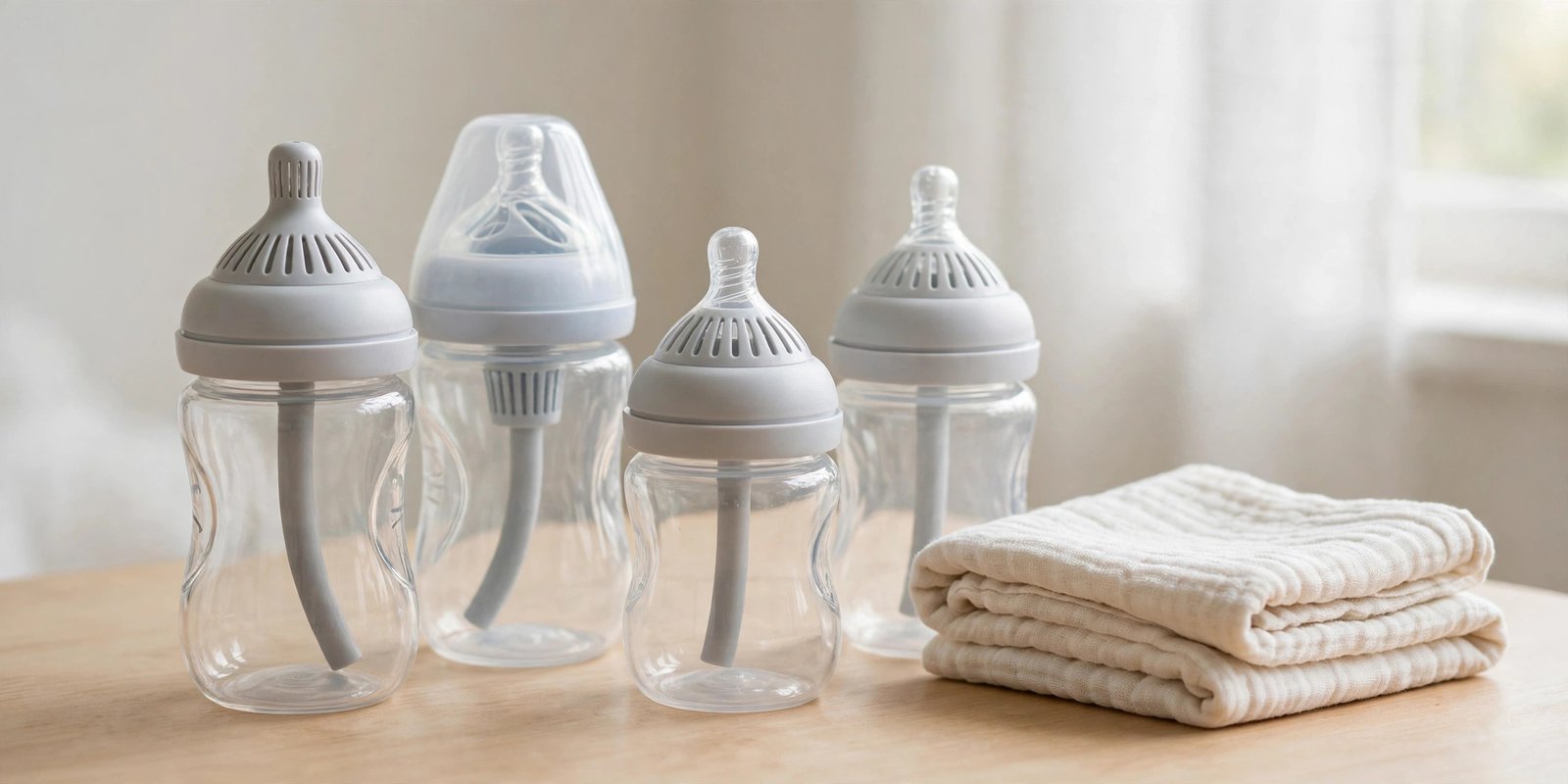
Colic and trapped wind can turn feeding time into a stressful ordeal for the whole family. If your baby cries for hours after a feed, pulls their legs up, or struggles to settle, the bottle you use may be part of the problem. The best baby bottles for colic and gas relief are designed to cut down the air your baby swallows, and that small change can make a big difference to their comfort.
In this guide we explain how anti-colic bottles work, what to look for when choosing one, and how to use them properly so your baby feeds calmly and comfortably.
How Do Anti-Colic Bottles Work?
When a baby feeds from a standard bottle, air can enter the milk through the teat and collect in their stomach. That trapped air causes wind, bloating, and the inconsolable crying many parents know as colic. Anti-colic bottles tackle this in two main ways.
First, many use a venting system, often a small valve or tube inside the bottle, that lets air flow into the bottle without mixing with the milk. Second, some use a specially shaped teat and a one-way valve that keeps the teat full of milk, so your baby swallows less air with each mouthful. Neither design is a cure for colic, which has many causes, but both can reduce one of its most common triggers.
What to Look for in a Bottle for Colic and Gas Relief
An Effective Venting System
Look for a bottle with a proven internal vent or valve. Vented bottles tend to work best when they are assembled correctly, so check that the parts are easy to fit together and clean. If a bottle has lots of small fiddly pieces, you are less likely to use it properly at 3am.
The Right Teat Flow
Teats come in slow, medium, and fast flows. A flow that is too fast can make your baby gulp and swallow air, while one that is too slow can frustrate them and make them suck harder, which also pulls in air. Newborns usually do best on a slow-flow teat, and you can move up as your baby grows. Watch your baby, not the age printed on the packet.
A Comfortable Shape and Size
Wide-neck bottles are easier to fill and clean, and they mimic the breast shape, which can help babies who mix breast and bottle feeding. A smaller 120ml bottle suits a newborn, while a 240ml bottle is better once your baby takes larger feeds. Glass bottles are durable and easy to sterilise, while BPA-free plastic bottles are lighter and harder to break.
Easy Cleaning and Sterilising
Anti-colic bottles have more parts than ordinary bottles, so choose one you can take apart and wash without a struggle. Bottles that are dishwasher-safe on the top rack and compatible with your steriliser will save you a great deal of time and frustration.
How to Use an Anti-Colic Bottle Properly
Even the best bottle only helps if it is used correctly. Keep these tips in mind:
- Keep the teat full of milk. Hold the bottle at an angle so the teat stays full and your baby does not suck in air.
- Pace the feed. Hold your baby semi-upright and pause every few minutes so they can rest and breathe.
- Burp during and after feeds. A gentle burp halfway through a feed and again at the end helps trapped wind escape before it builds up.
- Check the vent. Make sure valves and vents are fitted the right way round and are not blocked with dried milk.
- Replace teats regularly. A worn or split teat changes the flow and can let in extra air. Replace teats every two to three months, or sooner if they look damaged.
When to Speak to Your Doctor
Bottles can ease wind and mild discomfort, but they are not a treatment for every cause of crying. Speak to your GP or health visitor if your baby cries for more than three hours a day on most days, refuses feeds, is not gaining weight, has blood in their stool, or seems in pain when feeding. These signs deserve a proper medical check, and no bottle can replace it.
Choosing the Right Bottle for Your Baby
There is no single best bottle for every baby. One baby may settle beautifully with a vented bottle, while another prefers a simple wide-neck design with a slow-flow teat. Buy one or two different styles to try before stocking up, and give each a fair trial of several feeds before deciding.
The goal is simple: a calm, comfortable feed with as little swallowed air as possible. The right bottle, used well, can help you get there, and that means more sleep and less stress for everyone. For more practical feeding advice, explore the guides on our homepage.