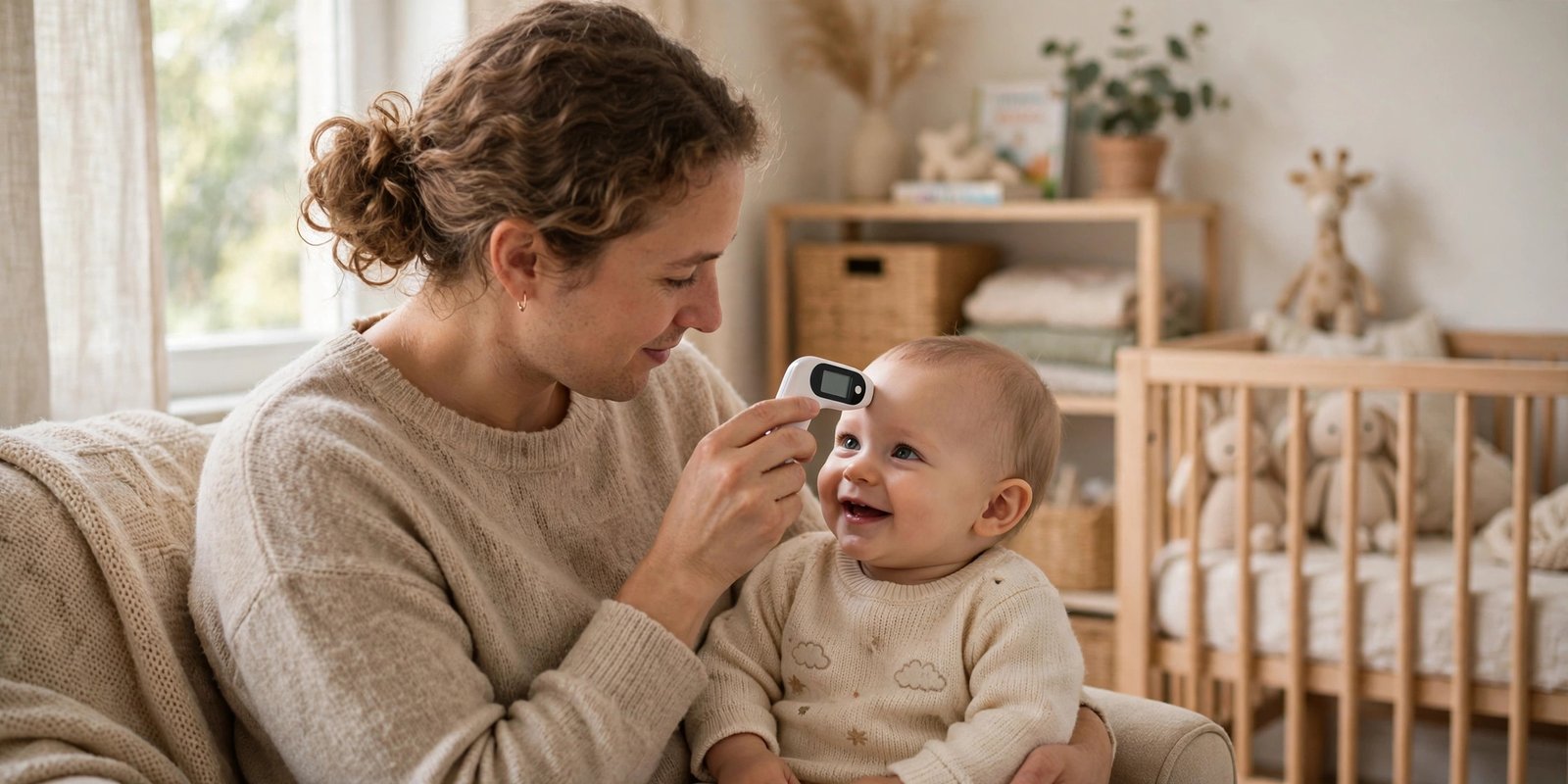
When your baby feels warm in the middle of the night, the first thing you reach for is a thermometer. But not all thermometers are equal, and a reading that is off by even half a degree can leave you unsure whether to call the doctor or let your little one sleep. Choosing the best baby thermometer for accurate fever readings is one of the most practical decisions new parents make.
In this guide, we explain the main types of baby thermometers, how accurate each one really is, and what to look for before you buy. For more everyday baby care advice, visit the Healthy Baby Guide homepage.
Why Accuracy Matters More Than Speed
Many thermometers promise a reading in one second, but speed means little if the number is wrong. A baby’s temperature changes quickly, and a fever in a newborn is treated very differently from a fever in a toddler. Rectal temperature is the most reliable measure for babies under three months, because it measures core body temperature directly.
That does not mean every parent needs a rectal thermometer. For older babies, a well-used forehead or ear thermometer can be accurate enough for day-to-day checks, as long as you use it correctly and understand its limits. The key is matching the thermometer to your child’s age and using the same method each time so you can spot real changes.
The Main Types of Baby Thermometers
Forehead (temporal artery) thermometers
These are swept gently across the forehead and are the most popular choice for toddlers and older babies. They are quick, non-invasive, and work even while a child is asleep. Accuracy is good when the forehead is dry and the thermometer is held correctly, but sweat, a hat, or a cold room can throw the reading off.
Ear (tympanic) thermometers
Ear thermometers measure the temperature inside the ear canal and give a result in seconds. They suit babies over six months, once the ear canal is large enough for the probe to sit properly. A poor fit or earwax can lower the reading, so positioning matters.
Rectal thermometers
Rectal readings are the gold standard for accuracy in newborns, and doctors often ask for one when a baby under three months has a fever. Digital rectal thermometers are fast and safe when used with a little lubricant and a gentle touch.
Underarm (axillary) thermometers
Underarm readings are easy and comfortable, but they usually read slightly lower than core temperature. They are useful as a quick screening check, but if the result is borderline, confirm it with a forehead or rectal reading.
What to Look For When Buying
- Age suitability: check the recommended age range. Some ear models are not meant for babies under six months.
- Clear display: a large, backlit screen is worth paying for, because most temperature checks happen at night.
- Fever alarm: a colour-coded display or gentle beep helps you tell at a glance whether the reading is in the fever range.
- Memory storage: storing the last few readings makes it easier to track a fever over a day and report it to your doctor.
- Easy cleaning: look for a smooth probe and disposable probe covers, especially for ear and rectal models.
- Speed: anything under ten seconds is plenty fast for a wriggling baby.
How to Get an Accurate Reading
Even the best thermometer gives a poor result if it is used badly. Always read the instructions that come with your model, because technique varies. A few rules apply to almost every type: take the reading when your baby is calm rather than just after crying or feeding, keep the probe still, and wait for the beep before removing it.
For forehead thermometers, wipe away sweat first and sweep slowly from the centre of the forehead to the temple. For ear thermometers, gently pull the ear back and up in older babies, or down and back in infants, to straighten the canal. If a reading looks wrong, wait a few minutes and take it again rather than trusting a single number.
When to Call the Doctor
Call your doctor or seek medical advice promptly if your baby is under three months old and has a temperature of 38°C (100.4°F) or higher, or if any baby has a fever alongside unusual sleepiness, difficulty breathing, a rash, persistent vomiting, or signs of dehydration. A thermometer tells you the number, but your baby’s behaviour matters just as much. Trust your instincts: if something feels wrong, get help.
Keeping Your Thermometer in Good Shape
Store the thermometer in its case, away from heat and damp. Clean the probe with an alcohol wipe or warm soapy water after each use, and replace the battery as soon as readings seem slow or dim. Replace a thermometer that has been dropped, because a cracked probe or damaged sensor can quietly lose accuracy.
The Bottom Line
For newborns, a digital rectal thermometer remains the most accurate choice. For babies over six months, a good forehead thermometer is the easiest everyday option, with an ear thermometer as a strong alternative. Whichever type you choose, learn the correct technique, keep it clean, and remember that the reading is one piece of information alongside how your baby looks and behaves. With the right thermometer and a calm routine, those worrying midnight checks become a little easier for everyone.