A good baby bouncer can be a lifesaver in those early months: a safe, comfortable spot where your newborn can rest and give your arms a break. But choosing the right one can feel overwhelming. Some are simple and affordable, others come with vibrations, music, and reclining seats. So what actually matters?
In this guide, we explain what makes a baby bouncer safe and comfortable for newborns, what to look for when you buy, and how to use one safely. For more honest baby gear advice, visit Healthy Baby Guide.
What Is a Baby Bouncer?
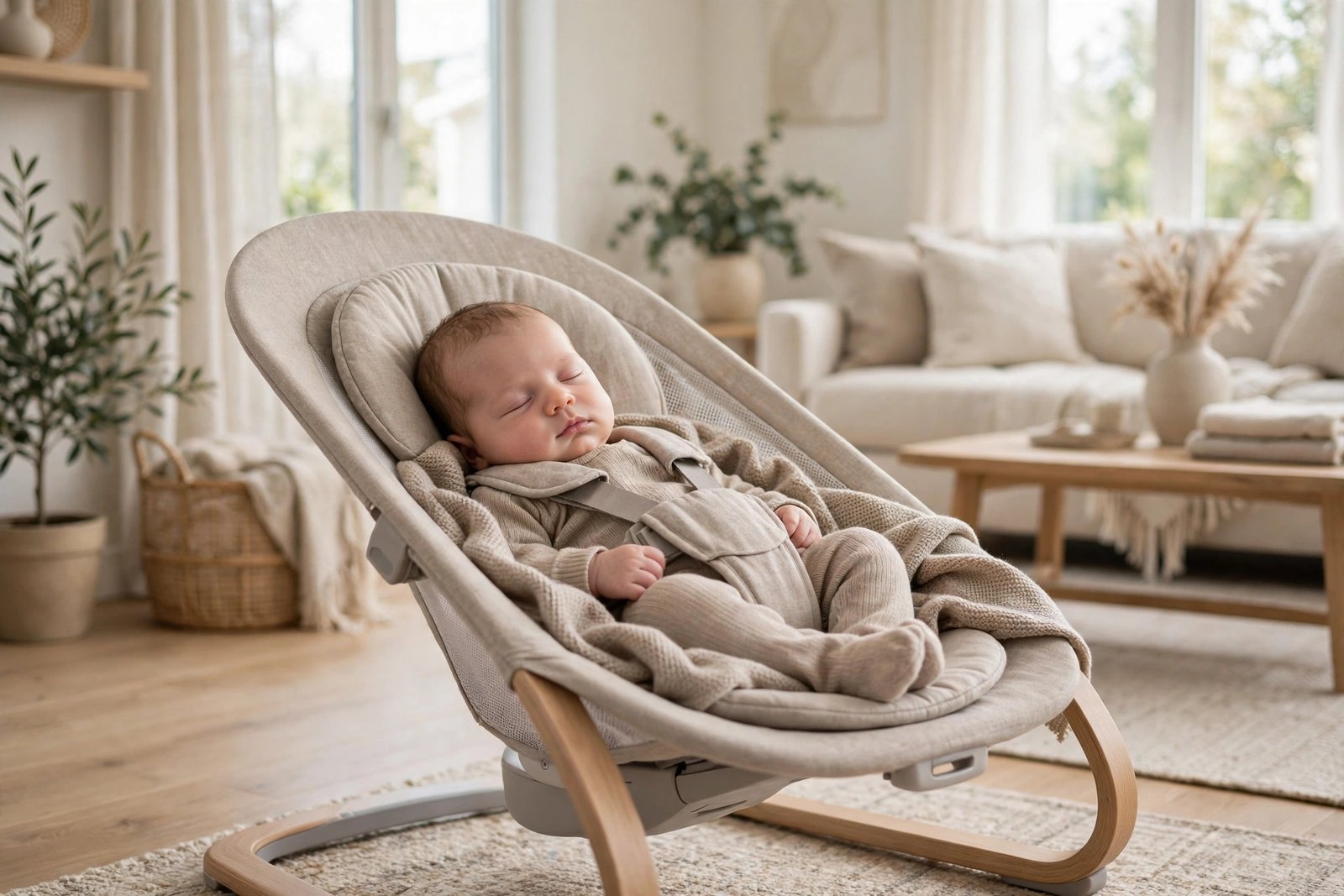
A baby bouncer is a lightweight, portable seat that sits on the floor and gently bounces in response to your baby’s movements. Unlike a swing or a rocker, it has no motor: the bouncing comes from your baby kicking and wriggling. Most bouncers are suitable from birth until your baby can sit up unaided or reaches the weight limit, usually around 9 kg.
Bouncers are ideal for short periods during the day, such as while you eat or shower. They are not a substitute for a cot, a pram, or your arms, and they should never be used for overnight sleep.
What Makes a Baby Bouncer Safe for Newborns?
Look for these essentials:
- A three-point harness: Every bouncer should have a secure harness. Use it every time, even for a short sit.
- A stable, wide base: The bouncer should sit firmly on the floor and resist tipping, even when your baby wriggles.
- A flat, supportive seat for newborns: Newborns need a seat that supports their back and head without letting them slump. Look for a model with a newborn insert or a reclined position.
- Breathable, washable fabric: A removable, machine-washable cover is a necessity, not a luxury.
- A recognised safety standard: Check that it meets a recognised standard, such as EN 12790 in the UK and Europe or ASTM F2167 in the US.
- A clear weight and age limit: Never use a bouncer beyond its stated limit, and stop once your baby can sit up unaided or climb out.
Comfort Features Worth Having
Multiple recline positions
Newborns need to lie fairly flat, while older babies enjoy sitting more upright. A bouncer with two or three recline positions grows with your baby.
Good padding and support
Look for a padded seat with gentle head and neck support for a newborn. A removable infant insert is a bonus. Avoid seats that are too soft or saggy, as they do not support a newborn properly.
Gentle bouncing action
The best bouncers respond to your baby’s own movements with a soft, natural bounce. Some models add vibration, which some babies love, though many are happy without it.
Lightweight and portable
You will want to move the bouncer from room to room and fold it flat for travel or storage. A lightweight frame and a simple fold make a real difference.
An optional toy bar
A detachable toy bar can keep an older baby entertained for a few extra minutes. It is a nice extra, not an essential.
How to Use a Baby Bouncer Safely
- Always place it on the floor: Never put a bouncer on a table or bed. It can bounce or slide off.
- Always use the harness: Fasten it every time, even for a minute.
- Keep sessions short: Limit bouncer time to around 20 to 30 minutes at a stretch, and no more than one to two hours per day. Babies need plenty of floor time.
- Always supervise: Stay in the same room. Never leave them alone in a bouncer.
- Never use it for sleep: If your baby falls asleep in the bouncer, move them to a flat cot on their back. Sleeping seated can restrict a baby’s breathing.
- Check it regularly: Inspect the frame, fabric, and harness for wear, and stop using it if anything is damaged.
Bouncer vs Rocker vs Swing: What Is the Difference?
Bouncers, rockers, and swings all offer a place to rest your baby, but they work differently. A bouncer moves when your baby moves and needs no power. A rocker can be rocked by hand and often reclines further. A swing is motorised and moves on its own, which some babies find soothing but which makes it larger, heavier, and more expensive. For most families, a simple bouncer is the most practical first choice.
What to Look for When Buying
Before you buy, think about your home and routine. If space is limited, choose a model that folds flat. If you will carry it upstairs, weight matters. If your baby has reflux, a model with a higher recline angle may help, though you should ask your health visitor first.
Price is not a reliable guide to quality. Some of the most popular bouncers are simple, well-made designs that cost far less than feature-heavy models. Read recent parent reviews, check the weight limit and fabric washability, and, if possible, try the bouncer in a shop.
Buying second-hand can save money, but check for missing parts, damaged harnesses, or recalls, and wash the fabric before use.
The Bottom Line
The best baby bouncer for a newborn is a safe, stable, comfortable seat with a secure harness, good newborn support, and washable fabric. Fancy features are optional; safety and simplicity matter most. Used for short, supervised periods, a bouncer is a genuinely useful part of your daily routine.