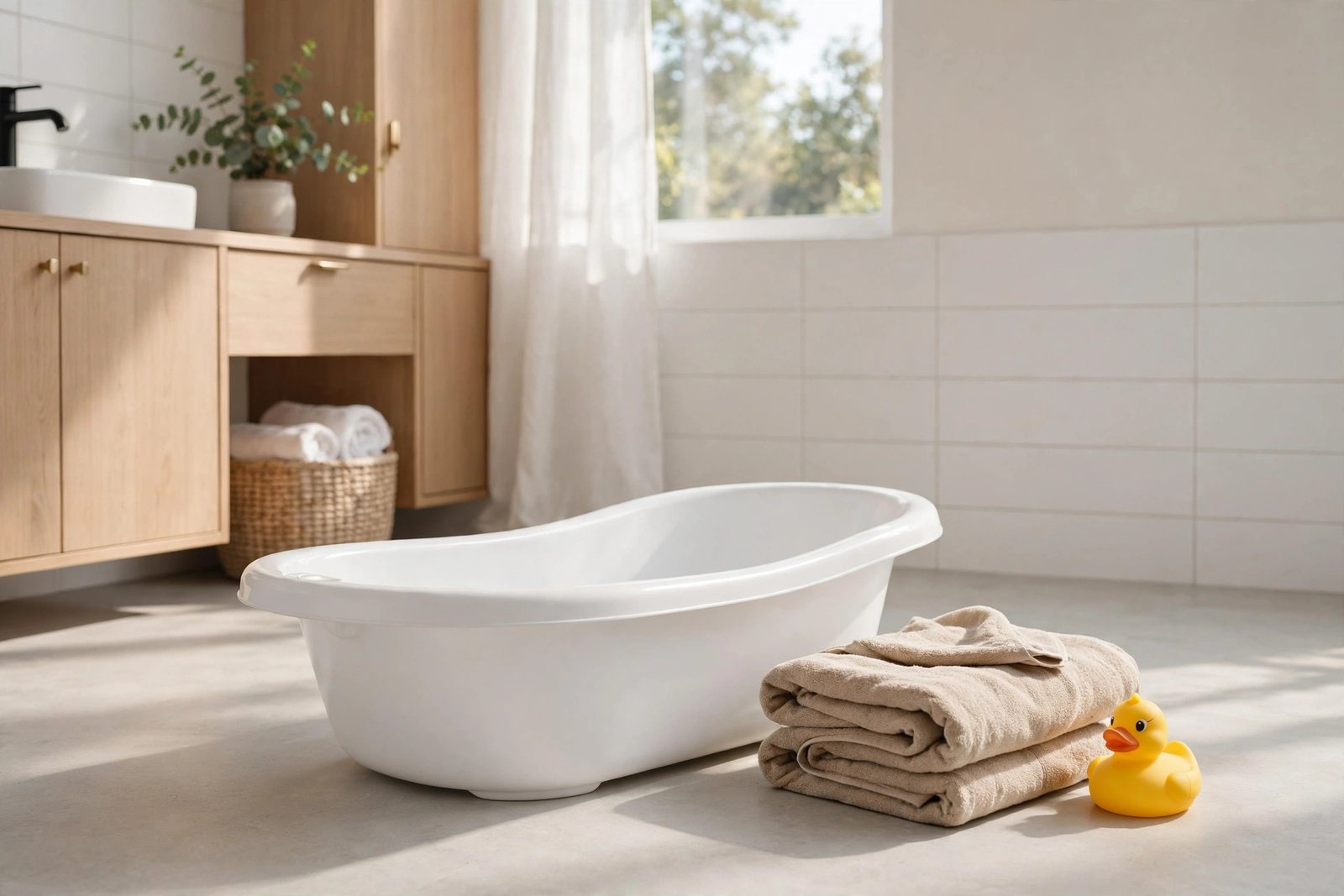
Bath time is one of the sweetest parts of the day with a baby — and also one of the moments where the right equipment matters most. A baby bathtub is not just a smaller version of an adult tub. It is designed to hold a slippery, wriggling newborn safely, support their head, and keep the water at a comfortable depth. Choosing the wrong one, or using it carelessly, turns a joyful routine into a stressful one.
The good news is that you do not need the most expensive tub on the shelf. You need one that fits your baby, fits your sink or bath, and follows a few basic safety rules. This guide walks you through the types available, what to look for, and the safety habits that matter far more than any feature.
Types of Baby Bathtubs
Most baby tubs fall into a few simple categories. A basic plastic tub is affordable, light, and easy to clean, and it suits most families perfectly well. A tub with a built-in newborn sling or hammock keeps a tiny baby supported and slightly raised, which helps new parents who worry about holding a slippery infant.
Some tubs include a drain plug, a temperature indicator, or a non-slip base — all genuinely useful, though none is essential. Inflatable tubs are handy for travel and small homes, but they need careful drying to avoid mould. Foldable tubs save space in tiny bathrooms. Whichever type you pick, the safety rules below apply equally.
What to Look for When Buying
Size and fit
Measure your sink, bath, or countertop before buying. A tub that wobbles on a too-small surface is dangerous, and one that barely fits the bath is awkward to lift when full of water. Your baby should fit comfortably with room to kick, but not so much room that they slide around.
Support and grip
Look for a contoured shape or sling that keeps your newborn’s head above water without you having to hold them up constantly. A textured, non-slip base inside the tub — and rubber feet underneath — makes a real difference on wet surfaces.
Easy cleaning
Bath toys, soap scum, and warm water are a recipe for mildew. Choose a smooth, simple shape with no hidden crevices, and pick a tub you can wipe dry quickly after each use. A drain plug saves your back when emptying it.
Baby Bath Safety Rules That Matter Most
No feature replaces supervision. Never leave your baby alone in water, even for a few seconds — not to answer the door, not to grab a towel. Gather everything you need before the bath starts: towel, nappy, clothes, and soap within arm’s reach.
- Water temperature: Aim for around 37°C (body temperature). Test with your elbow or inner wrist, and swirl the water first so there are no hot spots.
- Water depth: For a newborn, a few centimetres is enough — water should reach roughly their waist when sitting supported, never near their face.
- Hold securely: Always keep one hand on your baby, supporting the head and back, especially in the first months.
- Skip the extras: Plain warm water is fine for newborns. If you use soap, choose a mild, fragrance-free baby wash and use very little.
- After the bath: Lift your baby out carefully with both hands, wrap them in a towel immediately, and dry skin folds well to prevent irritation.
Common Mistakes to Avoid
The most common mistake is buying for the future instead of the present — a tub designed for a six-month-old is often too big and unsupportive for a newborn. Another is trusting bath seats or rings as safety devices; they are not, and they can tip. Finally, many parents overfill the tub thinking more water means a warmer bath, when it actually increases risk and makes handling harder.
The Bottom Line
A safe baby bathtub is one that fits your space, supports your newborn, and is easy to keep clean — plus a parent who never steps away. Get those basics right and bath time becomes what it should be: a calm, happy ritual you both look forward to. For more practical newborn care guides, visit Healthy Baby Guide and browse the baby care section.