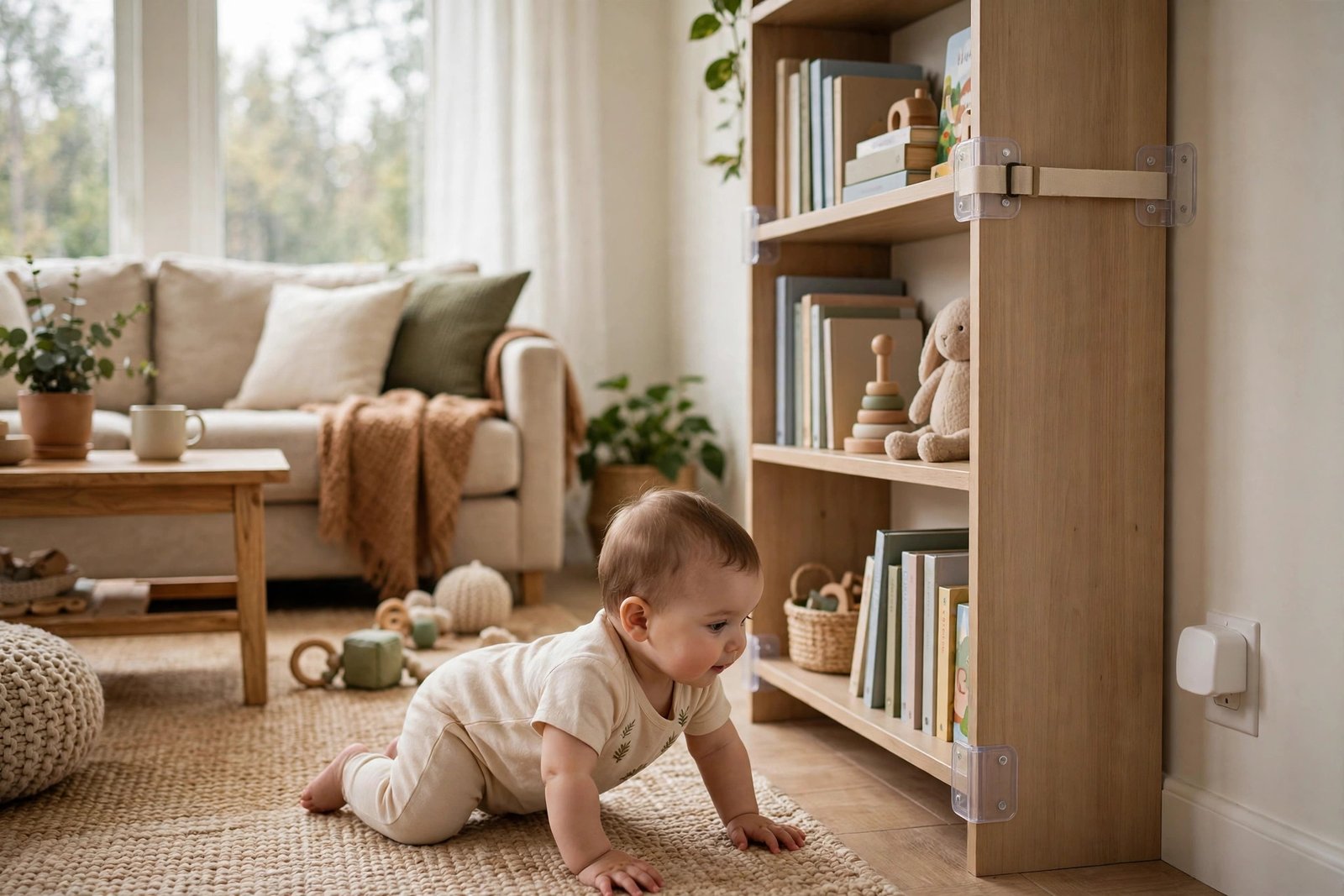
The moment your baby starts crawling, your home turns into a brand-new world of risks. Cabinets become treasure chests, power outlets become finger toys, and stairs become mountains to climb. Baby proofing your home room by room is the calmest way to handle it — instead of trying to do everything at once, you work through each space with a clear checklist. This guide walks you through every room so nothing important gets missed.
Why Room-by-Room Baby Proofing Works Best
Babies explore one space at a time, so it makes sense to secure your home the same way. A room-by-room approach keeps the job manageable: finish the living room this weekend, the kitchen next weekend, and so on. It also forces you to look at each room from your baby’s level — quite literally. Get down on your hands and knees in every room. You will spot cords, sharp corners and small objects you never noticed from standing height.
Living Room Checklist
The living room is where babies spend most of their awake time, so start here.
- Anchor bookcases, TV stands and any tall furniture to the wall with anti-tip straps.
- Cover all power outlets with sliding-plate covers, which are safer than plug-in caps that babies can pull out.
- Hide or shorten cords from lamps, chargers and blinds — bundle them with cord wraps or run them behind furniture.
- Put corner guards on sharp coffee-table edges, or move glass-topped tables to storage for now.
- Remove small objects — coins, batteries, remote-control backs — from low tables and the floor. Button batteries are an emergency-room hazard.
- Secure the TV to the wall or stand so it cannot be pulled down.
Kitchen Checklist
The kitchen combines heat, sharp objects and cleaning chemicals, so it deserves extra care.
- Fit childproof latches on lower cabinets, especially the ones holding knives, cleaning products and plastic bags.
- Move cleaning products and dishwasher tablets to a high, locked cabinet if possible.
- Use stove knob covers and always turn pot handles inward while cooking.
- Keep a baby gate across the kitchen doorway for times when you are cooking and cannot supervise closely.
- Lock the oven door with a heat-resistant latch, and never leave the dishwasher door hanging open.
- Unplug small appliances and push them to the back of the counter.
Bathroom Checklist
- Set your water heater to no higher than 48°C (120°F) to prevent scalds.
- Keep medicines, razors, cosmetics and cleaning products in a locked cabinet — never on the counter.
- Install a toilet lock and keep the lid closed; a toddler can drown in just a few centimetres of water.
- Use a non-slip mat in the bath and never leave your baby unattended in water, even for a moment.
- Unplug hair dryers and straighteners and store them out of reach.
Nursery and Bedrooms Checklist
- Keep the cot bare: no pillows, blankets, bumpers or soft toys for babies under one year.
- Position the cot away from windows, curtains and blind cords.
- Anchor dressers and wardrobes to the wall — climbing toddlers tip furniture every year.
- Use a cordless window covering, or cut looped blind cords and fit a cleat high on the wall.
- Check that night lights and humidifiers are out of reach and their cords are hidden.
Stairs, Hallways and Doors Checklist
- Install safety gates at the top and bottom of every staircase. At the top of the stairs, always use a hardware-mounted gate, never a pressure-fit one.
- Fit door-handle covers or locks on doors leading to the garage, basement or outside.
- Use door pinch guards to protect little fingers from slamming doors.
- Make sure handrails are secure and balusters are close enough that a baby’s head cannot fit through.
- Keep the hallway clear of tripping hazards like loose rugs and shoes.
Do a Final Walk-Through
Once every room is done, walk through the whole house once more — this time on your knees. Check for choking hazards (anything smaller than a toilet-paper tube), loose rugs, and anything your baby could climb on to reach something higher. Baby proofing is not a one-time job: revisit your checklist every few months as your baby grows, learns to climb and opens new kinds of trouble. For more practical guidance on keeping your little one safe and happy, explore the rest of Healthy Baby Guide.