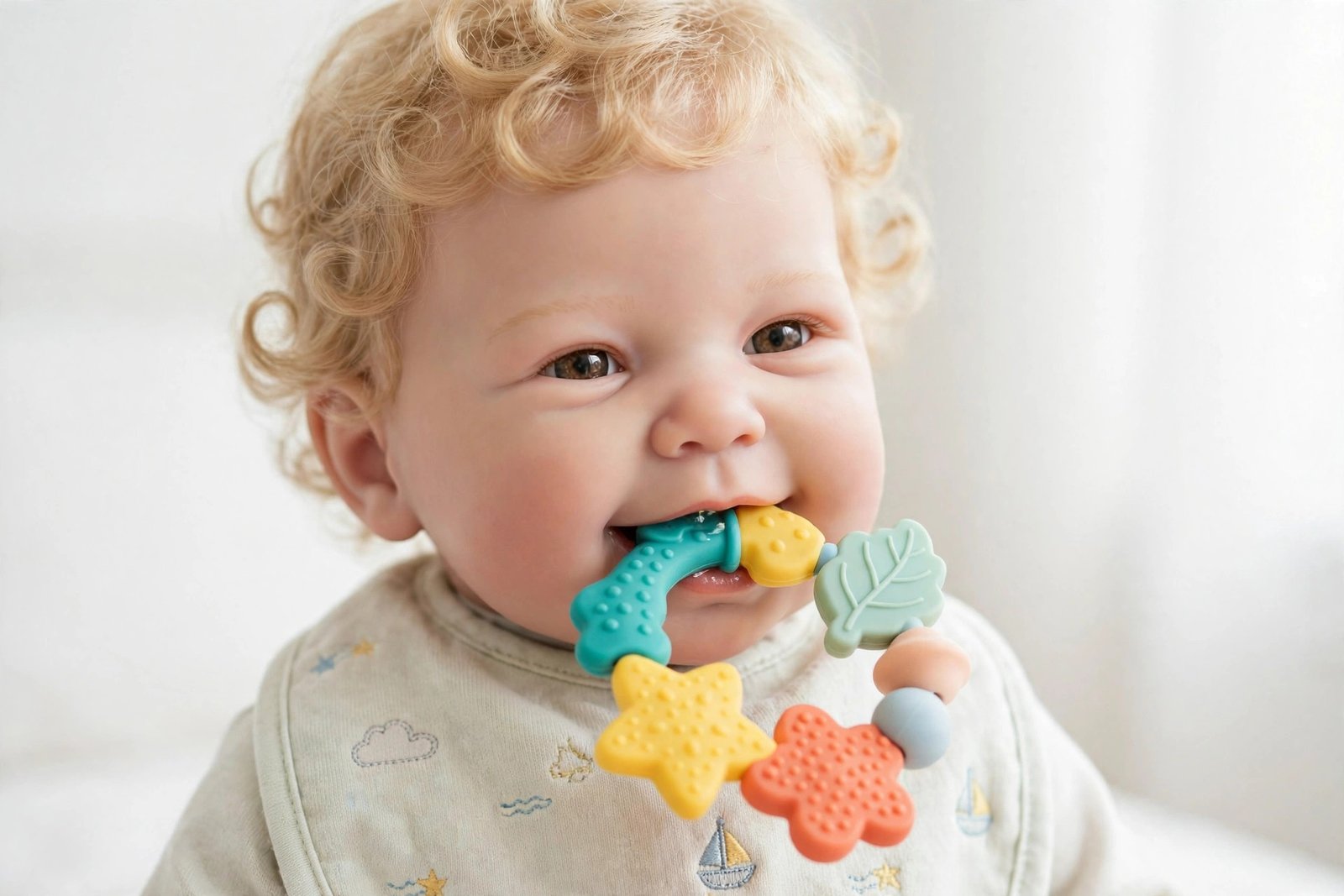
Is your usually cheerful baby suddenly drooling everywhere, chewing on everything, and waking up fussy? Those are classic clues that teeth are on the way. Knowing when babies start teething and recognizing the signs and symptoms helps you soothe your little one — and worry less about what’s normal. Here’s what to expect.
When Do Babies Start Teething?
Most babies get their first tooth between 4 and 7 months, with 6 months being the most common age. That said, the range is wide and completely normal: some babies are born with a tooth (rare), while others don’t see their first tooth until after their first birthday. Girls often teeth slightly earlier than boys, and teething timing tends to run in families — if you teethed late, your baby probably will too.
The first teeth to arrive are almost always the two bottom front teeth (lower central incisors), followed by the two top front teeth. The full set of 20 baby teeth usually arrives by around age 3.
Teething Signs and Symptoms
Common Signs
- Heavy drooling: one of the earliest and most reliable signs — you may suddenly go through several bibs a day.
- Chewing on everything: fingers, toys, your shoulder — biting gives counter-pressure that relieves sore gums.
- Swollen, red gums: the gums may look puffy or show a small white bulge where the tooth is about to break through.
- Fussiness and irritability: teething discomfort often peaks in the evening and can disrupt naps and nighttime sleep.
- Refusing feeds: sucking can feel uncomfortable on sore gums, so some babies eat less for a few days.
- Mild temperature rise: a slight increase is possible, but true fever (100.4°F / 38°C or higher) is not caused by teething — look for another cause.
What’s NOT a Teething Symptom
Teething gets blamed for a lot, but it does not cause high fever, diarrhea, vomiting, or rashes all over the body. If your baby has these, call your pediatrician — something else is going on. A drool rash around the chin and mouth is common and harmless, but anything beyond that deserves a check.
How to Soothe a Teething Baby
Safe, Simple Remedies
- Chilled (not frozen) teething rings: the cold numbs sore gums. Avoid fully frozen rings, which can be too hard on delicate gums.
- Clean finger massage: wash your hands and gently rub your baby’s gums with a finger for a minute or two.
- Cold washcloth: a damp, chilled washcloth gives babies something safe to chew and soothes at the same time.
- Chilled foods (for babies on solids): a cold spoon, chilled cucumber stick (with supervision), or cold purees can help.
- Extra comfort: teething babies are often clingier — extra cuddles really do help.
What to Avoid
Skip teething gels and tablets containing benzocaine or belladonna — major health authorities advise against them for infants. Teething necklaces and bracelets are a choking and strangulation risk. If pain seems severe, talk to your pediatrician before giving any medication.
Caring for New Teeth
Dental care starts with the first tooth. Wipe it twice a day with a soft, damp cloth, and switch to a soft baby toothbrush with a smear of fluoride toothpaste once more teeth arrive. Schedule your baby’s first dental visit by their first birthday or within six months of the first tooth appearing.
Teething Timeline at a Glance
- 4–7 months: bottom front teeth (lower central incisors).
- 8–12 months: top front teeth, then teeth beside them.
- 13–19 months: first molars — often the toughest teeth to cut.
- 16–22 months: canine teeth (the pointy ones).
- 25–33 months: second molars — the last of the baby teeth.
Teething can feel like a never-ending cycle, but each tooth that arrives is a milestone worth celebrating. Keep soothing remedies on hand, stay patient through the fussy stretches, and enjoy those new toothy grins. For more stage-by-stage baby development guides, visit Healthy Baby Guide — your practical companion for the parenting journey.