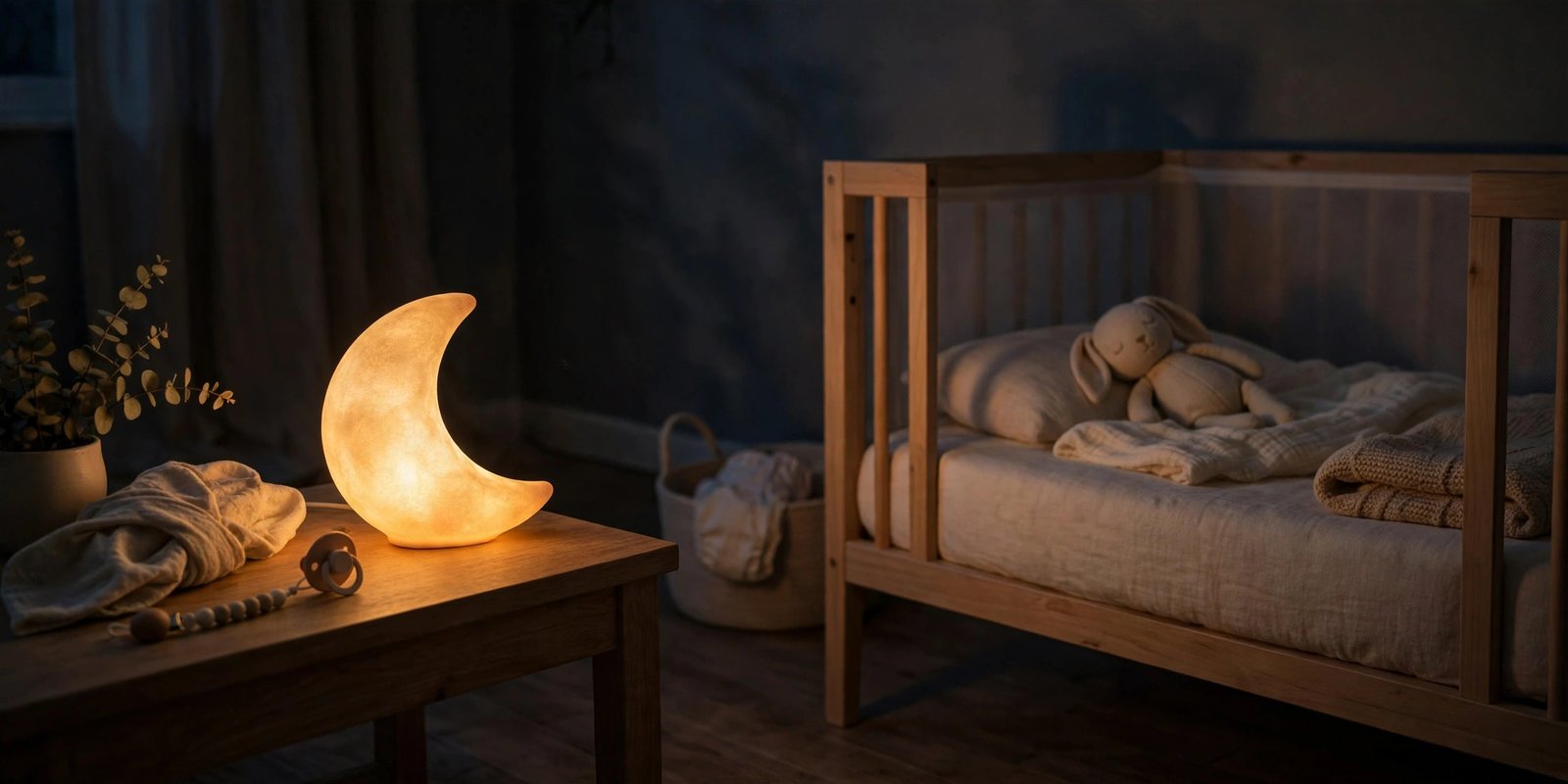
A good night light can turn a nursery from a dark, unfamiliar room into a calm, sleepy space. It helps with night feeds and nappy changes, and it gives your baby a gentle anchor when they wake in the dark. But with so many shapes, colours, and brightness settings on the market, choosing the best baby night light for nursery sleep routine takes a little thought. Here is how to pick the right one.
For more nursery and sleep guides, visit the Healthy Baby Guide homepage.
Why a Night Light Helps Sleep
Babies are not afraid of the dark in the way older children are, but a small amount of warm, steady light helps parents see what they are doing during night feeds without switching on a bright lamp that wakes the baby fully. A consistent glow also becomes part of the bedtime routine: when the light goes on, it is time to wind down, and when it stays dim, the night is for sleeping. That predictability helps babies learn the difference between night and day.
Warm Light Beats Bright White Light
The colour of the light matters more than most parents realise. Warm amber or soft red light is the least likely to disturb sleep, because it has the smallest effect on the body’s natural melatonin production. Cool white and blue-toned light, by contrast, signals the brain to stay alert. When you shop, look for a light with a warm colour temperature, ideally under 2700K, or a dedicated red or amber mode.
What to Look For When Buying
- Dimmable brightness: you want a light that can go very dim. A light that is only “on” or “off” is often too bright for a sleeping baby.
- Warm colour options: amber, red, or warm white settings are the best choices for a nursery.
- Timer or auto-off: a light that fades or switches off after 30 to 60 minutes saves battery and stops the room staying lit all night.
- Safe materials: look for a cool-touch LED, a sturdy base, and shatterproof material. Avoid glass shades and any light that gets hot.
- Simple controls: you will be operating it half asleep, so big buttons or a tap control beat a complicated menu.
- Portability: a rechargeable light you can carry to the changing table or into another room is genuinely useful.
Types of Baby Night Lights
Plug-in wall lights
These are the simplest option: they sit in a socket and give a steady, low glow. They are cheap, always ready, and never need charging, but they cannot be moved and some models are brighter than they look in the shop.
Tabletop and animal-shaped lights
Soft silicone animal or moon-shaped lights are popular because they double as a comforting object. Many are rechargeable, dimmable, and change colour with a tap. They suit nurseries well, but keep them out of the cot and away from a baby who can grab or chew them.
Projector lights
Projectors cast stars or gentle shapes onto the ceiling and can be soothing for older babies and toddlers. They work best as part of a wind-down routine rather than an all-night light, because moving images can be stimulating for some children.
Smart lights and sound machines
Some night lights pair with an app or a sound machine, offering schedules, gradual dimming, and white noise in one device. These are handy if you like automation, but make sure the controls are simple enough to use without your phone at 3am.
Where to Place the Night Light
Put the light low and away from the cot, not right beside your baby’s face. A light on a dresser or a low shelf gives enough glow for feeds without shining directly into the baby’s eyes. Never place a night light inside the cot, and keep cords and plugs well out of reach. If the light is bright enough to read by, it is too bright for sleep.
Building the Night Light Into the Routine
Consistency is what makes a night light work. Use the same light, at the same dim setting, every night. Turn it on during the bath and story, keep it on for the feed, and leave it dim through the night or set it to switch off after your baby is asleep. Over time, that soft glow becomes a cue that tells your baby the day is over.
Common Mistakes to Avoid
The most common mistake is choosing a light that is too bright or too blue. The second is changing the light every few weeks, which removes the routine value. And the third is leaving the nursery brightly lit all night, which can disturb sleep quality. Dim, warm, and consistent is the formula that works.
The Bottom Line
The best baby night light for your nursery is a dimmable, warm-toned, cool-touch light that you can operate in the dark and place safely away from the cot. You do not need the most expensive model: a simple warm LED with a timer does the job beautifully. Choose one, use it every night, and let the gentle glow become part of the routine that helps your baby, and you, get back to sleep.