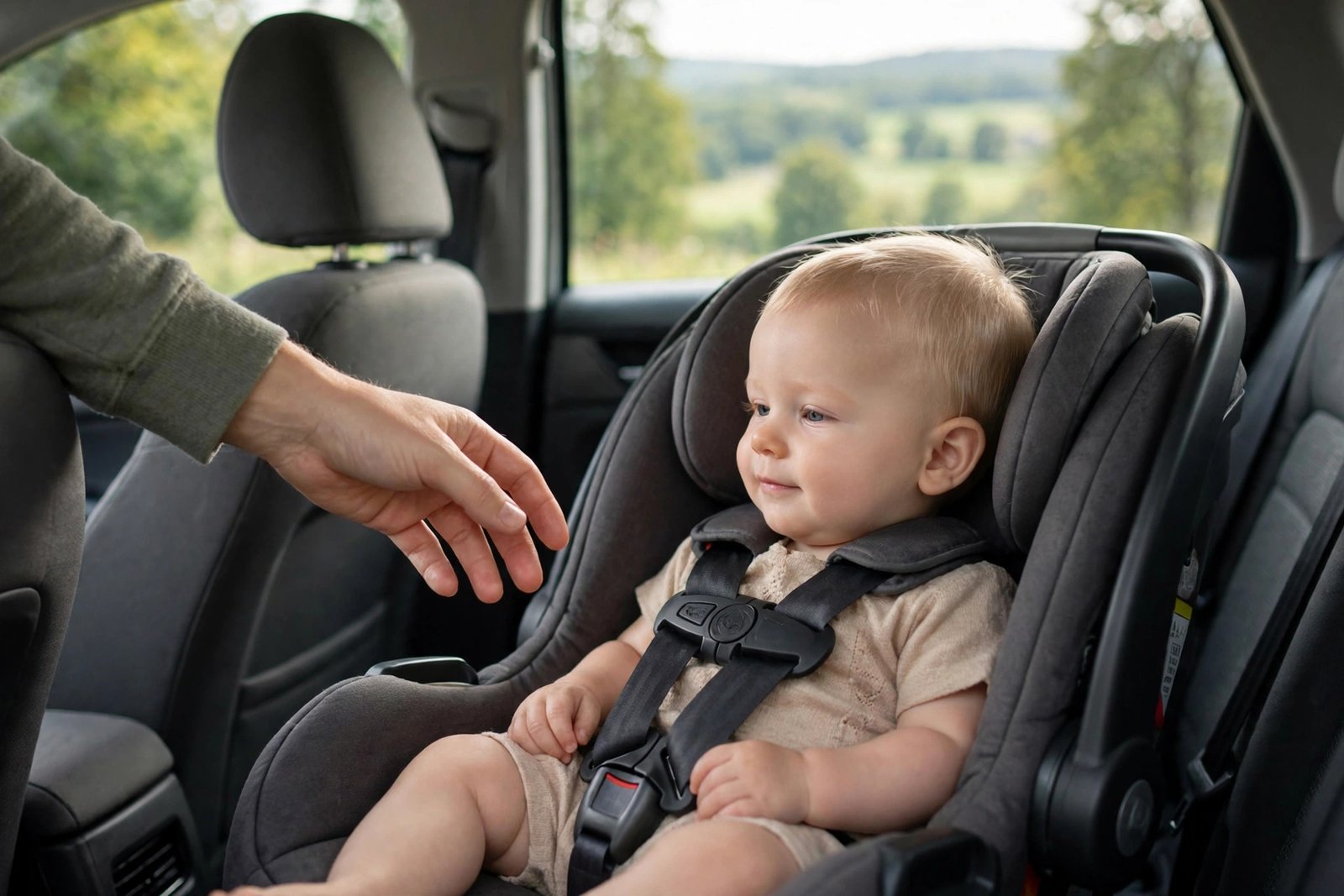
Few things test a parent’s nerves quite like a baby who starts crying in the car. You are strapped in, traffic is moving, and the one person you want to comfort is behind you, out of reach. The good news is that most car crying has a simple cause, and with a little preparation you can make most journeys calmer for everyone.
First, rule out the basics before you set off
Many car meltdowns are prevented before the engine starts. Check that your baby is fed, has a clean nappy, and is dressed comfortably for the temperature in the car. A baby who is too hot is a very common reason for car crying, because cars warm up fast and car seats are well padded. Dress your baby in one layer less than you think they need, and check the back of their neck rather than their hands to judge warmth.
Make sure the car seat straps are snug but not digging in. Straps that are too tight over a bulky coat can feel uncomfortable, and bulky coats should not be worn under harness straps anyway, as they stop the straps working properly in a crash. A thin fleece layer is a safer choice, with a blanket over the top of the harness if needed.
Why babies cry in the car
Babies cry in cars for the same reasons they cry anywhere: hunger, tiredness, discomfort, boredom, or simply wanting to be held. The difference is that you cannot pick them up, and the noise of the road can make their crying sound louder and more urgent than it is. Some babies also dislike the feeling of being reclined and unable to see much, especially once they are old enough to want to look around.
Motion sickness is less common in babies than in toddlers, but it does happen. If your baby regularly vomits in the car, goes pale, or cries only on winding roads, mention it to your doctor. In most cases, though, car crying is a comfort issue, not a medical one.
Calming tricks that actually work while driving
- Your voice. Talk or sing steadily. Babies respond to the rhythm of a familiar voice, even from the front seat. A playlist of songs you sing at home can work surprisingly well.
- White noise. The steady sound of the car engine helps some babies, but a white noise track played through the car speakers can help others. Keep the volume low and steady.
- A safe distraction. For babies old enough to grasp, a soft toy attached to the car seat can give them something to focus on. Avoid loose toys that could become projectiles if you brake suddenly.
- A mirror. A crash-tested back-seat mirror lets you glance at your baby, and lets an older baby see you too. Never turn around to look while driving; use the mirror at a glance only.
- Timing. Where possible, travel around nap time. A baby who falls asleep in the car is a baby who is not crying in the car.
What not to do
Never unbuckle your baby while the car is moving, and never let someone hold them on their lap instead of using the car seat. It feels kinder in the moment, but it is far more dangerous. If the crying is distressing you, or you are worried something is wrong, pull over somewhere safe and stop. It is always better to arrive late than to drive while distracted and stressed.
Similarly, do not dangle food, toys, or a phone where a baby could choke on small parts, and do not hand a bottle to a baby in a moving car unless you can see them clearly. If you need to feed, stop the car.
Build a calmer car routine
Consistency helps. Use the same seat, the same music, and the same pre-journey checks every time, so the car becomes a familiar place. Short practice trips around the block, with no pressure to get anywhere, can help a baby who has learned to associate the car with crying. End each short trip with something pleasant, like a walk or playtime, so the car stops meaning only long, boring journeys.
If one adult can travel in the back for the first few trips, that can break the cycle too. Once your baby learns that the car is safe and boring, they usually settle much faster on their own.
When to get advice
See your doctor if your baby cries inconsolably in the car and also shows other worrying signs, such as vomiting after most trips, a rash, breathing difficulty, or a sudden change in behaviour. Trust your instincts: you know your baby’s normal cry, and a cry that sounds different deserves a check.
For most families, though, car crying is a phase. With preparation, a calm routine, and safe stops when you need them, journeys get easier. For more everyday baby care guides, visit the Healthy Baby Guide homepage.