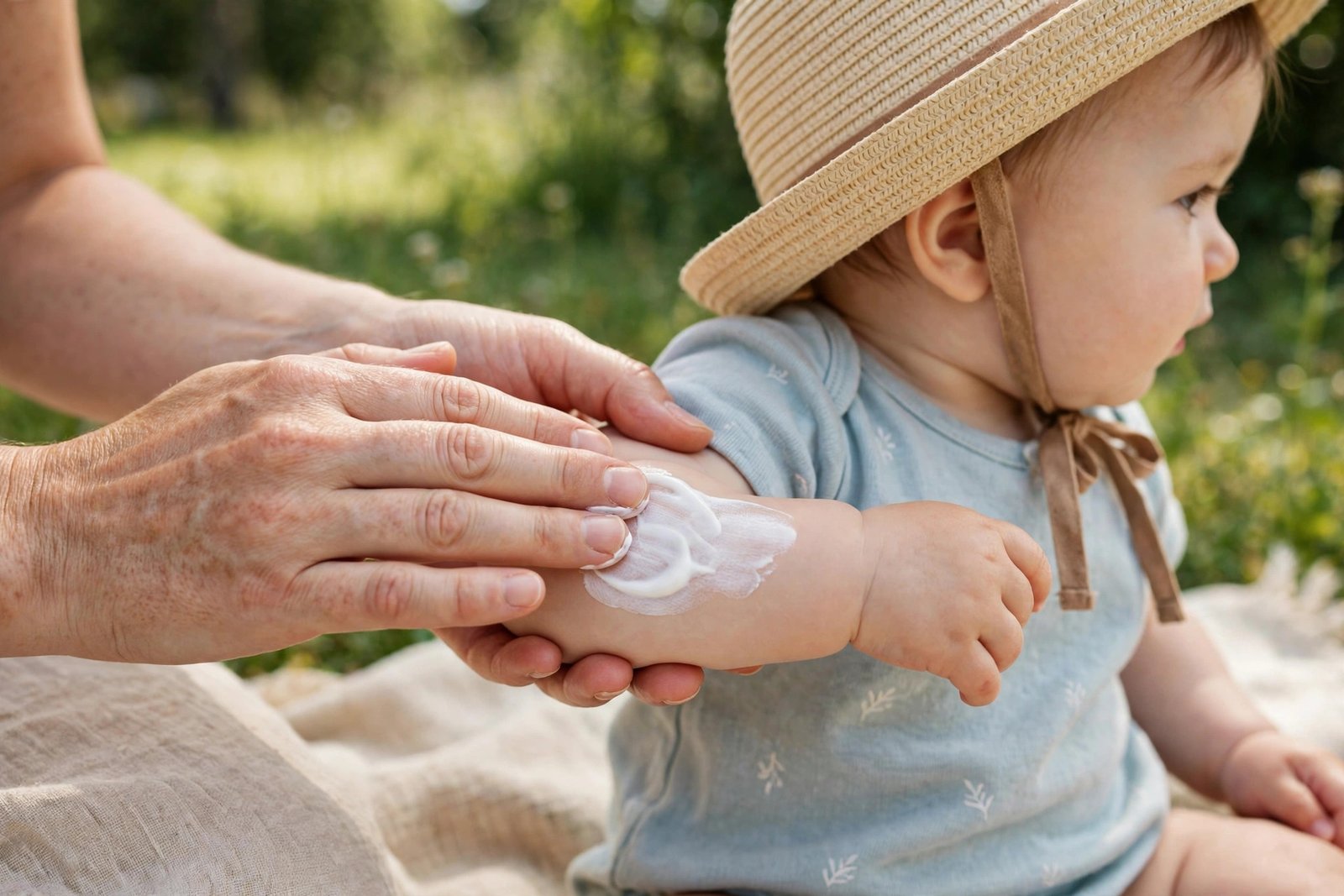
Sunny days are made for prams and parks, but a baby’s skin needs extra care in the sun. Babies have thinner, more delicate skin than adults, so they burn more easily. Choosing a sunscreen for a baby with sensitive skin can feel confusing, with shelves full of lotions, sprays, and sticks. This guide explains how to choose baby sunscreen for sensitive skin, what to look for on the label, and how to use it safely alongside shade and clothing. Babies under six months should be kept out of direct sunlight as much as possible; ask your paediatrician before using sunscreen on a very young baby.
Why Sensitive Skin Needs a Different Approach
Sensitive skin reacts more easily. It may flush, feel dry, or develop red patches after contact with fragranced products or strong chemicals. A sunscreen that suits an older child may sting a baby’s eyes or trigger a rash. That does not mean every baby with sensitive skin will react. It means the choice matters, and a patch test is worth the extra day.
Mineral or Chemical Sunscreen?
Mineral sunscreens use zinc oxide, titanium dioxide, or both. They sit on the surface of the skin, reflect ultraviolet rays, and start working as soon as they are applied. For sensitive skin, mineral sunscreen is often the first choice. It is less likely to sting or irritate than many chemical formulas, and zinc oxide is also used in nappy creams.
Chemical sunscreens use ingredients that absorb ultraviolet rays. They tend to rub in clear and feel lighter. Some babies with sensitive skin tolerate them well, while others find they sting, especially on the face or on skin with eczema. The best sunscreen is the one your baby tolerates and that you will use every time. If your baby has eczema or very reactive skin, a mineral formula is usually the safer starting point.
What to Look for on the Label
When comparing products, a few details matter more than marketing words:
- SPF 30 or SPF 50: SPF 50 blocks slightly more UVB than SPF 30. Either is a good choice if you apply enough and reapply.
- Broad spectrum: This means protection against both UVA rays, which contribute to skin damage, and UVB rays, which cause sunburn.
- Fragrance-free: Fragrance is a common irritant. Choose “fragrance-free” rather than “unscented”, as unscented products can still contain masking fragrance.
- Water resistant: Useful if your baby will paddle or sweat. It does not mean waterproof. Reapply after swimming or towelling, and at least every two hours.
- Short, simple ingredients: Fewer added extras often means less to react to. Avoid added alcohol, strong essential oils, or lots of botanical extracts if your baby’s skin is reactive.
How to Patch Test and Apply It
Apply a small amount to the inside of the forearm or behind the ear, and check after a few hours and again the next day. Look for redness, swelling, itching, or raised spots. If the skin looks calm, the product is likely suitable. If there is a reaction, wash gently with lukewarm water, stop using it, and try a simple mineral formula. If a reaction is strong or your baby seems unwell, contact your paediatrician or health visitor.
Apply sunscreen 15 to 20 minutes before going outside, and use a generous amount. Most people use too little. Aim for an even layer on all exposed skin, including ears, the back of the neck, the tops of feet, and the backs of hands. Take care around the eyes, and rely on a hat with a brim and sunglasses if your baby will wear them. Reapply every two hours, and straight after swimming or towelling dry. At the end of the day, wash it off gently with lukewarm water and a mild, fragrance-free wash.
Lotion is usually the easiest choice for babies, as you can see where you have applied it. A stick is handy for cheeks, ears, and the nose. Avoid sprays on a small baby: the mist can be breathed in and it is easy to miss patches. If you use a spray, spray it into your hands first and rub it on, away from the face. For more baby care ideas, visit the Healthy Baby Guide homepage.
Sun Protection Beyond Sunscreen
Sunscreen should be the last line of defence, not the only one. Keep babies in shade, especially between 11am and 3pm, using a pram shade or umbrella. Dress them in light, loose clothing with long sleeves, a wide-brimmed hat, and sunglasses with UV protection. Plan outings for the morning or late afternoon when you can, and remember that cloud does not block all ultraviolet rays. Offer regular feeds or water for older babies, and watch for flushed cheeks or unusual sleepiness, which can signal overheating.
For eczema-prone skin, apply moisturiser first, then sunscreen, and keep broken skin covered. Ask your paediatrician for advice if eczema is severe.
Final Word
Choosing baby sunscreen for sensitive skin does not need to be stressful. Start with a simple, fragrance-free, broad-spectrum mineral sunscreen at SPF 30 or 50, patch test it, apply it generously, and pair it with shade, a hat, and covering clothes. Watch your baby’s skin, and change product calmly if a reaction appears. If you are unsure, especially if your baby is under six months old or has eczema, ask your paediatrician or health visitor.