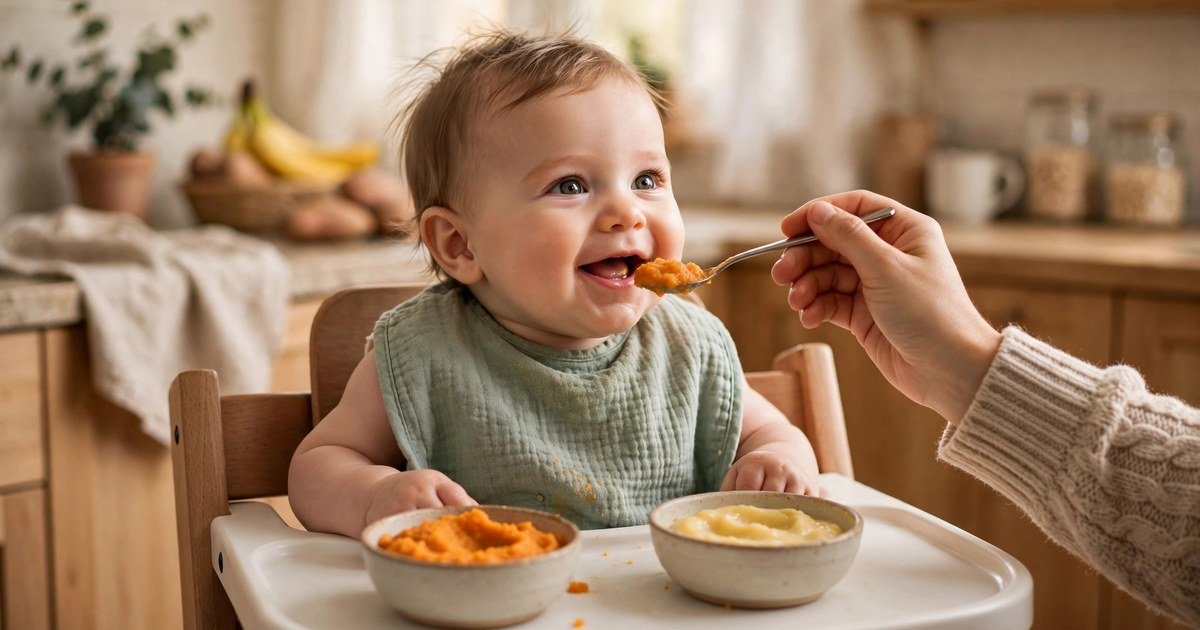
Around six months, your baby starts showing new skills — sitting with support, grabbing toys, and watching your food with total fascination. That is usually the moment parents begin to ask: how do I introduce solids to my 6-month-old baby? The good news is that it is simpler than most guides make it sound. Here is a calm, practical walkthrough of when, what, and how to begin.
When Is Your 6-Month-Old Ready for Solids?
Age is only one piece of the puzzle. Before offering any food, look for these readiness signs:
- Sits with support — your baby can hold their head steady in a high chair.
- Lost the tongue-thrust reflex — they no longer push food straight back out with their tongue.
- Shows interest — reaching for your food, watching you eat, opening their mouth.
- Doubled birth weight — roughly, and shows hunger between milk feeds.
If your baby was born prematurely, use their adjusted age and check with your pediatrician. Breast milk or formula remains their main nutrition until about 12 months — solids at this stage are for learning, not calories.
What to Feed First
Start with single-ingredient foods so you can spot any reaction easily. Offer one new food for 2–3 days before adding another. Good first foods include:
- Iron-fortified baby cereal mixed with breast milk, formula, or water to a thin consistency.
- Mashed vegetables — steamed sweet potato, carrot, pumpkin, or peas.
- Mashed fruits — ripe banana, cooked apple or pear, avocado.
- Protein options — well-cooked lentils or soft-cooked egg yolk, if your pediatrician agrees.
Foods to Avoid at 6 Months
Do not give honey (risk of infant botulism), cow’s milk as a drink, foods with added salt or sugar, and anything that is a choking hazard — whole grapes, nuts, hard raw vegetables, or big chunks. You can find more age-appropriate guidance across our feeding resources on the Healthy Baby Guide homepage.
How to Offer the First Meals
Keep it relaxed. Choose a time when your baby is awake and mildly hungry — not starving or exhausted. This is usually mid-morning, after a milk feed, rather than replacing a feed.
- Start with 1–2 teaspoons of food. That is a full meal at first.
- Use a small, soft spoon and bring it to your baby’s mouth — do not force it in.
- Expect faces, mess, and food everywhere. This is tasting and exploring, not “eating.”
- Stop when your baby turns away, pushes the spoon, or closes their mouth. Never force bites.
A Simple First-Week Plan
Days 1–2: Rice or oat cereal mixed thin — once a day, a few spoonfuls.
Days 3–4: Add steamed mashed sweet potato as the second food.
Days 5–7: Add mashed banana or avocado, still one feeding session per day.
Gradually increase from one to two and then three small meals over the coming weeks. Thicken textures slowly as your baby manages them.
Common Worries Parents Have
My baby pushed the food out — are they not ready?
Not necessarily. The tongue-thrust reflex fades gradually, and some babies need a week of practice. If they happily open their mouth, they are ready even if half the spoonful ends up on their chin.
How much water should I give?
Just a few sips from a cup with meals — 2–4 ounces total a day is plenty. Milk remains the main drink.
What about allergies?
Introduce common allergens (egg, peanut, dairy, fish, wheat, soy) one at a time, in small amounts, at home — not right before a nap — so you can watch for hives, vomiting, or swelling. If your baby has severe eczema or a known egg allergy, talk to your pediatrician first.
Signs Your Baby Is Full or Wants More
Babies are good at signaling. Fullness cues: turning the head away, closing the mouth, pushing the spoon, getting fussy. Hunger-for-more cues: leaning forward, opening the mouth, reaching for the spoon. Trust their signals rather than aiming for a certain number of spoonfuls.
Final Tips for a Stress-Free Start
- One parent feeds, both parents smile — your calm mood makes mealtimes enjoyable.
- Sit your baby upright in a high chair with a footrest if possible.
- Expect gagging — it is a normal reflex that protects the airway, different from choking.
- Keep milk feeds unchanged — offer milk before or after solids as usual.
- Be patient — it can take 10–15 exposures before a baby accepts a new food.
Introducing solids to your 6-month-old is the beginning of a fun adventure. Go slow, follow your baby’s lead, and enjoy the messy, joyful process.