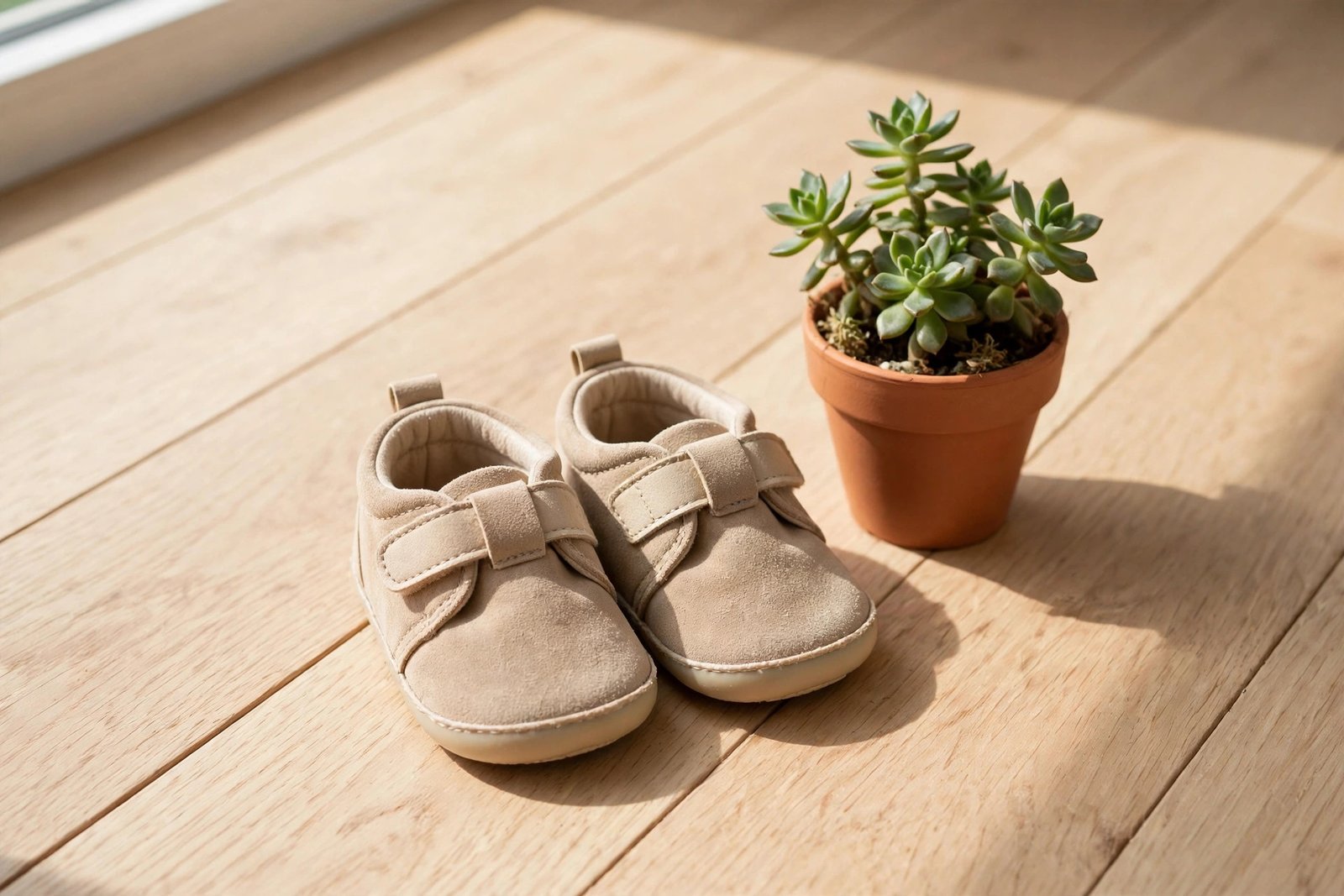
Your baby has just taken those first wobbly steps, and suddenly everyone has an opinion about shoes. The truth is simpler than the shoe shop displays suggest: for new walkers, less shoe is usually better. Soft, flexible, and well-fitting beats stiff and fancy every time.
Do new walkers even need shoes?
Indoors, bare feet are best. Bare feet let babies feel the ground, grip with their toes, and build balance and strength in their feet and ankles. Shoes are mainly for protection outdoors, on rough or cold surfaces, or when your baby is walking somewhere that is not clean or safe for bare feet.
That means your baby’s first shoes are really outdoor shoes. They do not need to “support” the ankle or “correct” flat feet. Babies are naturally flat-footed, and their arches develop over the first few years. A stiff, high-top shoe will not speed that up, and it can actually make walking harder by restricting movement.
What to look for in first shoes
- Soft, flexible soles. You should be able to bend and twist the shoe easily in your hands. If you cannot bend it, your baby’s foot cannot bend in it either.
- Lightweight. Heavy shoes tire little legs quickly and change how a baby walks.
- Room to grow, but not too much. Aim for about a thumb’s width (roughly 1 cm) between the longest toe and the end of the shoe. Much more than that, and your baby will trip.
- A wide toe box. Toes need room to spread. Pointed or narrow shoes squeeze developing feet.
- Easy fastenings. Velcro or elastic fastenings are easier than laces for wriggly feet, and they let you adjust the fit quickly.
- Breathable materials. Soft leather or canvas lets feet breathe and moulds to the foot shape better than stiff synthetics.
Getting the size right
Baby feet grow fast, sometimes a full size in a few months, so check the fit every six to eight weeks. Measure both feet while your baby is standing, if they will cooperate, and fit to the larger foot. Shop in the afternoon when feet are slightly larger, and always try shoes on with the socks your baby will wear.
Watch for signs the shoes are too small: red marks on the feet after wearing, toes curling, your baby suddenly refusing to walk, or shoes that are hard to get on. Any of these means it is time to size up.
What to avoid
Skip hand-me-down shoes that are already moulded to another child’s foot shape, stiff boots marketed as “supportive”, and shoes with heels of any kind. Flip-flops and slip-on shoes fall off constantly and make babies grip with their toes, which changes their walking pattern. Save character shoes and dress shoes for photos, not for walking practice.
When to replace first shoes
Check the fit every few weeks, because baby feet grow in spurts. Replace shoes when the thumb’s-width gap at the toe disappears, when the shoe starts to pinch at the sides, or when the sole wears unevenly. Worn soles change how a baby balances, so a cheap pair that has gone smooth is worse than no shoes at all indoors. Keep the old pair for messy outdoor play if they still fit, and buy the next size up promptly rather than squeezing extra weeks out of a tight pair.
One pair is enough
You do not need a wardrobe of baby shoes. One well-fitting pair for outdoors, plus bare feet or soft socks indoors, will cover almost everything. Keep a second pair only if the first is often wet or muddy. As your baby becomes a confident walker and starts running and climbing, you can move to slightly sturdier shoes with a bit more grip, but flexibility still matters more than anything else.
First steps are a milestone worth celebrating, and the right shoes simply get out of the way and let your baby practise. For more practical guides for new parents, visit the Healthy Baby Guide homepage.