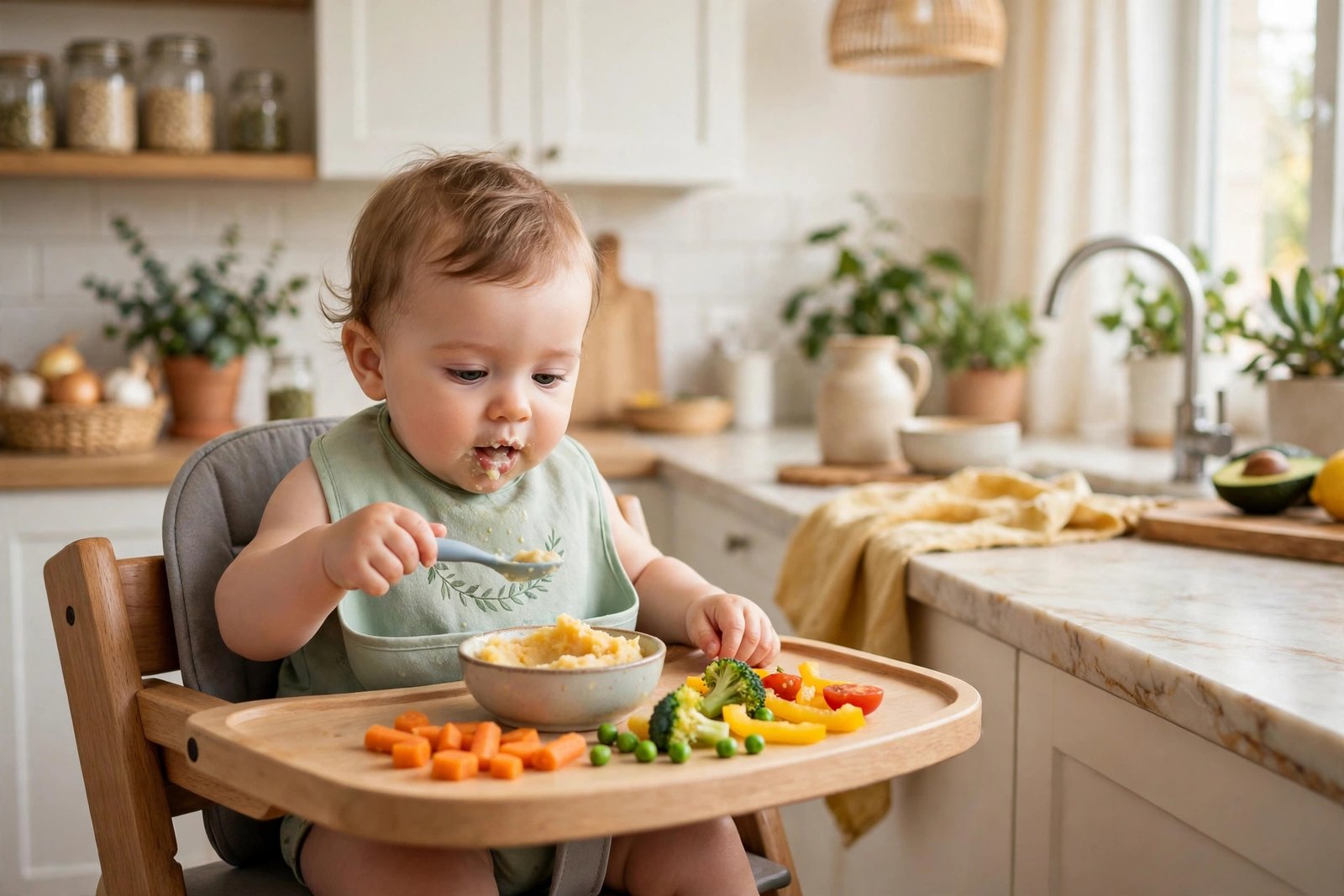
For months, milk has been your baby’s whole world. Then one day they start watching every bite you take, reaching for your plate, and suddenly the question arrives: is my baby ready for solid foods? Starting solids is an exciting milestone, but starting too early — or waiting too long — can both cause problems. The good news is that babies give clear signs when they are ready, and age is only part of the story.
Most health experts suggest starting solids at around six months, alongside continued breast milk or formula. But readiness is about development, not the calendar alone. Here are the signs to look for, the ones that do not count, and how to begin safely.
The Key Signs Your Baby Is Ready
Look for several of these signs together, not just one in isolation:
- Sitting with support: Your baby can sit upright in a high chair with minimal support and hold their head steady. This matters because safe swallowing needs an upright posture.
- Lost the tongue-thrust reflex: Young babies automatically push food out with their tongue. When this reflex fades, food stays in instead of being pushed straight back out.
- Shows interest in food: Your baby watches you eat, reaches for your food, opens their mouth when food approaches, or leans forward eagerly.
- Can pick things up: Developing hand-to-mouth coordination — grabbing toys and bringing them to the mouth — shows readiness to handle finger foods later.
- Seems hungry despite enough milk: If your baby still seems unsatisfied after full milk feeds and is gaining well, solids may be the next step. Hunger alone, though, is not a reliable sign on its own.
Signs That Do NOT Mean Readiness
Several things parents often mistake for readiness are actually normal development. Waking at night is not a sign your baby needs solids — night waking has many causes, and early solids do not reliably improve sleep. Chewing on fists is usually teething or exploration. And simply being a big baby, or reaching a particular weight, says nothing about swallowing readiness.
Starting solids before four months is not recommended: a young baby’s gut and kidneys are still maturing, and early solids can displace the milk that provides complete nutrition. If you are unsure, your paediatrician can confirm readiness at a routine check.
How to Start Solids Safely
Begin with simple, single foods
Start with smooth purées or very soft mashed foods: cooked sweet potato, carrot, banana, avocado, or baby rice mixed with milk. Offer one new food at a time, a few days apart, so you can spot any reaction. Keep portions tiny — a teaspoon or two is a fine first serving.
Watch for allergies
Introduce common allergens such as egg, peanut, and wheat one at a time and in small amounts, and watch for reactions like rash, swelling, or vomiting. Current guidance actually encourages introducing allergens around six months rather than avoiding them, but do it deliberately and talk to your doctor if allergies run in the family.
Keep milk as the main nutrition
Solids at this stage are about learning tastes and textures, not replacing milk. Breast milk or formula remains your baby’s main source of nutrition until around twelve months. Offer solids after a milk feed at first, so a hungry baby is not frustrated by a slow new skill.
Moving Beyond First Tastes
Within a few weeks, most babies progress from smooth purées to lumpier textures and soft finger foods such as cooked carrot sticks, banana slices, and soft toast fingers. Let your baby explore mess — squashing, smearing, and dropping food is how they learn. It is messy, but it is also exactly how confidence with food develops.
Stay close during every meal, keep your baby upright, and never leave them eating unsupervised. Gagging is common as babies learn — it is noisy and dramatic but different from choking, which is silent. Knowing basic infant first aid before starting solids is one of the most useful things any parent can do.
Enjoy the Milestone
Starting solids is messy, funny, and a genuine milestone worth celebrating. Trust the readiness signs, start simple, and let your baby set the pace. For more guidance on feeding, sleep, and everyday baby care, explore Healthy Baby Guide.