What Is Separation Anxiety?
Separation anxiety is a normal, healthy stage of development. From around eight months, babies begin to understand that they are separate people from their parents, and that when you leave the room, you are really gone — they do not yet know you will come back. That realisation can bring tears, clinginess, and protests at drop-off. It is not a sign that you have done something wrong. In fact, it shows a strong, secure attachment: your baby loves being with you and notices your absence.
Separation anxiety often peaks between 10 and 18 months and gradually eases as toddlers learn, through repeated experience, that goodbyes are followed by reunions. Daycare drop-off can intensify it, because it combines a new place, new people, and a longer separation. The good news is that most children settle into daycare happily once the routine becomes predictable. The first weeks are usually the hardest, for parents as well as children.
Preparing Before the First Day
Preparation reduces the shock of the new. If possible, visit the daycare together a few times before the real start, so the rooms, sounds, and carers become familiar. Talk about daycare in a warm, matter-of-fact way: “Tomorrow we go to nursery, you will play with the blocks, and then Mummy comes back.” Short practice separations help too — leave your baby with a trusted relative or friend for an hour, then return cheerfully, so they learn that leaving ends with coming back.
Pack a comfort item if the nursery allows it: a favourite soft toy, a blanket, or a small cloth that smells of home. Familiar objects are genuinely soothing. Also keep your own emotions in check at drop-off as much as you can. Babies read faces remarkably well; a calm, smiling parent signals that this place is safe.
The Drop-Off Routine That Works
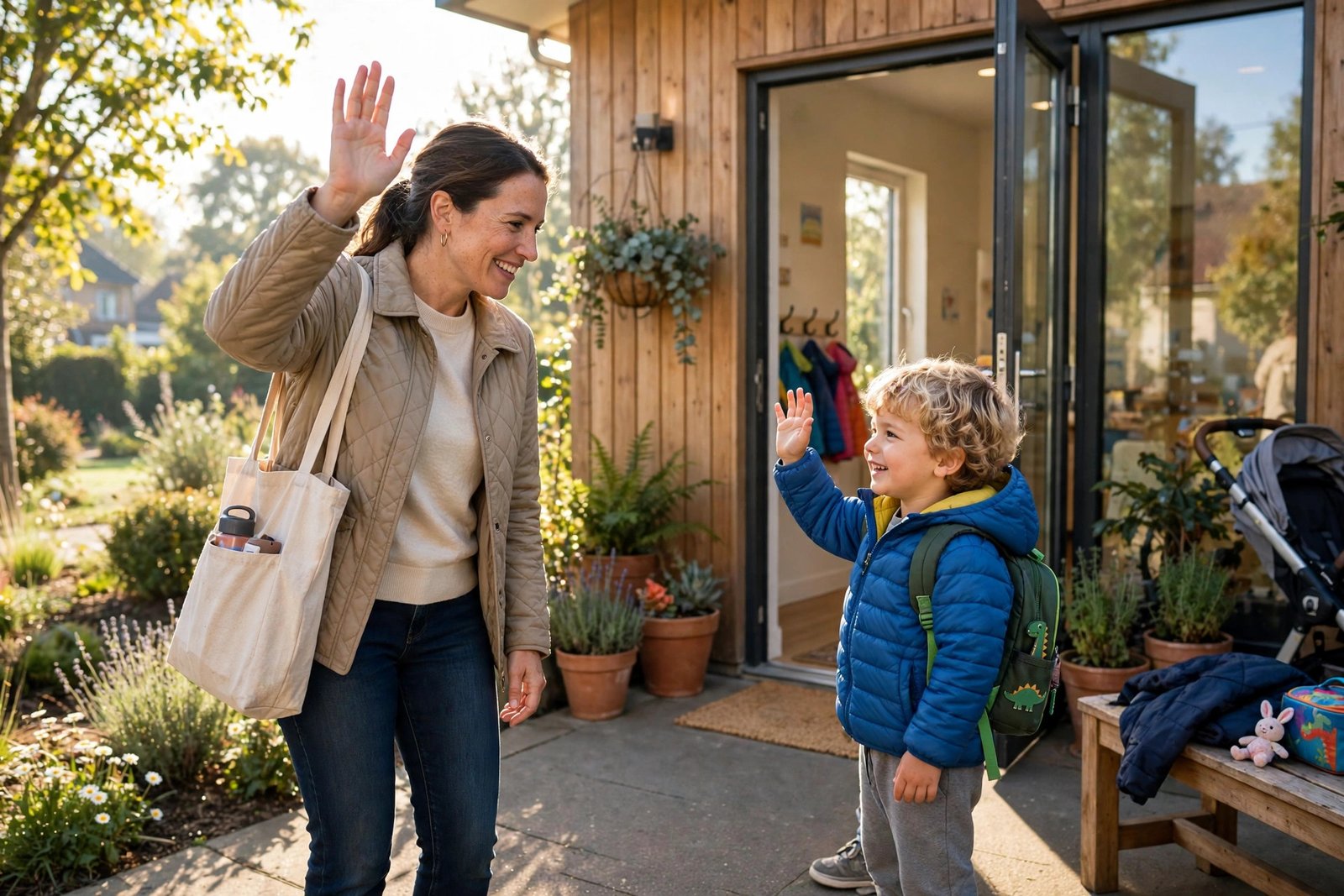
Children cope best with a short, predictable goodbye. Develop a ritual and use it every day: a hug, a special phrase (“See you after snack time”), and a wave at the window. Then go. Lingering, sneaking out while they are distracted, or returning for “one more hug” several times usually makes things harder, because the child learns that protesting longer brings you back — and the goodbye becomes longer and more distressing each day.
That does not mean being cold. Be warm, confident, and brief. Hand your child to a carer, say your goodbye phrase, and leave. It is normal for a child to cry for a few minutes after you go and then settle into play; most daycare staff will tell you honestly how long the tears lasted, and a quick call later in the morning can reassure you. If your child cries all day, every day, for weeks, raise it with the nursery — that may point to something that needs adjusting, such as settling-in time or staffing.
Helping at Home
- Play peekaboo and hide-and-seek: these games teach, in a fun way, that things and people who disappear come back.
- Practise brief separations at home: pop into another room and return with a smile, gradually lengthening the time.
- Keep mornings calm and unhurried where possible; a rushed, stressed start makes drop-off harder.
- Talk about feelings simply: “You felt sad when Mummy left, and then you played with the cars.” Naming feelings helps children manage them.
- When you collect your child, greet them warmly and let them tell you — in words or gestures — about their day.
What Not to Do
Avoid sneaking away without saying goodbye. It may dodge a scene today, but it teaches your child that you might vanish at any moment, which increases anxiety overall. Avoid making big promises you cannot keep, such as “I will be back in five minutes” when it will be hours — instead use events they understand: “after lunch” or “after your nap.” And try not to show your own guilt or distress too openly at the door; your child takes their cue from you.
When Anxiety Needs Extra Support
Most separation anxiety eases within a few weeks of a new routine. Seek advice from your health visitor or paediatrician if distress is extreme, lasts for many months without improvement, affects eating or sleeping badly, or your child seems withdrawn or fearful far beyond drop-off times. Occasionally, extra settling-in support or a change of routine is all that is needed, and professionals can help you work out what fits your child.
Drop-off tears are hard to walk away from, but they are usually a sign of a healthy bond, not a broken one. With a consistent routine, a warm goodbye, and patience, most babies learn that daycare is a safe, fun place — and that you always come back. For more support for the early years, visit the Healthy Baby Guide homepage.