Bath time should be one of the calmest moments of the day, but for many new parents it comes with a nagging worry: is the water too hot? A baby’s skin is far thinner and more sensitive than an adult’s, so water that feels pleasantly warm to your hand can still scald a newborn. A good baby bath thermometer takes the guesswork out of bath time and helps you keep every bath at a safe, comfortable temperature.
What Is the Safe Water Temperature for a Baby’s Bath?
Paediatric guidance generally recommends bath water between 37°C and 38°C (98.6°F to 100.4°F) — roughly body temperature. Water above 40°C (104°F) can scald a baby’s delicate skin in seconds, while water below 36°C can leave a small baby chilled very quickly. The safest habit is to check the temperature every single time, even if you have just run the bath the same way as yesterday. Boilers, mixer taps and the weather can all change the temperature coming out of the tap.
Types of Baby Bath Thermometers
There are three main types, and each suits a different style of bath time.
Floating bath thermometers
These sit in the water and display the temperature on a clear dial or digital screen. Many change colour or flash a warning when the water is too hot. They are simple, cheap and easy to read at a glance, which makes them the most popular choice for new parents.
Digital probe thermometers
A probe thermometer gives a fast, precise reading, often in a few seconds. You dip the tip into the water and read the number. They are very accurate, but you need to remember to use one each time rather than relying on a device that floats in the bath.
Thermometer bath toys
Some bath toys and bath mats include a built-in temperature indicator that changes colour when the water is too hot. These are handy as a backup, but they are usually less precise than a dedicated thermometer, so treat them as a second check rather than your only one.
What to Look For When Choosing One
- Accuracy: Look for a thermometer that reads to within 0.5°C and displays in both Celsius and Fahrenheit if that helps you.
- Clear warning: A red “too hot” indicator or an alarm is genuinely useful when your hands are full.
- Easy to read: Large digits or a simple colour scale beat a tiny dial when you are holding a wriggling baby.
- Safe materials: Choose BPA-free plastic and a sealed, waterproof design with no small parts that could come loose.
- Floats or stays put: A floating thermometer stays in the water where you can see it throughout the bath.
How to Use a Baby Bath Thermometer Correctly
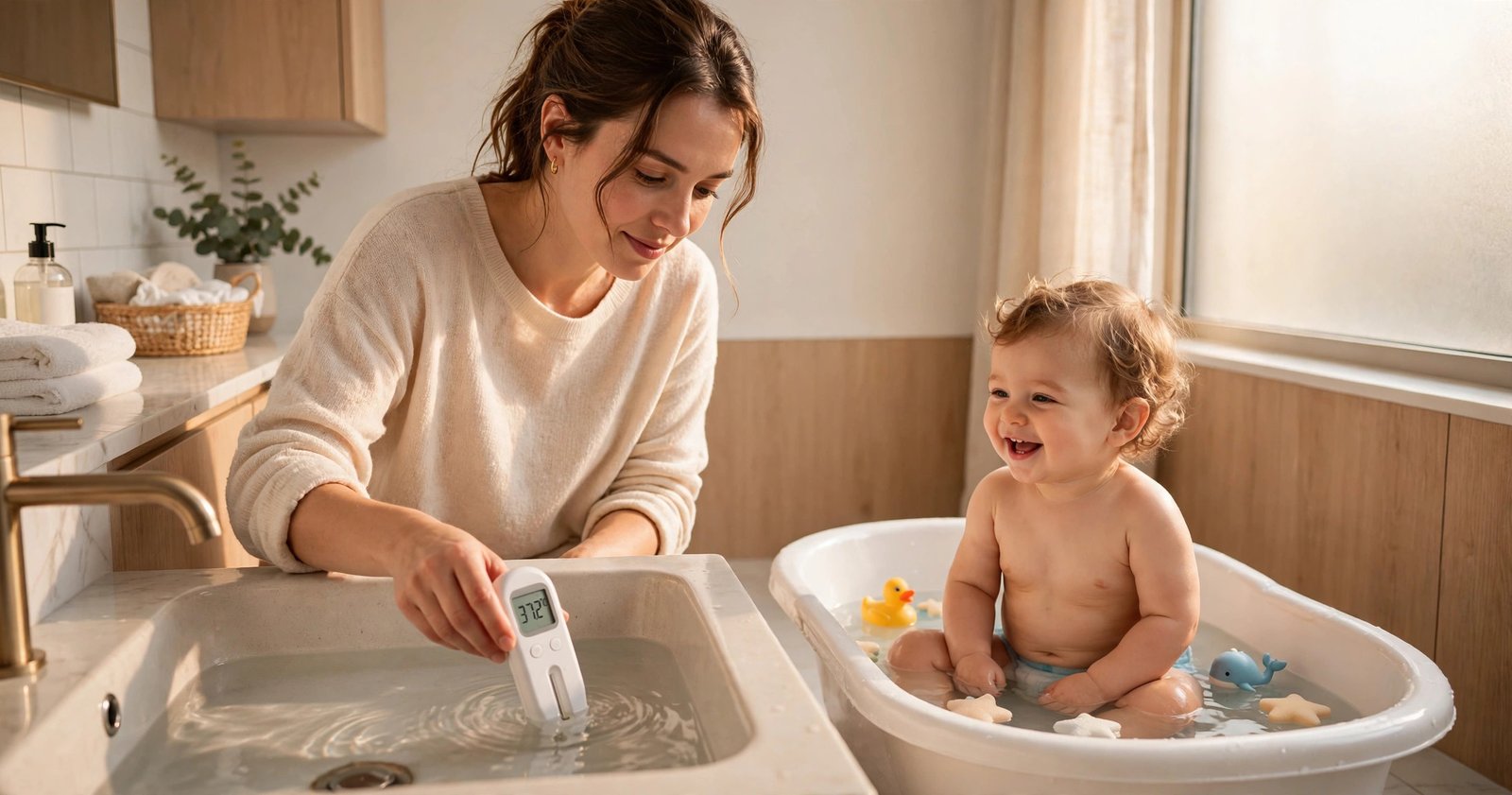
Run the bath first and stir the water well before you test it — hot water can sit in layers, warm at the top and hotter near the tap. Place the thermometer in the middle of the bath, away from the running tap, and wait for the reading to settle. Aim for 37°C to 38°C. Always double-check with the inside of your wrist or elbow as well; it is a useful second sense. Never put your baby in the bath while the tap is still running, and never leave a baby unattended in water, even for a moment.
Common Mistakes to Avoid
The most common mistake is testing the water with your hand alone. Your hands are used to hot water from washing up and showers, so they are a poor judge of what is safe for a baby. Another is adding hot water after the baby is already in the bath — always get the temperature right first. Finally, do not rely on the bath thermometer alone if it is old or damaged; if the reading looks wrong, trust your wrist and re-check with a second method.
Do You Really Need One?
Strictly speaking, you can bathe a baby safely using the wrist test alone, and many parents do. But a thermometer costs very little, removes doubt, and is especially reassuring in the first few months, when you are still learning what “just right” feels like. It is also helpful when grandparents or a babysitter give the bath, because the safe number is right there in front of them.
The Bottom Line
The best baby bath thermometer for safe water temperature is one that is accurate, easy to read at a glance, and always within reach at bath time. Keep the water at 37°C to 38°C, stir before you test, and check with your wrist too. With that simple routine, bath time stays safe, warm and relaxing for both of you. For more practical guidance on everyday baby care, visit our homepage for the latest guides.