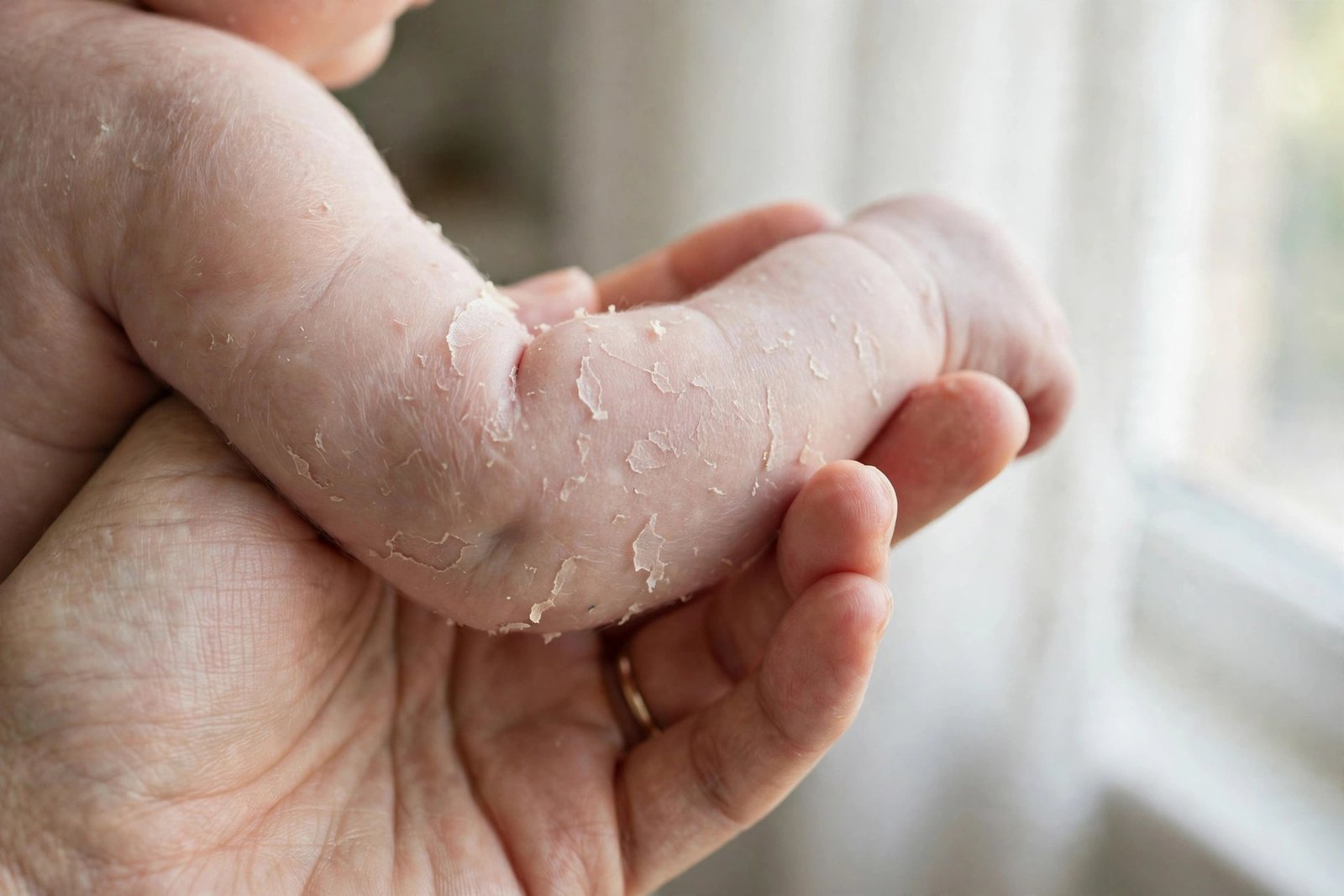
Noticing your newborn’s skin peeling and flaking can be alarming, especially in the first few weeks. The good news is that in most cases it is completely normal. Newborn skin peeling is one of the most common things parents ask their health visitor or paediatrician about, and it usually resolves on its own without any treatment.
Why Is My Newborn’s Skin Peeling?
Before birth, your baby lived in fluid, protected by a creamy white coating called the vernix. After birth, that protective layer is gone and the skin has to adjust to dry air for the first time. The outer layer of skin dries out and sheds — a bit like a mild, natural exfoliation. This is most common in babies born after their due date, because they have spent longer in the womb and their vernix has already worn away. Peeling usually appears in the first one to two weeks and often affects the hands, feet, ankles and wrists first.
What Does Normal Newborn Peeling Look Like?
Normal peeling is dry, flaky skin that comes away in small patches or thin sheets. The skin underneath looks healthy and pink, not red or raw. Your baby should not seem uncomfortable, itchy or in pain, and there should be no blisters, oozing or yellow crusts. If the peeling is mild and your baby is feeding and sleeping normally, it is almost certainly just the skin adjusting to life outside the womb.
When Peeling Could Mean Something Else
Occasionally, peeling skin is a sign of something that needs attention. Eczema can cause dry, red, itchy patches, often on the cheeks, scalp or the folds of the arms and legs. A fungal infection or a reaction to a new soap, lotion or laundry detergent can also cause flaking. Very rarely, widespread peeling with blistering can be a sign of a skin condition that needs a doctor. Seek medical advice promptly if you notice any of the following:
- Red, inflamed or broken skin underneath the flakes
- Blisters, sores or yellow crusts
- Your baby seems itchy, uncomfortable or in pain
- Peeling that spreads over most of the body or does not improve after a few weeks
- Signs of infection, such as swelling, warmth or a fever
How to Care for Peeling Newborn Skin at Home
For normal newborn peeling, less is more. Resist the urge to peel the flakes off yourself — pulling at them can damage the delicate skin underneath. Instead, keep baths short, around five to ten minutes, and use lukewarm water with a gentle, fragrance-free cleanser, or plain water alone. Pat the skin dry gently rather than rubbing, and apply a small amount of plain, fragrance-free moisturiser or petroleum jelly to keep the skin soft. Dress your baby in soft cotton and wash new clothes before first use to remove any irritating residues.
What Not to Do
Avoid adult moisturisers, scented lotions, oils with strong fragrances and antiseptic creams unless a doctor has recommended them. Do not use exfoliating products or baby wipes with alcohol on peeling skin. And do not bathe your baby more often in an attempt to wash the flakes away — too much bathing dries the skin out further and can make peeling worse.
How Long Does It Last?
Most newborn peeling clears up within two to three weeks as the skin settles into its new environment. If it is still going strong after a month, or if it seems to be getting worse rather than better, mention it at your baby’s next check-up or speak to your health visitor. They can confirm whether it is simple dry skin or something like eczema that needs a different approach.
The Bottom Line
Newborn skin peeling and flaking is usually a normal part of adjusting to life outside the womb, especially in babies born after their due date. Keep baths short and gentle, moisturise with a plain fragrance-free product, and let the flakes come away on their own. If the skin underneath looks red or sore, or your baby seems uncomfortable, get it checked — but in most cases, a little patience is all it takes. For more newborn care guidance, visit our homepage.