Swimming is one of the best activities you can share with your baby — it builds water confidence, strengthens little muscles, and is genuinely fun for both of you. But many parents wonder: how young is too young, and how do you keep it safe? Here is what you need to know about baby swimming lessons — the right age to start and the safety tips that matter most.
When Can Babies Start Swimming?
Babies can go in the water from birth, and many do — a warm bath is a baby’s first swim. Formal swimming lessons, though, are a different question. Most swim schools accept babies from around six months old, once they can hold their head up steadily and have had their first round of vaccinations. Some parent-and-baby classes take babies as young as three months, but six months is the most common starting point.
There is no rush. The goal of lessons at this age is not to teach your baby to swim — it is to build comfort in the water, learn safe holds, and enjoy the experience. Real swimming skills develop much later, usually from around age four.
What Happens in a Baby Swimming Lesson?
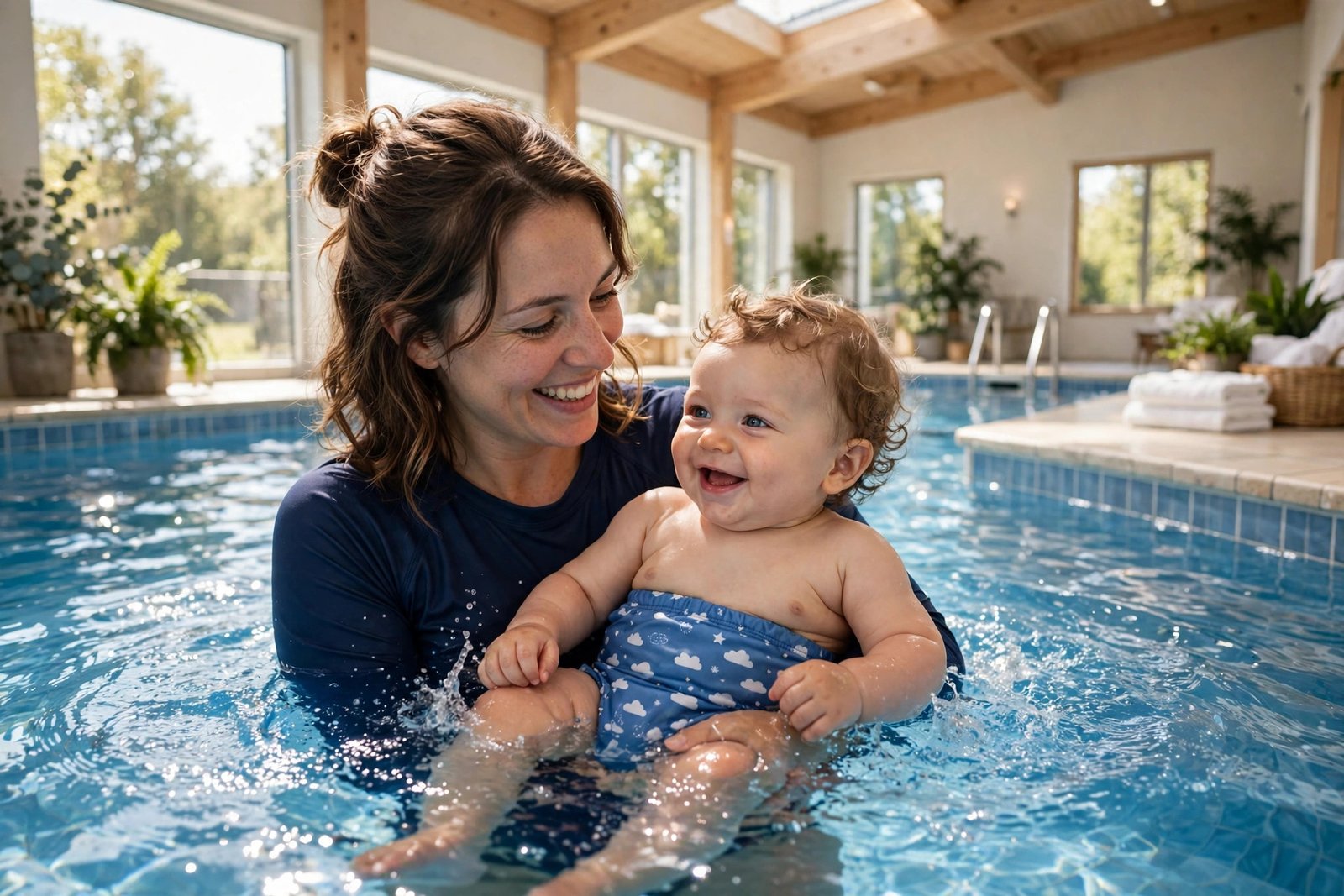
A good baby swim class is gentle, playful, and parent-led. You will be in the water with your baby the whole time, guided by a qualified instructor. A typical 30-minute class includes:
- Warm-up songs and splashing: getting comfortable with water on the face and ears.
- Holding positions: learning secure holds that keep your baby’s head above water.
- Floating practice: gentle back floats with your hands supporting them.
- Submersion (optional): some programmes introduce brief dips under water, always with a clear signal and only when the baby is ready. This is never forced.
- Safe exits: practising how to hold the pool edge and climb out with help.
Choosing the Right Class
Not all swim schools are equal. Before you sign up, check these points:
- Warm water: the pool should be at least 30°C (86°F) for babies under one year. Cold water makes babies miserable and can chill them quickly.
- Qualified instructors: look for instructors trained specifically in baby and toddler swimming, with lifeguard and first-aid certification.
- Small groups: ideally no more than 8–10 babies per class, so the instructor can watch every child.
- Clean, well-run pool: the water should be clear and the changing area clean and warm.
- No pressure: a good school never forces submersion or any activity your baby is unhappy with.
Safety Tips for Baby Swimming
Never take your eyes off your baby
Stay within arm’s reach at all times, even in a class with an instructor. Drowning is fast and silent — it can happen in seconds, in shallow water, with other adults nearby.
Use proper swim nappies
Most pools require a swim nappy, often with a reusable neoprene nappy over the top. Regular nappies swell up in water and are not allowed. Pack a spare — accidents happen.
Keep sessions short
Thirty minutes is plenty for a baby. Watch for signs they are cold or tired: shivering, blue lips, or sudden fussiness mean it is time to get out, warm up, and feed.
Feed before, not during
Give your baby a feed about an hour before the lesson. A hungry baby is a grumpy swimmer, but a full tummy right before swimming can cause discomfort.
Skip the lesson when your baby is unwell
If your baby has a cold, a temperature, diarrhoea, or an ear infection, stay home. Pools are shared spaces, and a poorly baby will not enjoy the class anyway.
Swimming at Home or on Holiday
The same rules apply outside lessons. At home, never leave a baby alone in or near water — not in the bath, not in a paddling pool, not even for a moment. On holiday, check the pool depth, keep your baby in your arms, and be careful with inflatables: arm bands and rings are toys, not safety devices, and they can slip or deflate.
What About Water Safety at Home?
Most water accidents involving babies happen at home, not at the pool. Keep these habits:
- Empty paddling pools, buckets, and baths straight after use.
- Keep bathroom doors closed and toilet lids down.
- Never leave a baby unattended in the bath — even while you answer the door or the phone.
The Bottom Line
Swimming lessons are a wonderful way to bond with your baby and build water confidence early. Start around six months, choose a warm pool with a qualified instructor, keep sessions short, and never let your baby out of your arm’s reach. Do that, and the pool becomes one of the happiest places you share together. For more simple, practical parenting ideas, visit Healthy Baby Guide.