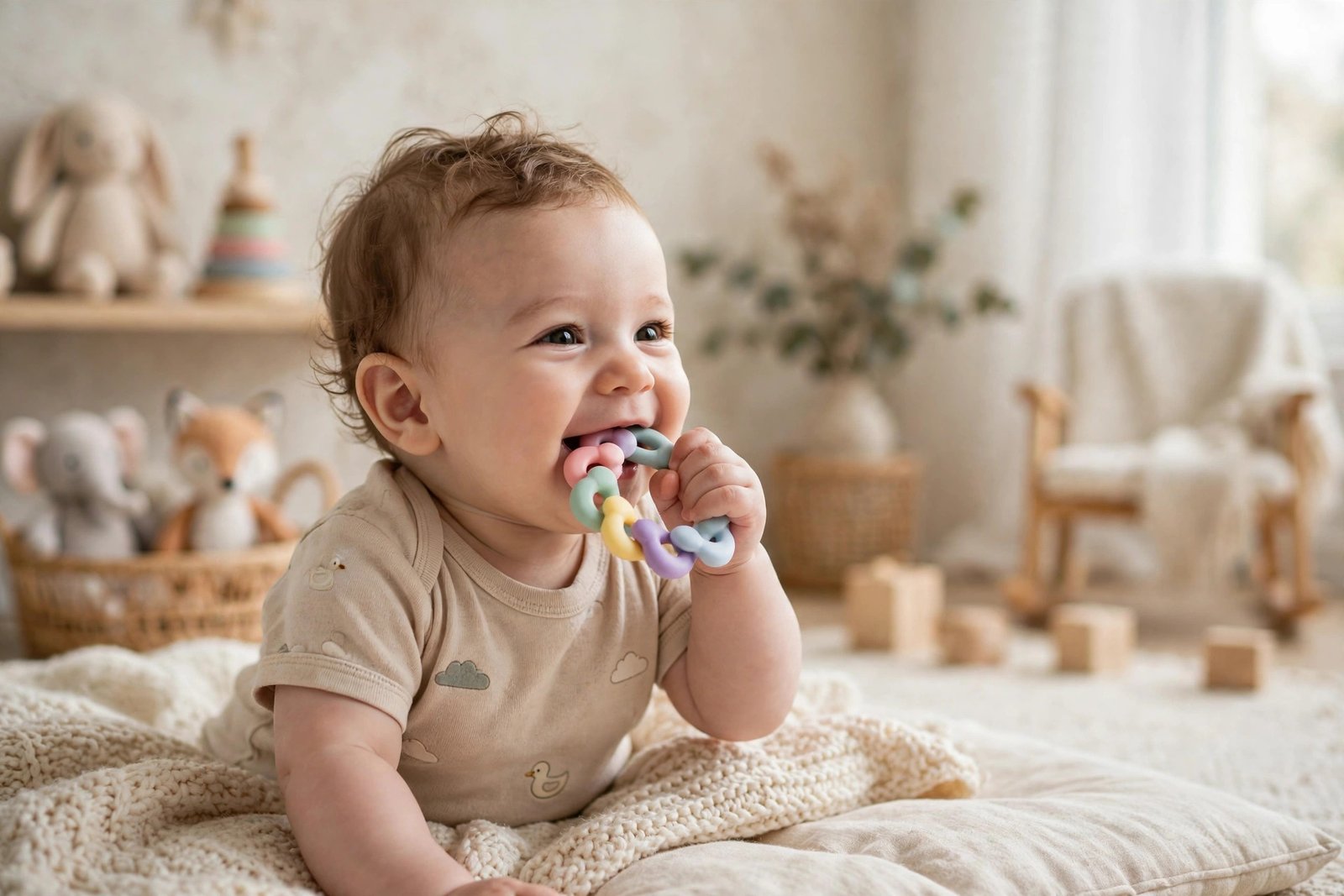
When your baby’s first teeth start coming through — usually around six months — chewing becomes a full-time job. Everything goes into the mouth: fingers, blankets, toys, and occasionally your nose. A good teething toy gives those sore gums something safe to bite, and gives you a few minutes of peace. Here is how to choose the best teething toys for babies six months and older.
Why Teething Toys Help
Teething can make babies fussy, drooly, and reluctant to sleep or feed. Gentle pressure on the gums eases the discomfort, and chewing helps the teeth push through. A purpose-made teether is safer than random household objects: it is sized so it cannot be swallowed, made from baby-safe materials, and easy for small hands to hold.
What to Look For in a Teething Toy
- Safe materials: food-grade silicone, natural rubber, or untreated wood. Avoid anything with BPA, phthalates, or paint that can flake off.
- Easy to grip: look for rings, loops, or chunky shapes a six-month-old can hold with one hand.
- Textured surfaces: bumps, ridges, and nubs massage different parts of the gum and keep babies interested longer.
- Easy to clean: it will spend a lot of time on the floor. Choose toys you can wash in warm soapy water or pop in the dishwasher.
- Right size: big enough that it cannot fit entirely in your baby’s mouth, with no small parts that could break off.
The Best Types of Teething Toys for 6 Months and Older
Silicone teething rings
The classic choice for good reason. Soft, flexible, and durable, silicone rings come in many shapes — animals, fruit, keys — and most can be chilled in the fridge for extra relief. Look for one-piece designs with no seams where germs can hide.
Teething mittens
For babies who have not yet mastered grabbing toys, a soft silicone-tipped mitten worn on the hand lets them chew without dropping anything. They are especially useful in the car or pram.
Wooden teethers
Simple beech or maple wood rings are firm, naturally antibacterial, and give good counter-pressure on sore gums. Choose untreated, sanded-smooth wood from a reputable baby brand, and oil occasionally with food-grade oil if the maker recommends it.
Teething necklaces for parents
Wearable silicone bead necklaces let your baby chew safely while you hold them. Make sure the clasp is a breakaway safety clasp, and never let your baby sleep wearing one.
Chilled teethers
Many silicone teethers can be cooled in the fridge (not the freezer — frozen teethers are too hard and can hurt delicate gums). The cold numbs the soreness while the chewing massages it.
Feeding teethers
Mesh or silicone feeders let older babies chew on cold fruit — frozen banana or chilled cucumber — through a safe mesh pouch. They double as a first step toward self-feeding.
What to Avoid
- Teething jewellery on babies: amber necklaces and bracelets are a choking and strangulation risk. Health authorities do not recommend them.
- Gel-filled teethers: if they split, the gel inside is not meant to be swallowed.
- Toys with batteries or small parts: keep electronic toys out of the teething rotation.
- Hard plastic or frozen-solid objects: these can bruise gums or damage emerging teeth.
Keeping Teething Toys Clean
Wash teethers daily in warm soapy water, rinse well, and air-dry. Silicone toys can usually go in the dishwasher’s top rack. Wooden teethers should be wiped clean and dried quickly so the wood does not crack. Rotate two or three teethers so one is always clean and ready, and inspect them regularly for tears, cracks, or loose parts — replace anything damaged straight away.
More Ways to Soothe Sore Gums
Teething toys work best as part of a small toolkit. A clean, damp flannel chilled in the fridge is a classic comfort. Gentle gum massage with a clean finger can help before feeds. If your baby is over six months and eating solids, a cold cucumber stick or a rusk designed for teething can help too. Always stay nearby while your baby chews anything.
When to call the doctor
Teething can cause mild fussiness and a slightly raised temperature, but it should not cause a high fever, diarrhoea, or a rash. If your baby has a fever above 38°C (100.4°F), seems unusually unwell, or refuses feeds for more than a day, call your paediatrician — those symptoms usually have another cause.
The Bottom Line
The best teething toy is the one your baby actually reaches for: safe, easy to hold, easy to clean, and gentle on sore gums. Start with a simple silicone ring or two, add a chilled option, and let your baby show you what works. Most babies find their favourite quickly. For more simple, practical parenting ideas, visit Healthy Baby Guide.