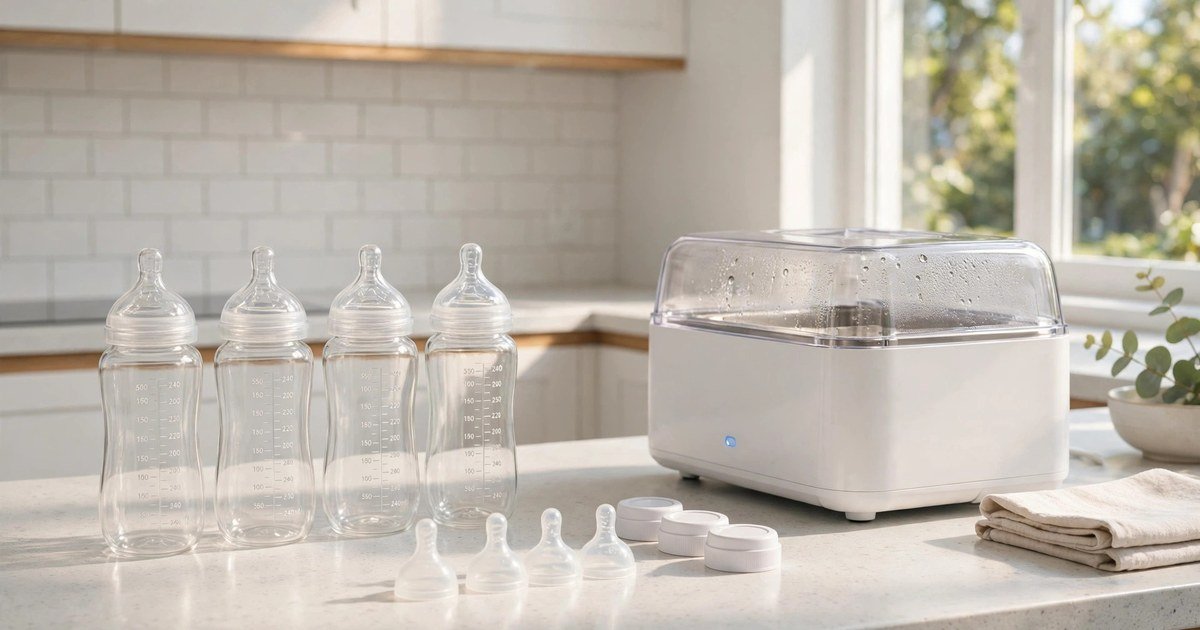
Every bottle your baby drinks from needs to be spotless and sterile — at least until their immune system matures. But between night feeds and nappy changes, what is the quickest safe way to clean and sterilise bottles? Here is the complete routine, from first rinse to fully sterile.
Why Cleaning and Sterilising Both Matter
Washing removes milk residue; sterilising kills the bacteria and germs washing can leave behind. Milk is a perfect breeding ground for bacteria, so a bottle that looks clean can still harbour them. Until your baby is 12 months old, health authorities recommend sterilising all feeding equipment — bottles, teats, caps, dummies, and even breast pump parts that touch milk.
Step 1: Wash Everything Immediately After the Feed
Don’t let used bottles sit — dried milk is much harder to clean and harbours bacteria faster. As soon as the feed is finished:
- Rinse the bottle and teat under warm running water right away.
- Take the bottle apart completely — remove the teat, cap, and any valve or ring. Milk hides in the threads and under the teat rim.
- Wash every part in hot soapy water using a dedicated bottle brush. Scrub the inside of the bottle, the teat (inside and out), and the cap threads.
- Rinse all parts thoroughly under clean running water to remove every trace of soap.
Keep a brush used only for baby bottles, and replace it regularly — a worn brush stops cleaning properly. Allow washed parts to air-dry on a clean tea towel or a dedicated drying rack; don’t dry them with a used cloth, which can reintroduce germs.
Step 2: Choose Your Sterilising Method
There are four proven ways to sterilise feeding equipment. All work — pick the one that fits your budget and routine.
1. Electric steam steriliser
The easiest option: load the bottles, add water, and press a button. Items stay sterile inside the unit for up to 24 hours if the lid stays shut. Great for parents doing several bottles a day.
2. Microwave steam steriliser
A compact container with a small amount of water, heated in the microwave for a few minutes. Cheaper than an electric unit, but check your microwave size and never put metal anywhere near it.
3. Cold-water sterilising solution
Tablets or liquid dissolved in cold water in a bucket or container; items soak for at least 30 minutes and stay sterile for 24 hours in the solution. Useful when travelling or during power cuts, but the solution must be made fresh daily and can leave a faint smell.
4. Boiling
Submerge all washed parts in a large pan of water, bring to a rolling boil for at least 10 minutes, and make sure nothing touches the bottom or sides. Free and effective, but uses energy and can wear out teats faster.
Step 3: Assemble and Store Safely
Wash your hands before touching sterilised equipment. Assemble bottles with the teat and cap on — this keeps the inside of the teat sterile — and store them in a clean, dry cupboard. Don’t rinse sterilised items afterwards; that undoes the sterilising. If a sterilised bottle hasn’t been used within 24 hours, wash and sterilise it again before the next feed.
Common Bottle Hygiene Mistakes
- Only rinsing, not washing. A quick rinse is not a wash — soap and scrubbing are essential.
- Microwaving to sterilise bottles directly. Microwaves heat milk unevenly and can create dangerous hot spots; sterilising units designed for microwaves are a different thing and are safe.
- Forgetting the teat hole. Milk residue collects around the teat’s opening. Squeeze water through it during washing.
- Using the dishwasher alone. Dishwasher cycles don’t reliably sterilise baby equipment — treat the dishwasher as a wash step, then sterilise separately.
- Skipping sterilising after 12 months inconsistently. After their first birthday you can stop, but keep washing thoroughly in hot soapy water.
When You’re Out and About
Take more bottles than you think you’ll need, pre-sterilised and assembled. Ready-to-feed formula bottles need no preparation and are the safest travel option; if you use powder, carry cooled boiled water in a sterilised bottle and add the powder just before the feed. Wash used bottles as soon as you’re home — don’t leave them in the bag overnight.
Good bottle hygiene quickly becomes second nature, and it is one of the simplest ways to protect your baby from tummy upsets and infections. For more practical feeding guides and baby care advice, visit Healthy Baby Guide.