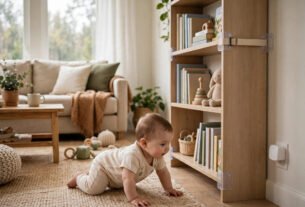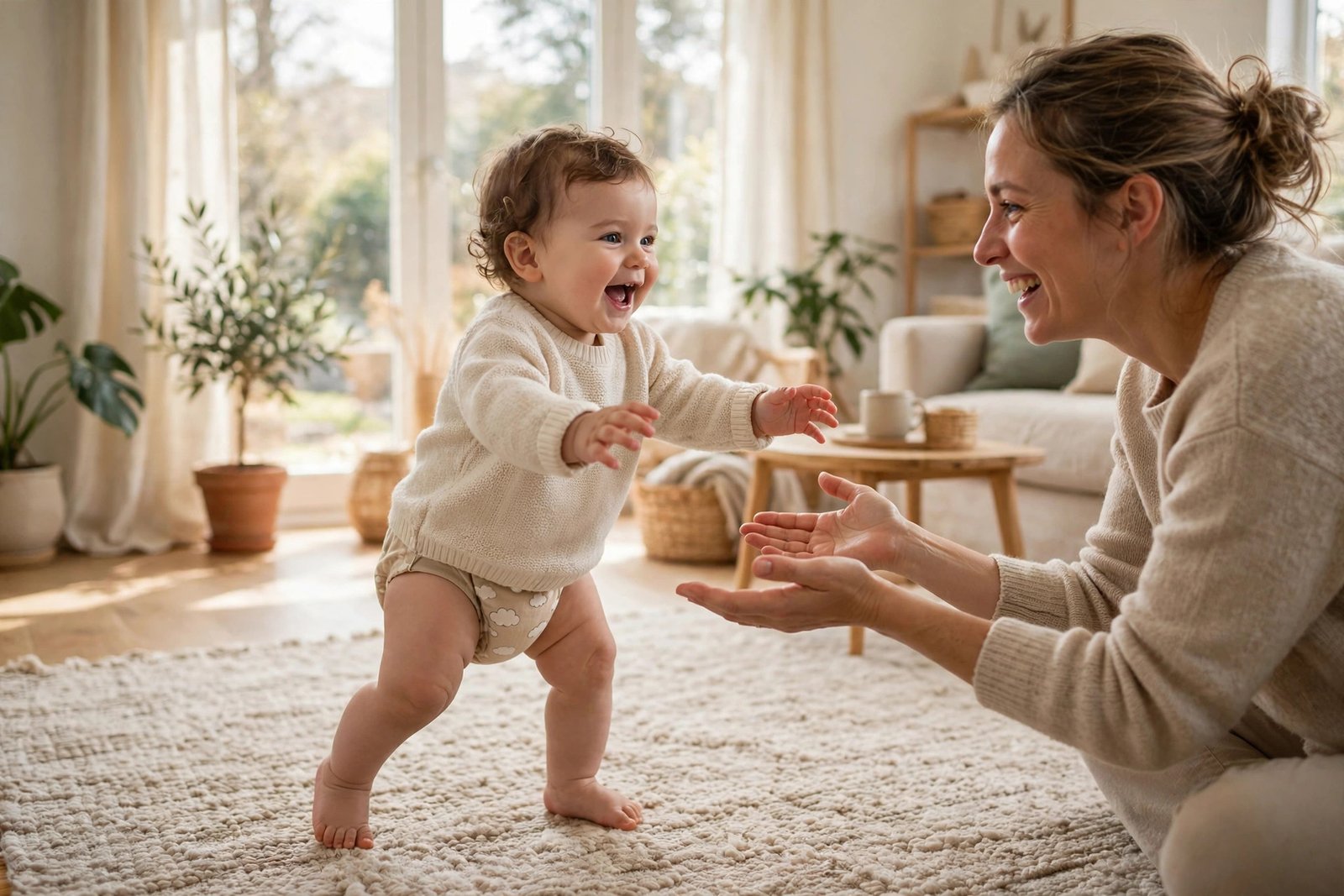
Those first wobbly steps are one of the most exciting milestones in your baby’s first year. Most babies take their first independent steps between 9 and 18 months, with the average around 12 to 13 months. Every baby develops at their own pace.
In this guide, we explain the signs that walking is near, share simple ways to encourage your baby safely, and cover when it is worth speaking to your health visitor or GP. For more practical guidance on your baby’s development, visit Healthy Baby Guide.
When Do Most Babies Start Walking?
Most babies walk independently between 12 and 15 months, though the normal range is wide. Some confident babies take their first steps at 9 or 10 months, while others are perfectly happy crawling until 17 or 18 months. Both can be completely normal. Babies tend to walk when their muscles, balance, and confidence are all ready at the same time, and that combination arrives on its own timetable.
Comparisons with other babies rarely help. A baby who walks late is not behind if they are progressing through the earlier stages: rolling, sitting, crawling or bottom-shuffling, pulling up to stand, and cruising along furniture. If your baby is steadily gaining new skills, they are on track.
Signs Your Baby Is Getting Ready to Walk
Walking rarely arrives out of nowhere. Look for these clues that first steps are close:
- Pulling up to stand: Your baby hauls themselves up on the sofa or coffee table, and can lower themselves back down with reasonable control.
- Cruising: They shuffle sideways along furniture, moving one hand after the other while their feet follow. This is walking practice in disguise.
- Standing alone: They let go of the furniture for a few seconds, wobble, and stay upright. Even a brief moment of unsupported standing is a big step forward.
- Taking steps with support: They walk happily while holding both of your hands, or push a toy walker across the room.
- Improved balance: They can sit, turn, and reach for toys without toppling over.
- Determination: They keep trying to stand and move, even after falling. That persistence matters more than perfect balance.
Once your baby can stand alone for a few seconds, first steps often follow within a few weeks. Try standing a short distance away with open arms. Many babies take their first steps simply because someone they love is waiting for them.
Tips to Encourage First Steps
1. Give plenty of floor time
Babies build the strength for walking by moving freely on the floor. Tummy time, crawling, and cruising strengthen the legs, core, and hips. Limit long stretches in bouncers, walkers, or high chairs, and let your baby explore a safe, open space instead.
2. Let them go barefoot indoors
Bare feet help babies grip the floor and feel where they are placing their weight. Socks with grips work well on slippery floors, but stiff shoes can make balancing harder at this stage. Save proper shoes for outdoor walks, and choose soft, flexible ones when you do.
3. Create safe cruising routes
Arrange furniture so your baby can cruise from one stable piece to another, with short gaps to cross. Make sure heavy furniture cannot tip, and keep the floor clear of tripping hazards.
4. Use toys as motivation
Place a favourite toy just out of reach, or stand a couple of steps away holding it. A push-along toy or a low activity table can also tempt your baby to move. Keep it playful and low-pressure; the goal is to make moving fun, not to drill them.
5. Hold their hands, not their arms
When you help your baby walk, hold their hands at a comfortable height rather than lifting them by the arms. Let them set the pace and carry their own weight. Short, happy practice sessions beat long, tiring ones.
6. Celebrate the falls too
Falling is part of learning to walk. Stay calm, offer a cuddle, and encourage them to try again. A relaxed response teaches them that falling is normal and safe.
What About Baby Walkers?
Traditional baby walkers, the wheeled seats babies sit in, are not recommended. They can delay walking and carry a real risk of accidents, especially near stairs. Push-along walkers, which babies hold onto while standing, are a much safer choice. Choose a sturdy model with a wide base and always supervise.
When to Ask for Advice
Most late walkers catch up without any help, but speak to your health visitor or GP if your baby:
- Is not bearing weight on their legs by around 12 months.
- Is not walking independently by 18 months.
- Seems very stiff or very floppy in their legs or body.
- Only uses one side of their body, or drags one leg.
- Has lost a skill they previously had.
These are simply prompts to check in, not reasons to panic. Early advice can reassure you and, if needed, arrange extra support. Trust your instincts too: if something feels off, it is always worth asking.
The Bottom Line
Most babies start walking between 9 and 18 months. Give your baby plenty of floor time, safe spaces to practise, and lots of encouragement, and those first steps will come when they are ready. Enjoy the wobbly, wonderful moment when they finally toddle into your arms.