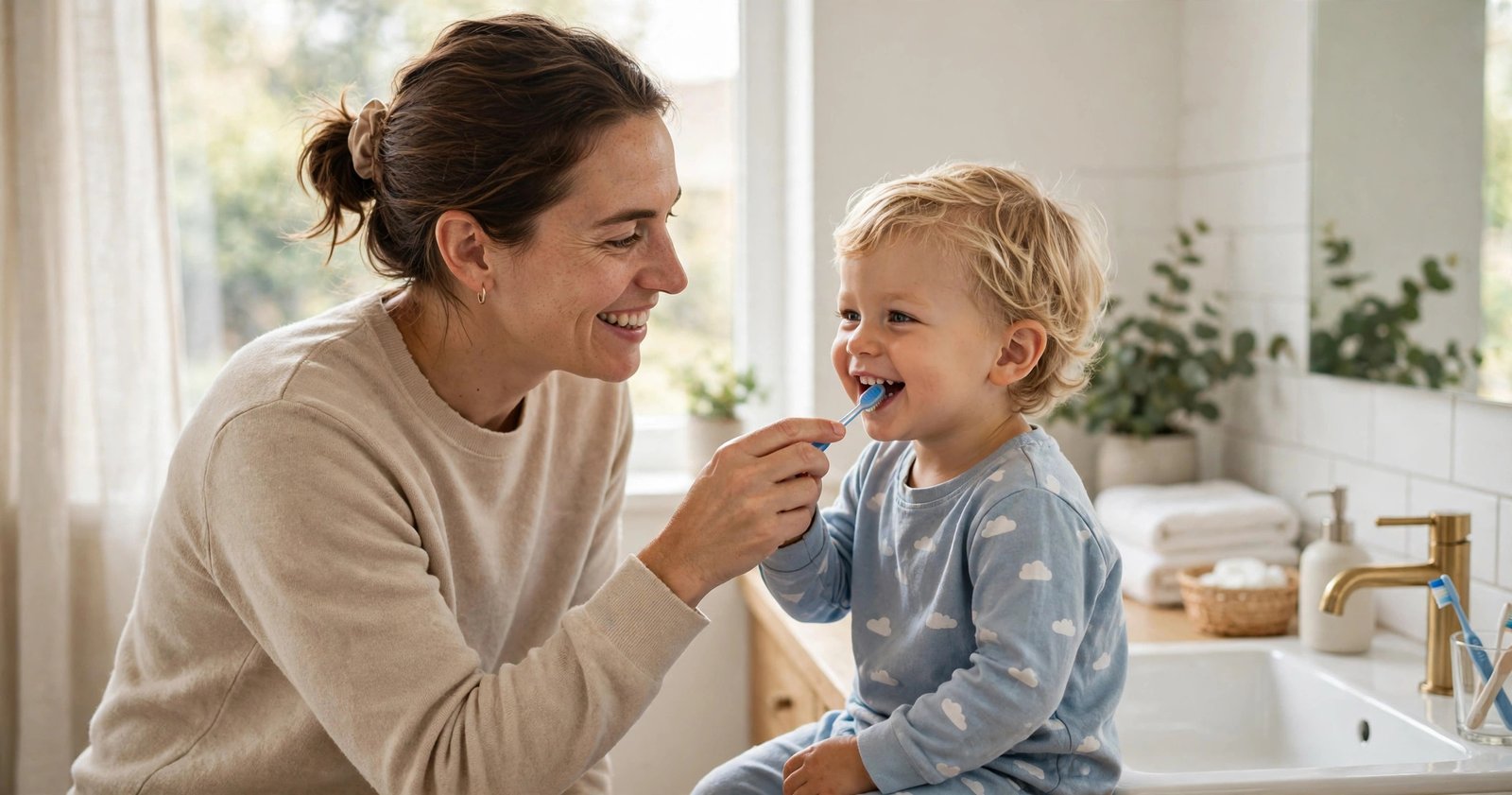
That first tiny tooth is a big milestone — and it is also the moment dental care begins. Many parents wonder when to start brushing baby teeth, how to do it properly, and whether toothpaste is safe for a baby who cannot spit yet. The short answer: start as soon as the first tooth appears, usually around six months, and keep it gentle, short, and positive.
This guide covers the right age to start, the correct technique, and how to turn brushing into a habit your child actually enjoys. You will find more baby health guides on our homepage.
When to Start Brushing Baby Teeth
Start brushing the day the first tooth breaks through the gum. Before any teeth appear, you can wipe your baby’s gums with a clean, damp cloth after feeds — this gets them used to having their mouth cleaned and removes milk residue. Once that first tooth is visible, switch to a soft baby toothbrush.
Most babies get their first tooth between four and seven months, but anywhere from three to twelve months is normal. The timing does not matter nearly as much as starting early and sticking with it.
How to Brush a Baby’s Teeth
Choose the Right Brush and Toothpaste
Use a small, soft-bristled toothbrush made for babies, with a small head and a handle you can grip easily. Some parents prefer a finger brush that slips over a fingertip — either is fine. Use a fluoride toothpaste: for children under three, a smear the size of a grain of rice is enough. From age three, move up to a pea-sized amount.
The Technique
- Sit your baby on your lap, facing away from you, so you can see into their mouth and support their head.
- Brush gently in small circles on all surfaces of each tooth — front, back, and chewing surfaces.
- Brush along the gum line too, where plaque builds up.
- Two minutes is the goal for older children, but for a baby, 30 seconds of gentle brushing is a great start.
- Do not rinse with water afterwards — just let your baby spit out what they can, or simply wipe away the excess. Leaving a little fluoride on the teeth helps protect them.
How Often?
Brush twice a day: once in the morning and once before bed. The bedtime brush is the most important, because saliva flow drops overnight and bacteria have hours to attack the teeth. Try to brush after the last feed, not before it.
Making Brushing Fun (Not a Battle)
Many toddlers resist brushing, and that is normal. A few tricks help:
- Let your child choose their own toothbrush — a favourite colour or character makes a difference.
- Brush your own teeth at the same time so they can copy you.
- Sing a short brushing song or count the teeth together.
- Use a simple reward chart, not sweets — a sticker after each brush works well.
- Stay calm and patient. A quick, cheerful brush is better than a long struggle.
When to See a Dentist
Take your child for their first dental visit by their first birthday, or within six months of the first tooth appearing — whichever comes first. Early visits are mostly about getting your child comfortable with the dentist and letting the dentist check that teeth are coming through normally. Ask your dentist about fluoride varnish, which can give extra protection against decay.
Common Mistakes to Avoid
- Putting a baby to bed with a bottle of milk or juice — the sugars sit on the teeth all night and cause decay.
- Sharing spoons or cleaning a dummy with your own mouth, which can pass decay-causing bacteria to your baby.
- Using too much toothpaste — more is not better, and young children swallow most of it.
- Skipping brushing because there are “only a few teeth” — baby teeth matter. They hold space for adult teeth and decay in baby teeth can affect the teeth underneath.
The Bottom Line
Start brushing as soon as the first tooth appears, use a rice-grain smear of fluoride toothpaste, brush twice a day, and keep it short and cheerful. Good habits built in the first year lay the foundation for a lifetime of healthy teeth — and a child who does not dread the dentist.