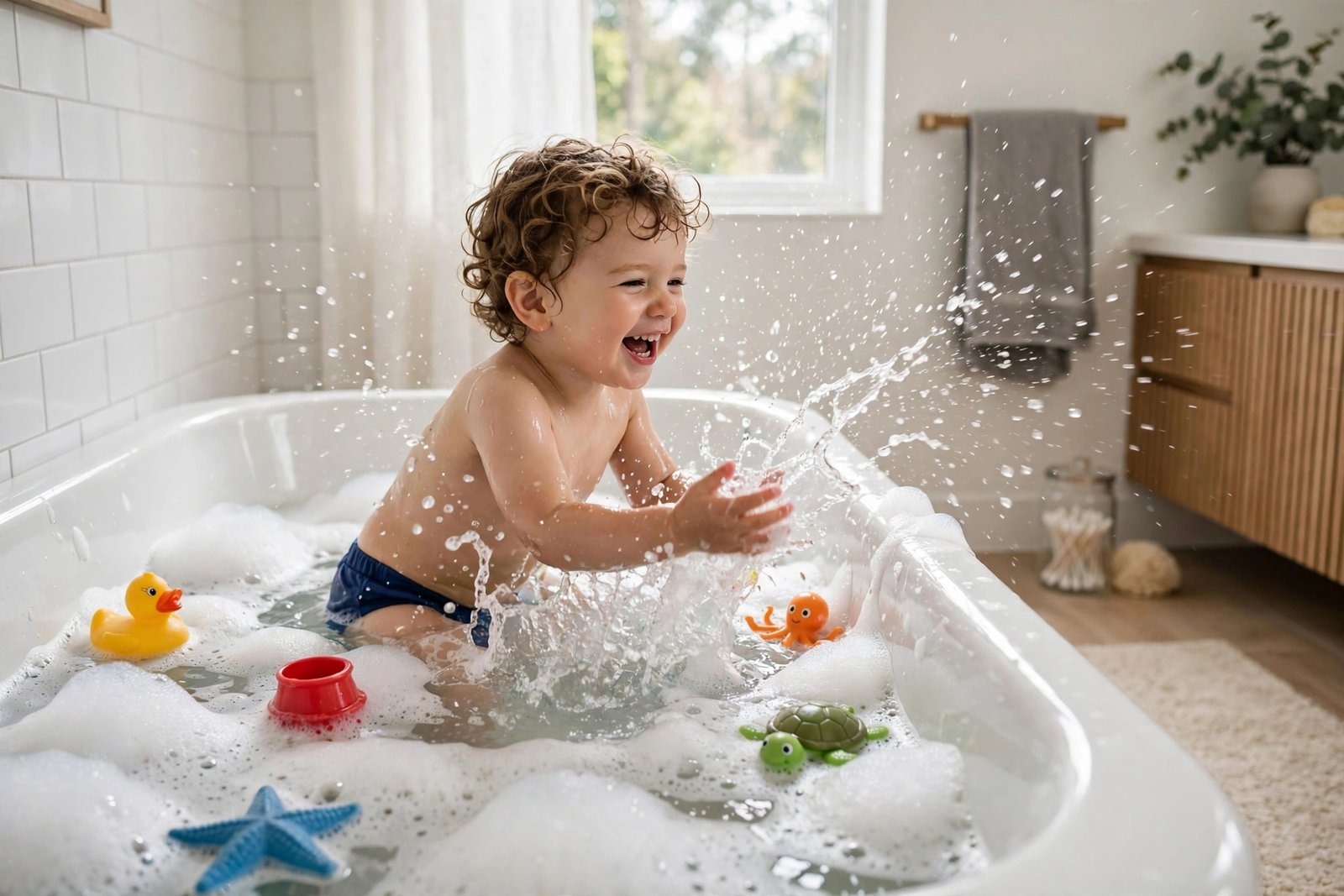
Bath time can be one of the best parts of the day — or one of the messiest. Once your toddler discovers splashing, the bathroom can turn into a mini water park in seconds. The good news is that with a few simple habits, you can keep bath time fun and safe at the same time. Here is how to make it work for everyone.
Why Toddlers Love to Splash
Splashing is not just play. For a toddler, it is a way to learn how water moves, how it feels, and what happens when you hit it hard with both hands. It builds coordination, confidence, and curiosity. The trick is to let them enjoy that learning while keeping the water, the tub, and the floor under control.
Set Up the Bath Before Your Child Gets In
A calm start makes everything easier. Run the water and test it with your wrist or elbow before your child steps in — it should feel warm, not hot. Aim for around 37°C (98°F). Fill the tub to about 5–10 cm (2–4 inches) for a toddler; they do not need deep water to have a great time.
- Put a non-slip mat on the bottom of the tub and another on the bathroom floor.
- Keep shampoo, soap, and a cup for rinsing within arm’s reach so you never have to step away.
- Remove anything sharp or breakable from the edge of the tub.
- Have a towel ready on a nearby hook before the bath starts.
Stay Within Arm’s Reach — Always
This is the single most important safety rule. Never leave a toddler alone in the bath, not even for a few seconds to grab a towel or answer the phone. Drowning can happen silently and in very little water. If you need to leave the room, take your child out of the tub first. Keep your phone out of the bathroom so nothing tempts you away.
Make Splashing Part of the Fun — With Limits
Trying to stop all splashing usually ends in tears. Instead, give it a place and a boundary.
Give them splash tools
Offer cups, a small watering can, bath squirters, and stacking cups. These let your child pour and splash on purpose, which feels more satisfying than random kicking — and it keeps the water mostly inside the tub.
Set a simple splash rule
Try something easy to remember, like “splash inside the tub, not on the floor.” Toddlers understand short, positive rules far better than a long list of “don’ts.” Praise them when they splash the water back into the tub.
Protect the floor
Lay an old towel or a bath mat on the floor beside the tub. It catches the water that escapes and stops slips when your little one climbs out.
Fun Bath Time Ideas That Keep Toddlers Happy
- Bubble mountains: a little bubble bath goes a long way — just choose a gentle, fragrance-free formula for sensitive skin.
- Floating toys: rubber ducks, boats, and foam letters keep small hands busy.
- Colour play: drop in a few bath-safe colour tablets or use coloured cups and watch the water change.
- Songs and stories: sing a bath song or make up a short story about a toy boat’s adventure.
- Washcloth puppets: a flannel on your hand becomes a puppet that can “wash” arms and toes.
Keep Bath Toys Clean and Safe
Bath toys live in warm, wet conditions — perfect for mould. Squeeze water out of squirters after every bath and let them dry fully. Rinse other toys and leave them in a mesh bag that drains. Throw away any toy that smells musty or has black spots inside, and check regularly for cracked or peeling paint.
Make Getting Out Part of the Routine
Ending the bath can be the hardest part. Give a two-minute warning — “two more splashes, then we get out” — so the end does not feel sudden. Let your child help pull the plug and watch the water swirl away. Wrap them in a warm towel straight away, and keep the cuddles going while you dry and dress them.
When to Skip or Shorten Bath Time
Some days bath time will not work, and that is fine. Skip or shorten it if your child is unwell, very tired, or has a skin rash that warm water would irritate. A quick wash with a warm flannel is enough on those days. There is no rule that says every toddler needs a bath every night — two or three proper baths a week, plus flannel washes, is plenty for most little ones.
The Bottom Line
Bath time works best when it is predictable, supervised, and playful. Keep the water shallow and warm, stay within arm’s reach, give splashing a safe outlet, and keep the toys clean. Do that, and the daily splash fest becomes a happy routine you both look forward to. For more simple, practical parenting ideas, visit Healthy Baby Guide.